
What Happened: The Core Developments
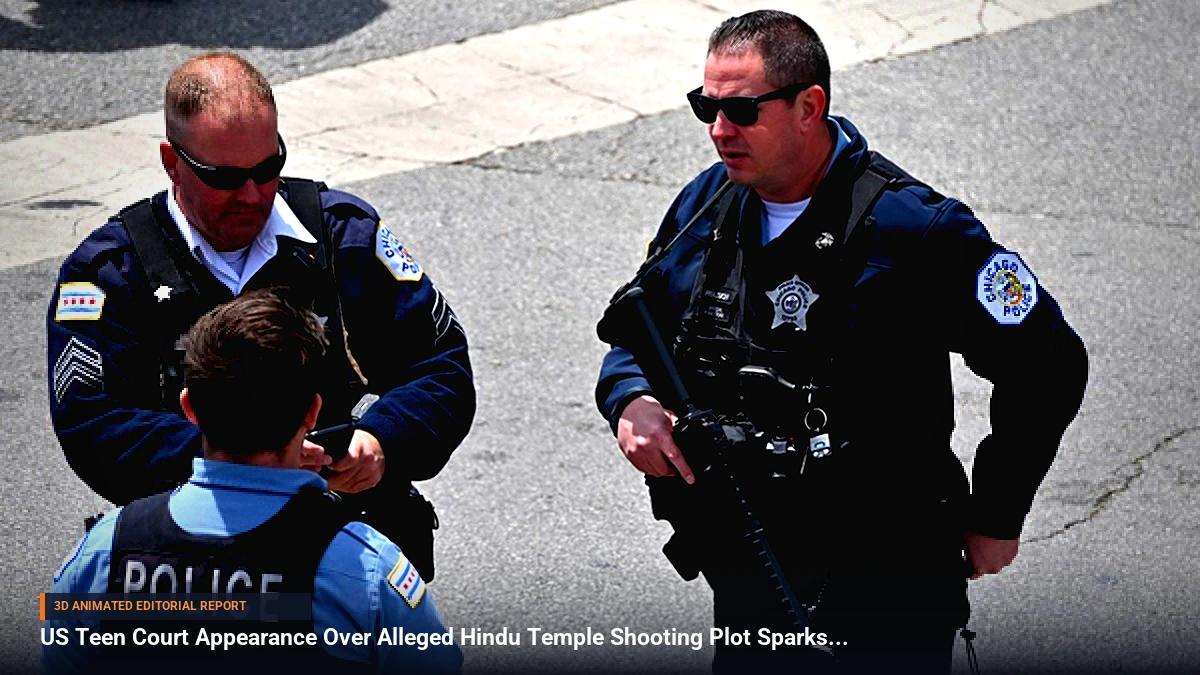
A chilling security threat came to light as a United States teenager made a formal court appearance in connection with an alleged plot to carry out a mass shooting at a Hindu temple located near Chicago. According to law enforcement and investigative findings, the minor from Palatine, Illinois, was apprehended before the attack could be fully realized. Authorities uncovered disturbing statements and a manifesto wherein the suspect allegedly expressed deep-seated hatred toward individuals of Indian descent, describing them with derogatory language and declaring an eagerness to commit acts of extreme violence.
Preliminary details from the investigation indicate that the suspect had discussed violent intentions with acquaintances and co-workers prior to his arrest. Security analysts and law enforcement agencies are continuing to comb through digital footprints, manifesto drafts, and communication channels to determine whether the teenager acted entirely alone or was influenced by extremist networks operating within online chat rooms and fringe forums.
Background & Key Context
The alarming arrest highlights a growing concern among security experts regarding the vulnerability of religious institutions and houses of worship. Hindu temples, cultural centers, and community hubs across North America have increasingly found themselves assessing their physical security measures in response to shifting societal tensions. While hate crimes historically targeted specific minority groups based on established threat matrices, federal and local law enforcement agencies have noted a broader diversification of bias-motivated threats in recent years.
Furthermore, the incident places a renewed spotlight on the phenomenon of minor radicalization. The ease with which adolescents can access toxic ideologies, extremist manifestos, and hate-filled rhetoric online has presented unprecedented challenges for parents, educators, and counter-terrorism analysts alike. Law enforcement officials emphasize that early intervention remains critical in identifying minors who exhibit warning signs of ideological extremism before online grievances manifest into physical violence.
Key Takeaways
- Court Appearance: An Illinois teenager has faced court proceedings regarding an alleged plot to target a Hindu temple in the greater Chicago area.
- Hate-Driven Manifesto: Investigators recovered writings and statements in which the suspect allegedly expressed explicit desires to kill individuals of Indian descent.
- Law Enforcement Intervention: Swift action by local and federal authorities thwarted the potential mass casualty event before the attack could be executed.
- Rising Xenophobia Concerns: Community advocates and civil rights organizations have voiced profound concerns over the apparent mainstreaming of anti-Indian racism and xenophobic rhetoric.
- Online Radicalization Vector: The case underscores the dangerous pipeline through which vulnerable minors are radicalized via fringe digital platforms and extremist messaging boards.
Impact, Analysis & Global/National Reactions
The thwarting of the alleged attack has sent shockwaves through the South Asian diaspora and Hindu-American communities across the United States. Leaders of various cultural and religious organizations have called for heightened vigilance, urging local law enforcement agencies to step up patrols around places of worship. Civil rights advocates point out that incidents of anti-Indian sentiment, ranging from online harassment to physical intimidation, have experienced an upward trajectory, necessitating a more robust institutional response.
"The normalization of hateful rhetoric against specific ethnic and religious minorities inevitably breeds real-world violence," noted community safety advocates in recent statements following the court hearing. Security analysts stress that communities must foster environments where concerning behavior can be reported confidentially without fear of social reprisal, bridging the gap between troubled youth and mental health or intervention services.
What's Next: Looking Ahead
As the legal proceedings advance, prosecutors are expected to formally lay down comprehensive charges detailing the scope of the conspiracy and the specific statutes violated. Legal experts anticipate that the case will heavily feature digital forensics, examining the extent of the teenager's online activity and whether any co-conspirators assisted in planning the attack.
Concurrently, federal agencies and community leaders are reviewing security protocols for religious sites nationwide. The incident serves as a grim reminder of the persistent threat posed by domestic violent extremism, prompting renewed calls for legislative and educational frameworks designed to combat radicalization among minors before tragedies occur.




Be the first to comment
Start a useful conversation around this story.