
What Happened: The Core Developments
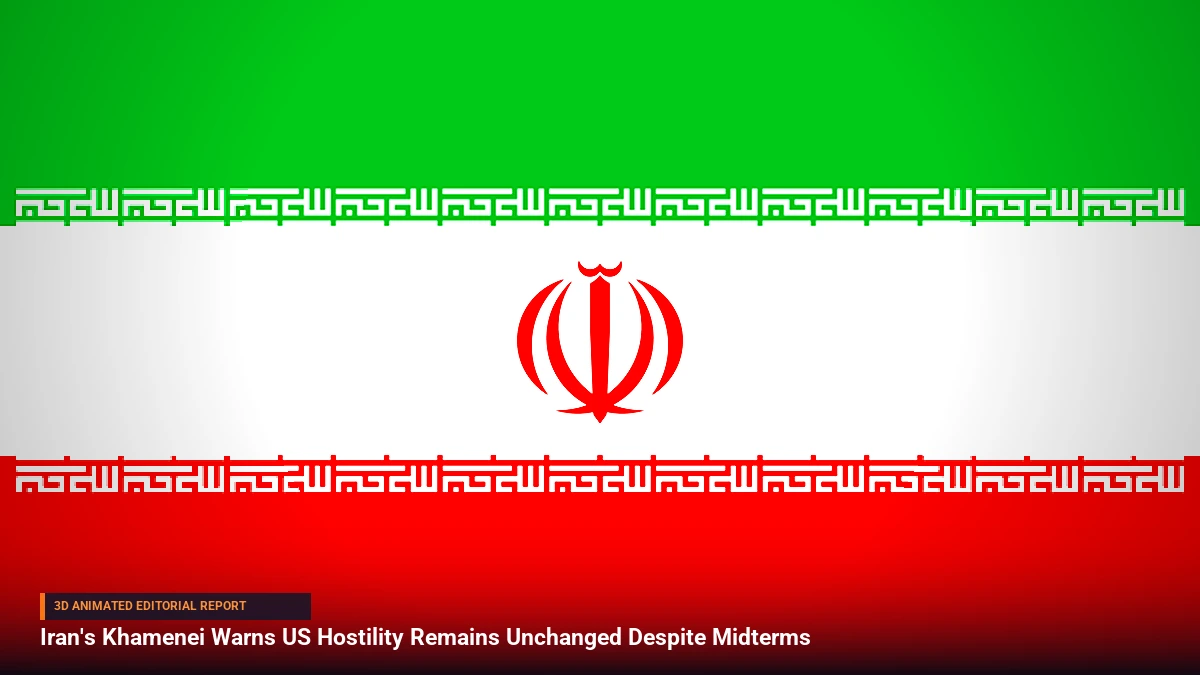
In recent public addresses delivered during the annual 'Fight Against Global Arrogance' day rallies in Tehran, Iran's Supreme Leader Ayatollah Ali Khamenei addressed the shifting political landscape in Washington following the United States midterm elections. While various Iranian state officials and media outlets viewed the setback of Republican candidates in a positive light—interpreting the electoral outcome as an unmistakable signal that American voters are growing weary of foreign military entanglements and potential conflicts—Khamenei offered a markedly more conservative and deeply institutional assessment.
The Supreme Leader cautioned the Iranian public and political establishment against placing any strategic faith in fluctuations within the American electoral system. According to Khamenei, structural hostility toward the Islamic Republic is hardwired into United States foreign policy, meaning that overarching tensions will remain entirely insulated from which political party happens to control the White House or Congress. This dual narrative playing out in Tehran highlights a complex internal calculus: balancing opportunistic diplomatic optics with an unyielding ideological stance against Washington.
Background & Key Context
The 'Fight Against Global Arrogance' day commemorates historical flashpoints of anti-American sentiment in Iran, most notably the 1979 takeover of the US Embassy in Tehran. For decades, the anniversary has served as an annual barometer for the Iranian regime's official posture toward Western powers. The timing of this year's rallies directly intersected with the aftermath of the US midterm elections, placing domestic American politics under intense scrutiny from state-run media in Tehran.
Simultaneously, regional tensions have remained exceptionally volatile. Recent reports of kinetic friction, including a reported US strike on Qeshm Island and subsequent warnings from Iranian military and diplomatic officials regarding potential new battlefields, have kept bilateral relations on a knife-edge. Iran's chief negotiator has repeatedly emphasized that Washington must take tangible steps to de-escalate and prevent renewed hostilities, framing recent diplomatic and military postures around the core demand of averting wider regional conflagration.
Key Takeaways
- Unwavering Stance: Supreme Leader Ayatollah Ali Khamenei asserted that structural US hostility toward Iran will continue uninterrupted, regardless of electoral shifts or party control in Washington.
- Optimistic Interpretations: Certain Iranian officials and commentators viewed Republican midterm losses favorably, characterizing the results as a referendum by American voters against foreign wars.
- Symbolic Timing: The high-stakes warnings were delivered directly amidst Tehran's large-scale 'Fight Against Global Arrogance' day rallies.
- Regional Friction: Tensions continue to simmer alongside reports of localized military friction, such as operations near Qeshm, prompting warnings of broader retaliation.
- Diplomatic Demands: Tehran's chief negotiator maintains that concrete action from the United States is vital to prevent any spiral into renewed warfare.
Impact, Analysis & Global/National Reactions
The juxtaposition of official state relief over US electoral outcomes and the Supreme Leader's absolute skepticism underscores the profound distrust defining US-Iran relations. International analysts note that while reform-leaning or pragmatic factions within Iran occasionally look to American domestic politics for openings to ease crushing economic sanctions, the ultimate authority—the Supreme Leader—consistently enforces a baseline worldview that views American imperialism as an immutable threat.
For international markets and regional stakeholders in the Middle East, Khamenei's remarks serve as a clear indicator that a structural diplomatic breakthrough remains highly unlikely. Even if shifting legislative majorities in Washington alter the domestic political bandwidth of the US executive branch, Tehran's defense and foreign policy apparatus is bracing for sustained, long-term friction rather than genuine detente.
What's Next: Looking Ahead
As the dust settles on the US midterm results, attention now pivots to how both nations will manage ongoing proxy conflicts and maritime security in vital shipping lanes. Diplomatic backchannels, mediated by regional partners, will likely remain active to prevent localized skirmishes—such as those reported around Qeshm—from escalating into a full-scale military confrontation. Observers will be closely watching for any subsequent policy adjustments from Washington or further hardening of positions from Tehran's Supreme National Security Council in the coming months.

Be the first to comment
Start a useful conversation around this story.