
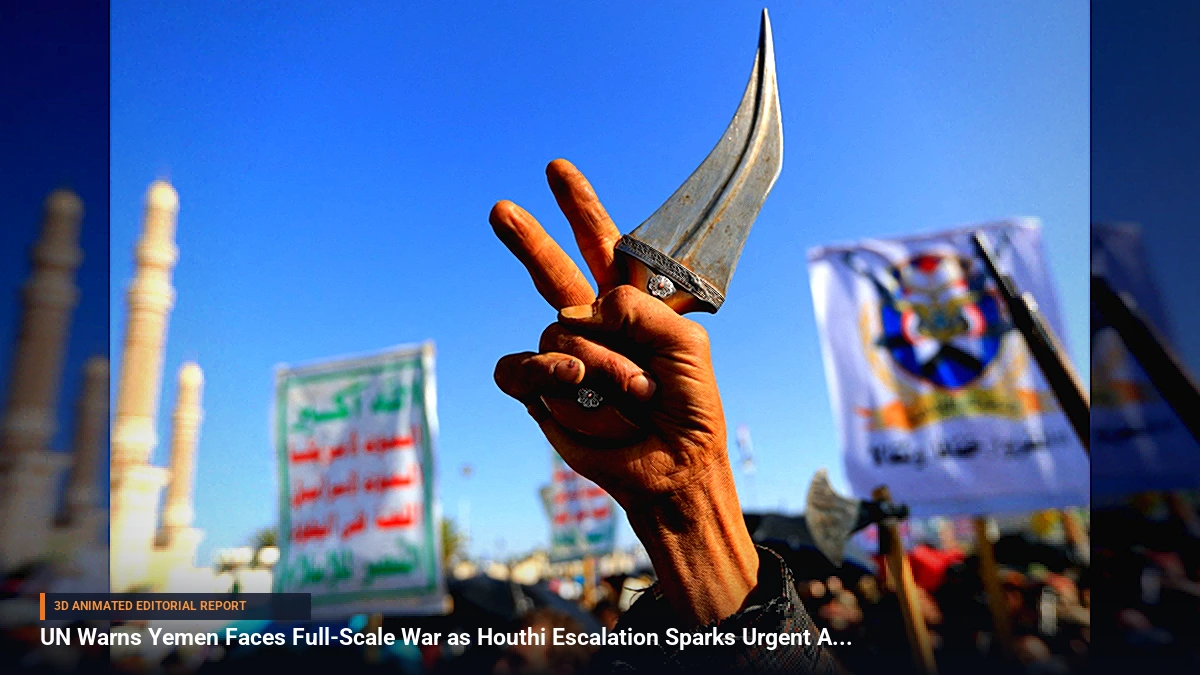
What Happened: The Core Developments
The fragile peace that once offered a glimmer of hope to millions in the war-torn nation has dramatically fractured. According to official briefings, the United Nations special envoy has officially warned that Yemen has returned to full-scale war, citing a sharp and alarming resurgence in hostilities.
At the center of this deteriorating landscape is a profound intensification of armed conflict between Yemeni government forces and the Houthi rebel movement. The escalation has dismantled the remnants of previous truces, pushing frontlines back into active, high-intensity combat. In response to the rapid deterioration, both Saudi Arabia and Yemen's internationally recognized government have formally appealed to the UN Security Council, demanding immediate and robust international action to counter the Houthi escalation and prevent a deeper humanitarian catastrophe.
Background & Key Context
Yemen has endured more than a decade of devastating conflict that began when Houthi rebels seized control of the capital, Sanaa, prompting a regional military intervention led by Saudi Arabia in 2015. Over the years, the conflict devolved into one of the world's worst humanitarian crises, marked by economic collapse, widespread food insecurity, and the fragmentation of state institutions.
While a UN-brokered truce in 2022 drastically reduced nationwide fighting and opened doors for diplomatic negotiations, a sustainable political settlement remained elusive. Sporadic clashes and deep-seated political mistrust continuously threatened the fragile calm. The latest breakdown signals that the diplomatic tracks have effectively stalled, giving way once again to military logic on the ground.
Key Takeaways
- Return to Active Conflict: The UN envoy confirmed that Yemen has officially regressed into full-scale war following a series of escalating military engagements.
- Intensified Clashes: Frontline fighting between Yemeni government troops and Houthi combatants has surged significantly across contested regions.
- Diplomatic Appeals: Saudi Arabia and Yemen's internationally recognized government have jointly petitioned the UN Security Council to take immediate steps.
- Urgent Need for Dialogue: Despite the bleak security outlook, international mediators continue to emphasize that a political solution remains the only viable path forward.
- Regional and Global Stakes: The renewed conflict threatens not only local stability but also vital regional security corridors and international shipping lanes.
Impact, Analysis & Global/National Reactions
The declaration of a return to full-scale war carries profound implications for regional stability and international diplomacy. Analysts note that the breakdown of peace efforts severely tests the resolve of regional powers who have sought to de-escalate tensions in recent years.
The joint appeal by Riyadh and the Yemeni government underscores the immense pressure facing regional stakeholders. Governments and international bodies are increasingly worried that a prolonged military campaign will trigger another wave of mass displacement and exacerbate acute food insecurity. Diplomatic observers emphasize that without unified international pressure from the UN Security Council, the conflict risks drawing in broader regional proxies, further destabilizing the strategic Arabian Peninsula.
What's Next: Looking Ahead
All eyes now turn to the UN Security Council in New York, where diplomats are under mounting pressure to formulate a cohesive response. Stakeholders anticipate emergency consultations to address the Houthi escalation and evaluate potential diplomatic or economic countermeasures.
Simultaneously, international mediators are working frantically behind the scenes to prevent total diplomatic abandonment, exploring whether localized ceasefires can be salvaged before the violence becomes entirely entrenched. The coming weeks will prove critical in determining whether the international community can pivot the warring parties back from the brink of prolonged devastation.



Be the first to comment
Start a useful conversation around this story.