
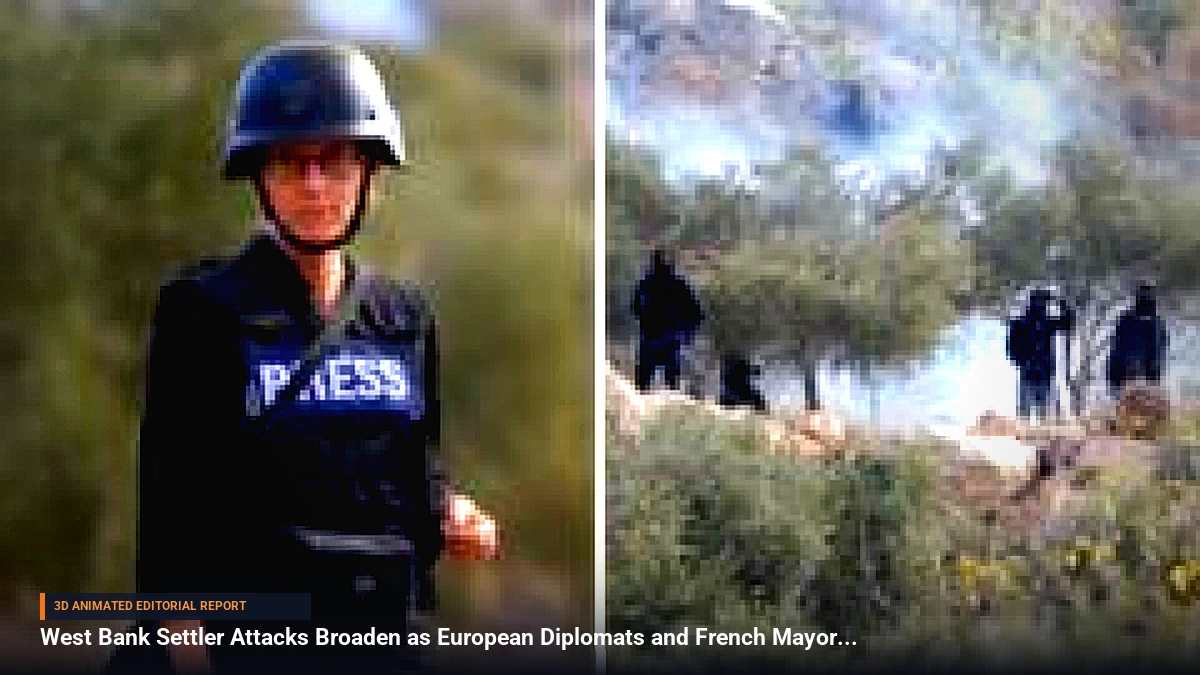
What Happened: The Core Developments
The annual olive harvest in the occupied West Bank has transformed into a theatre of intense violence, culminating in a direct assault on international delegates. A group of European diplomats, alongside a visiting French mayor and the archbishop of Cambrai, were targeted by masked Israeli settlers in the West Bank town of Taybeh.
During the melee, Bernard Baudoux, the mayor of the French commune of Aulnoye-Aymeries, was assaulted and knocked to the ground while wearing his official red, white, and blue sash. The delegation was attempting to safely enter a vehicle bearing diplomatic plates when the confrontation escalated. The violent episode follows a string of similar disruptions across the territory, which have severely impacted local agricultural communities and foreign observers alike.
Background & Key Context
The olive harvest is a vital cultural and economic pillar for Palestinian communities in the West Bank, but it has historically served as a flashpoint for friction and territorial assertion by hardline Israeli settlers. In recent weeks, however, the violence has reached unprecedented levels of coordination and brutality.
According to data from the Palestinian health ministry, at least four individuals have been killed and over 100 others injured since the harvest season commenced. Human rights organizations and local activists have consistently accused Israeli security forces of maintaining a passive stance, routinely failing to intervene or arrest perpetrators wielding clubs, rocks, and firearms.
In the days immediately preceding the diplomatic incident, widespread assaults were documented in towns such as Abu Falah and Turmus Ayya. Among the injured was Washington Post photographer Heidi Levine, who was beaten by settlers while covering the destruction of Palestinian groves and vehicles.
Key Takeaways
- Targeting of Officials: European diplomats, a French mayor (Bernard Baudoux), and the archbishop of Cambrai were physically assaulted in Taybeh.
- Rising Casualties: The Palestinian health ministry reports at least four deaths and more than 100 injuries since the harvest began.
- Broader Targeting: Media personnel, including Washington Post photographer Heidi Levine, have been injured in coordinated assaults.
- Destruction of Livelihoods: Settlers have systematically set fire to Palestinian olive groves, vehicles, and agricultural infrastructure.
- International Fallout: European officials have explicitly linked the violence to Israel's expanding settlement policies, prompting fresh demands for diplomatic penalties.
Impact, Analysis & Global/National Reactions
The expansion of settler violence to include foreign diplomats and elected municipal leaders from Europe marks a significant diplomatic escalation. European foreign ministries have expressed profound outrage over the breach of diplomatic security and the physical targeting of their representatives.
Belgium’s foreign minister strongly condemned the assault, tying the deteriorating security situation directly to Israel’s "illegal settlement policy" and urging the European Union to enact further sanctions against violent actors. France has similarly demanded immediate accountability from Israeli authorities regarding what Paris termed "criminal violence" against its visiting public servants.
Analysts note that while previous harvest seasons witnessed systemic intimidation of Palestinian farmers, the brazenness of targeting international figures indicates a growing impunity among extremist settler factions operating within the occupied territories.
What's Next: Looking Ahead
Pressure is mounting on European Union institutions to move beyond verbal condemnations and implement concrete economic and travel restrictions on prominent instigators of West Bank violence. Meanwhile, local Palestinian farmers face the daunting prospect of completing their harvest under heavy protection or abandoning their generational lands altogether, risking severe economic disenfranchisement. Diplomatic channels between European capitals and Israeli authorities remain strained as foreign missions demand concrete security guarantees and transparent investigations into the attacks.

Be the first to comment
Start a useful conversation around this story.