
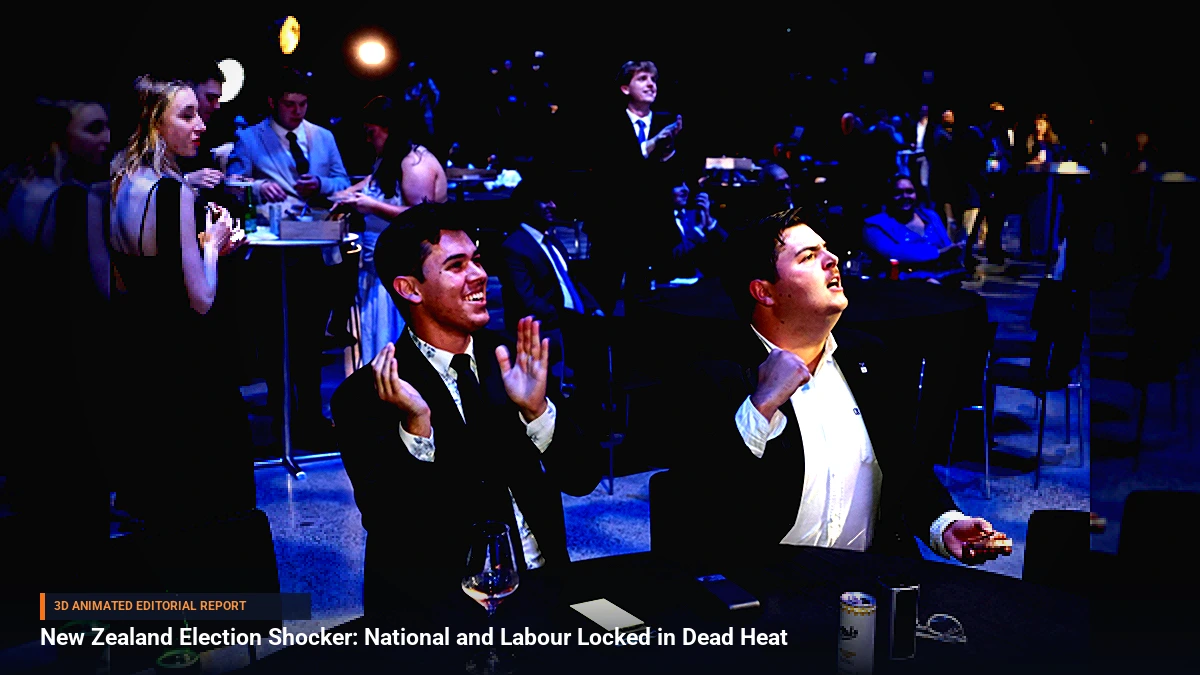
What Happened: The Core Developments
The political landscape of Aotearoa New Zealand has been thrown into a state of high suspense as preliminary and near-complete vote counts indicate a dramatic dead heat between the governing National Party and the opposition Labour Party. Election night tallies show both major political institutions hovering just short of the crucial 30 percent threshold of the popular vote.
With neither of the traditional powerhouses securing a decisive mandate to govern alone, the electoral outcome reflects a fragmented electorate. The knife-edge margins mean that the final composition of parliament will rely heavily on specialized coalition arrangements, signaling a dramatic shift away from single-party rule toward intense legislative negotiation.
Background & Key Context
This high-stakes electoral showdown arrives against a backdrop of deep economic anxiety felt globally and domestically. New Zealanders, much like voters across Western democracies, have grappled with soaring living costs, inflationary pressures, and housing affordability crises over recent years.
Historically, New Zealand operated under a traditional two-party system until the adoption of the Mixed Member Proportional (MMP) voting system in 1996. MMP was explicitly designed to prevent single-party dominance and ensure broader representation, routinely empowering minor factions. However, the current convergence of both major parties near the 30 percent mark represents an extraordinary erosion of their traditional voter bases, setting the stage for one of the most complex government formations in recent history.
Key Takeaways
- Neck-and-Neck Race: Both the National and Labour parties are virtually tied in early and near-complete vote counts.
- Shrinking Majorities: Each major party secured just under 30 percent of the national popular vote, demonstrating a significant shift in voter allegiance.
- Kingmaker Era: Neither major party possesses the numbers to govern alone, placing minor political entities in a powerful negotiating position.
- Cost-of-Living Focus: The tight race mirrors global voter discontent, driven heavily by persistent inflation and economic pressures.
- MMP Dynamics: New Zealand's proportional representation framework will dictate the formation of the next government through multi-party compromises.
Impact, Analysis & Global/National Reactions
Political analysts note that the fractionalized result underscores widespread public fatigue with conventional economic management. The inability of either major force to command a clear majority highlights a broader crisis of confidence among the electorate.
Party leaders have moved quickly to rally their bases and signal openness to negotiations. Leadership figures from both sides emphasized resilience, with Labour figures maintaining that the party remains a central pillar of the nation's future. Meanwhile, financial markets and policy stakeholders are closely watching the coalition arithmetic, as minor parties holding the kingmaker leverage could demand substantial policy concessions on taxation, environmental regulations, and social spending in exchange for their parliamentary support.
What's Next: Looking Ahead
As election officials finalize special votes and overseas ballots, attention shifts immediately to backroom coalition talks. The coming days and weeks will involve intense bargaining between party whips and minor faction leaders to forge a stable administration.
Observers anticipate that official coalition agreements could take weeks to formalize. Until then, New Zealand's governance enters a transitional phase where minor party influence will effectively steer the legislative agenda for the next parliamentary term.






Be the first to comment
Start a useful conversation around this story.