
What Happened: The Core Developments
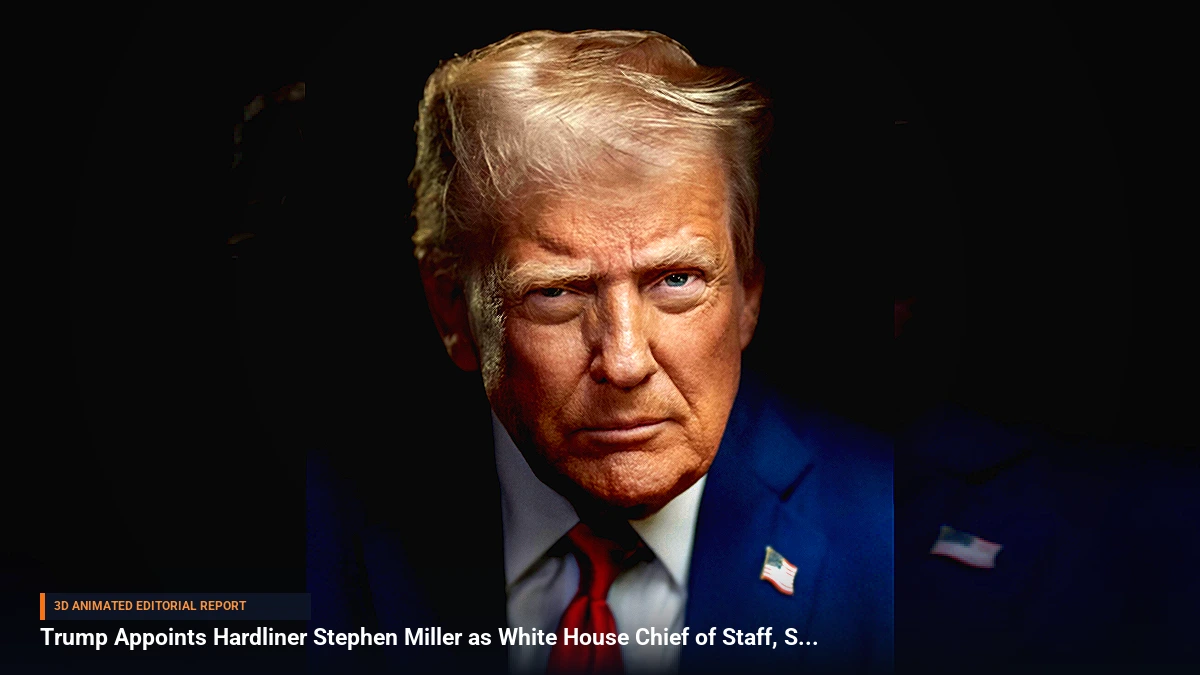
In a sudden and high-stakes political shake-up, US President Donald Trump announced via his social media platform that Stephen Miller will assume the role of White House chief of staff. Miller takes over the critical West Wing post from Susie Wiles, whose departure was confirmed alongside the appointment. Known widely as the chief architect of Trump’s hardline immigration policies, Miller's ascension marks a significant pivot toward an aggressively partisan administration posture, coming directly in the wake of the 2026 US midterm elections.
Background & Key Context
Stephen Miller has long been one of Donald Trump's most trusted and ideologically steadfast advisers, specializing in hardline nationalist policy implementation, most notably spearheading sweeping immigration crackdowns. His previous tenures demonstrated a willingness to utilize executive authority to enforce stringent border controls and reshape federal policy frameworks. The transition from Susie Wiles—who was often viewed as a stabilizing, traditional operational manager—to a firebrand loyalist like Miller signals an intentional shift in presidential strategy as the administration prepares to engage an increasingly hostile legislative branch.
Key Takeaways
- Leadership Transition: Stephen Miller replaces Susie Wiles as White House chief of staff following an abrupt announcement by President Trump.
- Policy Continuity and Escalation: Miller is best known as the primary architect behind the administration's aggressive immigration and border enforcement crackdowns.
- Legislative Confrontation: The appointment signals a combative approach by the executive branch toward congressional Democrats and political opponents following the midterm elections.
- Sharp Political Backlash: Democratic lawmakers swiftly condemned the selection, labeling Miller a xenophobe and hatemonger.
- Global Scrutiny: International observers and foreign policy analysts have begun evaluating how Miller's hardline record might influence broader diplomatic relations and international trade postures.
Impact, Analysis & Global/National Reactions
The reaction to Miller's promotion was immediate and polarized. Democratic lawmakers launched scathing criticisms against the appointment, characterizing it as dangerous and divisive. Critics denounced Miller as a "xenophobe" and "hatemonger," arguing that elevating a polarizing figure deepens political fractures rather than fostering national consensus.
Simultaneously, the appointment has drawn analytical commentary from international observers regarding potential foreign policy implications. Analysts note that Miller's historical stance on international trade and economic policy—including past criticisms leveled against nations like India over their energy procurement and commercial arrangements with Russia—could reintroduce friction into bilateral diplomatic channels.
What's Next: Looking Ahead
As Stephen Miller settles into his new capacity as chief of staff, Washington braces for a period of heightened executive-legislative gridlock. Observers anticipate immediate clashes over upcoming federal funding bills, immigration legislation, and oversight investigations. The administration's pivot toward a more combative governance style will likely dictate the political landscape heading into the next legislative cycle, forcing stakeholders and foreign governments to recalibrate their engagement strategies with the White House.





Be the first to comment
Start a useful conversation around this story.