
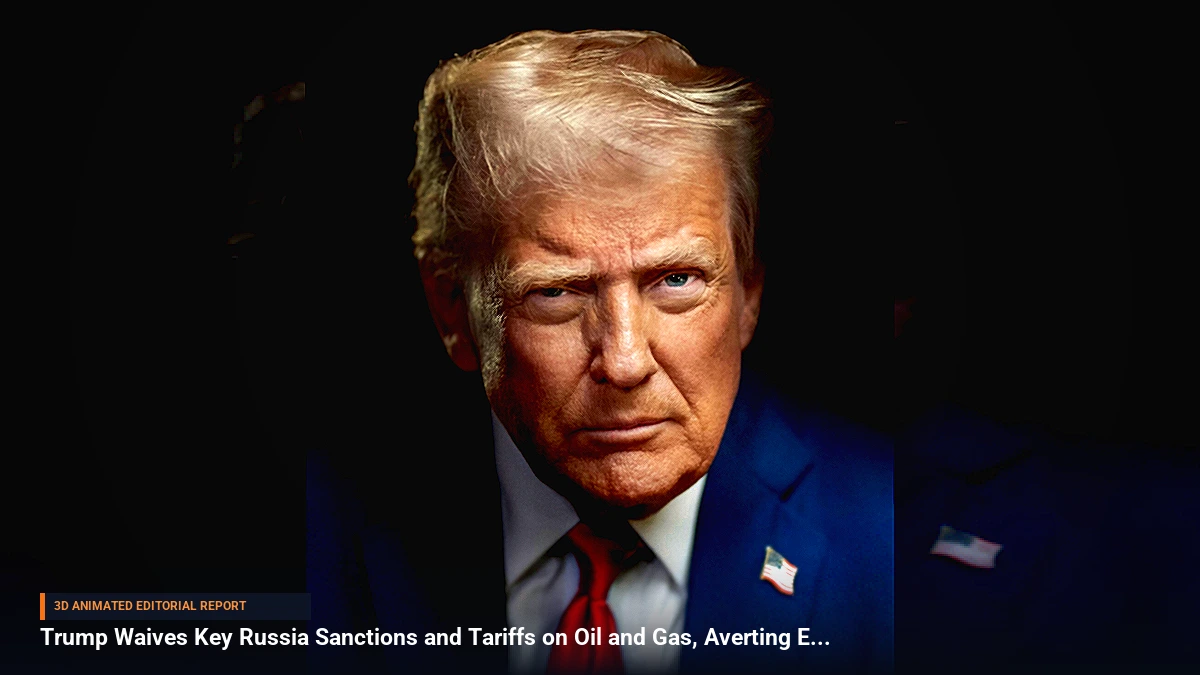
What Happened: The Core Developments
In an unexpected and decisive shift in American foreign and economic policy, US President Donald Trump chose to waive a substantial package of Russia-related sanctions and secondary tariff measures. The punitive provisions—originally engineered to penalize Moscow for its ongoing military campaign in Ukraine—carried threats of steep duties, reaching up to 100% on major global importers of Russian crude oil and natural gas.
The executive intervention directly targets statutory measures that were slated to take effect under recent congressional legislation. By halting these enforcement mechanisms, the White House has defused an imminent trade standoff, shielding critical trading partners such as India and China from severe secondary economic penalties that threatened to disrupt global commodity markets.
Background & Key Context
The suspension of these restrictions marks a sharp pivot in executive implementation versus legislative intent. Lawmakers in Washington had codified stringent penalties to isolate the Russian energy sector completely. However, the enforcement timeline coincided with a deteriorating diplomatic relationship between Washington and Kyiv, highlighted by an escalating public and private rift with Ukrainian President Volodymyr Zelenskyy.
President Trump defended his decision to sideline parts of the newly enacted congressional framework by pointing directly to core domestic and global economic imperatives. Administration officials stressed that aggressive enforcement of secondary boycotts on Russian petroleum would destabilize global energy markets, trigger severe supply shocks, and inflict inflationary pain on American consumers at the pump.
Key Takeaways
- Executive Relief: President Trump waived key Russia-related sanctions and tariff threats concerning international oil and gas transactions.
- Major Importers Shielded: The policy shift averts heavy secondary tariffs—previously projected as high as 100%—on vital emerging economies including India and China.
- Strategic Justification: The White House defended the move by asserting that stringent enforcement directly harms US national interests and threatens global energy price stability.
- Political Friction: The decision runs counter to strict legislative mandates passed by Congress and unfolds against the backdrop of a widening diplomatic rift with Ukrainian President Volodymyr Zelenskyy.
- Global Market Reaction: International energy markets responded to the averted supply bottleneck, while foreign trade partners noted the dramatic reduction in geopolitical friction.
Impact, Analysis & Global/National Reactions
The policy reversal has triggered immediate ripple effects across international capitals and commodity trading floors. Emerging market powerhouses like India and China, which have maintained steady energy procurement channels with Moscow despite Western pressures, secured crucial breathing room from potential punitive tariffs.
International analysts note that the move underscores a pragmatic re-prioritization by the White House, favoring economic insulation and energy cost management over rigid geopolitical alignment. Conversely, critics and staunch congressional hawks argue that the executive waivers undermine unified Western deterrence against Moscow and signal a fracturing of transatlantic resolve regarding the ongoing conflict in Ukraine.
What's Next: Looking Ahead
As the dust settles on the executive order, lawmakers on Capitol Hill are expected to challenge the administration's legal authority to indefinitely halt provisions mandated by statute. Congressional pushback could materialize in upcoming committee hearings, where legislators may demand tighter accountability regarding presidential waiver powers.
For global energy markets, the immediate threat of secondary tariff disruptions has receded, allowing refiners in Asia to plan medium-term imports with greater certainty. However, the evolving friction between the executive branch and Congress—compounded by the strain in US-Ukraine relations—suggests that energy security and foreign policy will remain volatile flashpoints in Washington.


Be the first to comment
Start a useful conversation around this story.