
What Happened: The Core Developments
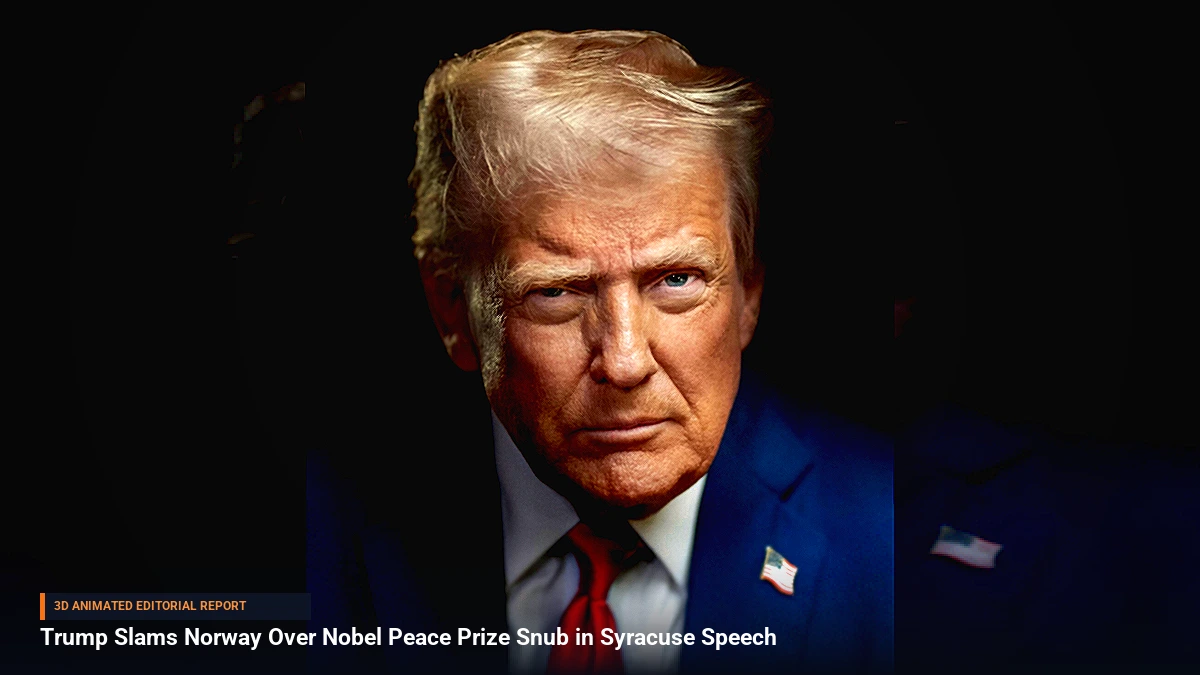
During a political rally in Syracuse, New York, aimed at supporting Republican candidates, President Donald Trump dedicated a significant portion of his address to airing grievances regarding the Nobel Peace Prize. Trump sharply criticized the Norwegian Nobel Committee, declaring that Norway carries an "indelible stain" for failing to award him the prestigious international accolade.
The public complaints highlighted the ongoing friction between the U.S. administration's perception of its diplomatic achievements and the traditional criteria upheld by the Oslo-based committee. Trump asserted that his administration successfully resolved multiple global conflicts and stopped major escalations, making the committee's omission difficult to accept.
Background & Key Context
International recognition and the Nobel Peace Prize have frequently emerged as talking points in political discourse. While various leaders and foreign officials have historically submitted nominations for U.S. presidents—with recent headlines noting repeated nominations from international figures—the Norwegian Nobel Committee operates independently under strict statutes, evaluating candidates based on contributions to fraternity among nations, the reduction of standing armies, and the promotion of peace congresses.
Trump’s latest complaints arrived during a turbulent international landscape, notably intersecting with a year marked by heightened strategic confrontation and military engagement involving Iran. Observers and critics have frequently pointed to the stark contrast between claims of conflict resolution and the simultaneous escalation of hostilities in the Middle East.
Key Takeaways
- Public Grievance: Donald Trump openly criticized Norway and the Nobel Committee during a campaign speech in Syracuse, New York.
- Controversial Phrasing: The U.S. president asserted that Norway holds an "indelible stain" for not granting him the peace prize.
- Geopolitical Backdrop: The remarks coincided with a year characterized by significant geopolitical tensions and military conflict involving Iran.
- Contrasting Narratives: While supporters cite various diplomatic efforts and foreign policy interventions, critics emphasize ongoing global conflicts that challenge the narrative of comprehensive peace.
Impact, Analysis & Global/National Reactions
Reactions to the president's statements reflect deeply polarized viewpoints on international diplomacy and accountability. Supporters often champion a non-interventionist or disruptive approach to foreign policy as a catalyst for breaking prolonged diplomatic stalemates. However, foreign policy analysts and international observers point out that the Nobel Committee's criteria require measurable, long-term multinational cooperation and peace-building rather than unilateral declarations.
Institutional responses from Oslo have historically remained muted, adhering to a strict policy of non-commentary regarding individual nominations and public complaints. Meanwhile, political commentators note that leveraging international snubs during domestic rallies serves to energize political bases by framing the administration as an unrecognized force against a biased global establishment.
What's Next: Looking Ahead
As the political calendar progresses, the intersection of foreign policy achievements and domestic campaigning will likely remain a central theme. Future diplomatic engagements and the ongoing management of Middle Eastern stability will continue to shape how political rhetoric is received both domestically and abroad, keeping the debate over international recognition alive in the public sphere.



Be the first to comment
Start a useful conversation around this story.