
What Happened: The Core Developments
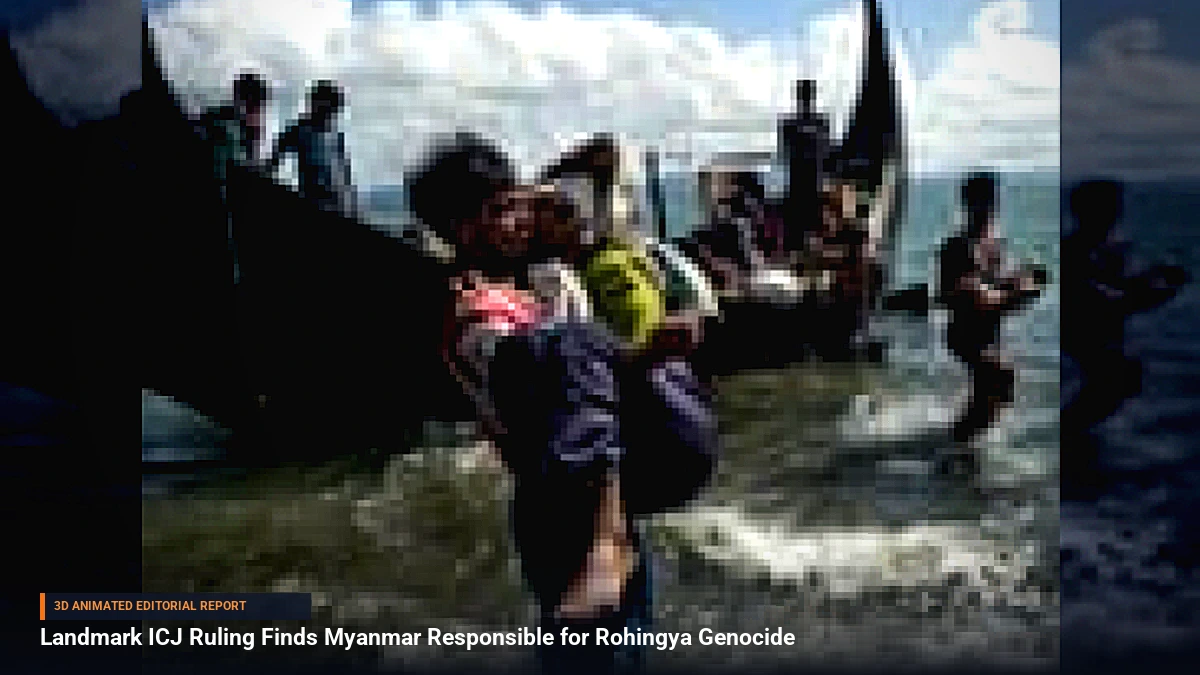
The International Court of Justice (ICJ) delivered a historic and legally binding judgment declaring that Myanmar committed genocide against its Rohingya minority. Announced at the Peace Palace in The Hague, the ruling brings formal international legal accountability to a brutal state-sponsored campaign that targeted the vulnerable population.
This decision marks a groundbreaking milestone in international law: the first time the ICJ has ever found a sovereign state directly responsible for genocide under the 1948 Genocide Convention. The court's findings validate years of relentless investigative reporting, human rights documentation, and survivor testimonies detailing mass atrocities.
Background & Key Context
The historic legal proceedings stem from a case filed at the ICJ in 2019 by The Gambia, a West African nation that stepped forward to bring the complaint under the 1948 Genocide Convention. The lawsuit specifically targeted the 2017 military crackdown in northern Rakhine State, a campaign of systematic violence that left more than 10,000 Rohingya dead and forced approximately 700,000 survivors to flee across the border into makeshift refugee camps in Bangladesh.
For nearly a decade, the scattered Rohingya diaspora and refugees residing in crowded camps have awaited formal recognition of the atrocities they suffered. The ICJ's judgment addresses the deliberate intent by Myanmar's military apparatus to destroy, in whole or in part, the mostly Muslim minority group through widespread killings, sexual violence, and forced displacement.
Key Takeaways
- Historic Precedent: The ruling represents the first time the ICJ has held a recognized nation-state legally accountable for genocide.
- Origin of the Case: The legal action was initiated in 2019 by The Gambia, championing international human rights enforcement on behalf of the Rohingya.
- The Catalyst Events: The judgment focuses heavily on the catastrophic 2017 military operations in northern Rakhine State.
- Devastating Toll: Official findings established that over 10,000 Rohingya were killed, with roughly 700,000 displaced into Bangladesh.
- Global Significance: The landmark decision sets a profound legal benchmark for how international tribunals evaluate and prosecute state-level atrocities.
Impact, Analysis & Global/National Reactions
The delivery of the verdict sparked emotional scenes, with tears shed in the courtrooms of The Hague and triumphant celebrations breaking out across refugee settlements in Bangladesh. Survivors and international human rights advocates hailed the decision as a momentous vindication after years of seeking global justice.
Legal experts emphasize that while the ICJ ruling carries immense moral and legal weight, enforcing compliance remains a complex challenge. Because the court lacks its own enforcement arm, the onus shifts to the United Nations Security Council and the international community to exert diplomatic, economic, and political pressure on Myanmar's leadership.
What's Next: Looking Ahead
Following this landmark judgment, international bodies and member states face mounting pressure to determine concrete remedial measures. Analysts note that the ruling will likely serve as a vital reference point for ongoing and future international justice initiatives, transforming how global institutions hold rogue state actors accountable for systematic human rights violations.




Be the first to comment
Start a useful conversation around this story.