
What Happened: The Core Developments
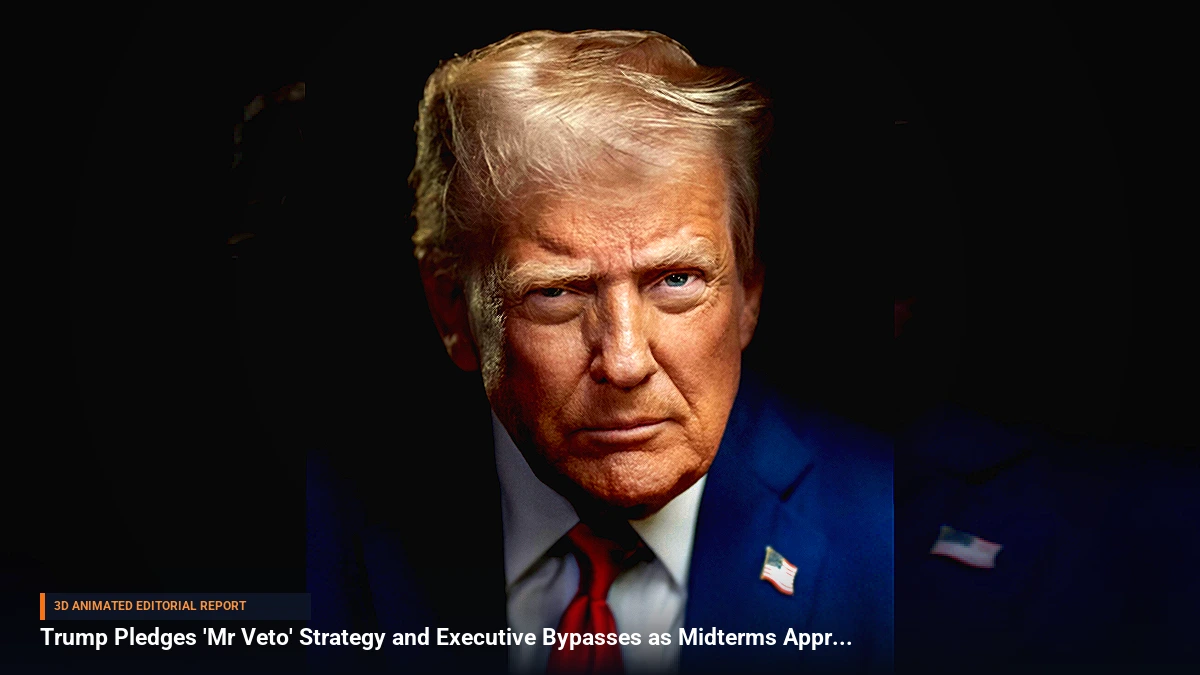
As the political landscape braces for the outcome of the United States midterm elections, former President Donald Trump has outlined a combative governance strategy in the event of a Democratic congressional takeover. During the final stretch of campaigning—marked by high-energy rallies across crucial battlegrounds like Iowa and Kansas—Trump explicitly stated that he is prepared to lean heavily on the executive branch's constitutional checks, famously declaring he may become "Mr Veto" to block opposition-led legislation.
Simultaneously, reports from inside the administration indicate that the White House has mapped out comprehensive pathways to govern largely without Capitol Hill. By leveraging executive actions, regulatory reconfigurations, and emergency powers, the executive branch is positioning itself to bypass legislative stalemates should Democrats capture either chamber of Congress.
Background & Key Context
Midterm elections traditionally serve as a referendum on the sitting administration, frequently resulting in a divided government where the opposing party captures the House of Representatives, the Senate, or both. Historically, this dynamic breeds deep partisan gridlock, forcing the executive and legislative branches into prolonged budget battles and legislative standoffs.
However, modern American politics has seen an aggressive expansion of unilateral executive authority as a workaround for congressional inaction. Executive orders, administrative rulemakings, and the strategic deployment of the presidential veto have transformed from secondary tools into primary mechanisms for executing a domestic agenda when legislative compromise breaks down. Trump's latest remarks underscore a growing reliance on these executive levers as a deliberate governance model rather than an absolute last resort.
Key Takeaways
- The 'Mr Veto' Stance: Donald Trump has vowed to actively use his veto power to block any progressive or opposition legislation passed by a potential Democratic majority.
- Contingency Planning: The White House has formulated strategic blueprints to enact policies and manage governance primarily through executive actions if Congress falls to the opposition.
- Intense Final Campaigning: Final pre-election rallies in key heartland states like Iowa and Kansas highlighted the high-stakes effort by Republicans to maintain control of the legislative branch.
- Constitutional Friction: A shift toward unilateral executive governance promises to heighten legal and institutional clashes between the White House and Capitol Hill.
Impact, Analysis & Global/National Reactions
Political analysts note that a strategy reliant on executive workarounds risks inviting immediate legal challenges from state attorneys general and advocacy groups. While utilizing the veto prevents unwanted legislation from becoming law, governing without Congress can push the boundaries of executive authority, inviting intense judicial scrutiny.
Constitutional scholars point out that while Article II of the Constitution grants broad enforcement powers, leaning excessively on administrative bypasses can further polarize the electorate and weaken the traditional checks and balances designed by the framers. Stakeholders across financial markets and industry sectors are closely monitoring these developments, recognizing that sudden shifts in administrative rules and regulatory enforcement can dramatically alter business environments overnight.
What's Next: Looking Ahead
With the midterm campaigns concluding, all eyes turn to the certified election results and the final balance of power in Congress. Should Democrats secure a majority, the nation faces an immediate test of institutional endurance as the administration prepares to deploy its executive roadmap.
Upcoming federal court challenges, potential government funding showdowns, and early legislative tests will quickly reveal whether the executive branch can successfully govern around a hostile Congress or if the checks and balances of Capitol Hill will hold firm against unilateral administrative action.



Be the first to comment
Start a useful conversation around this story.