
What Happened: The Core Developments
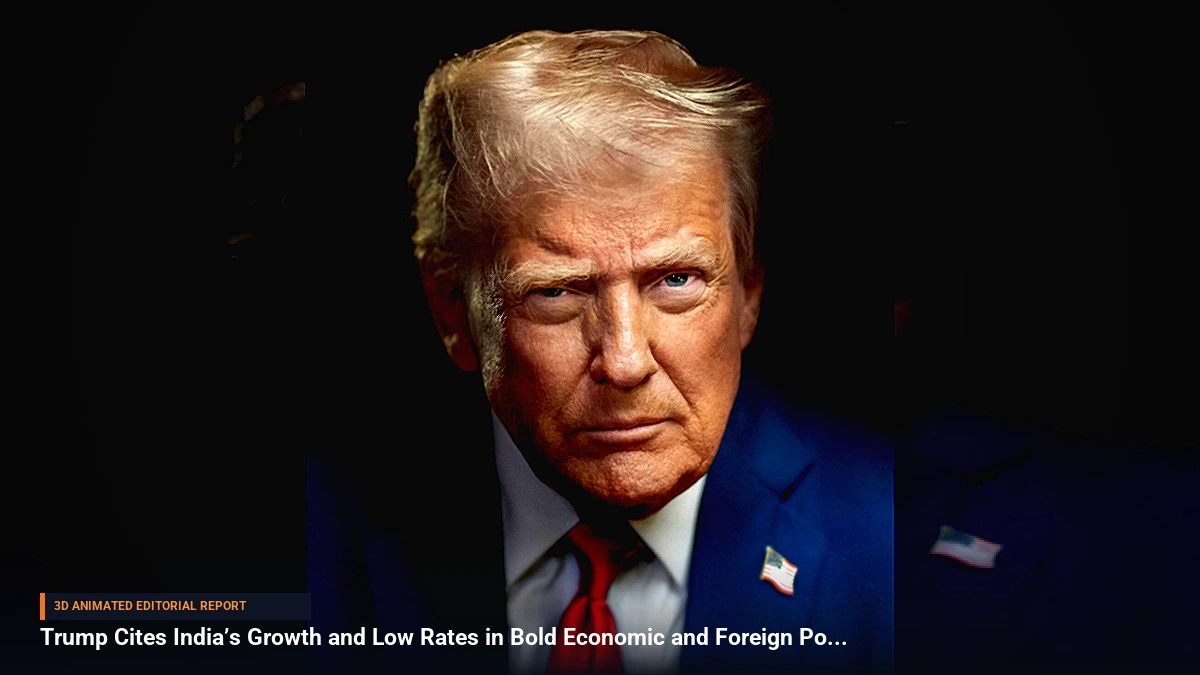
Recent statements and policy postures from Donald Trump have sparked widespread international debate across financial markets and geopolitical circles. In a high-profile economic critique, Trump asserted that the United States could realistically achieve staggering economic growth figures of 14% to 15%—or even up to 20% in aggressive projections—by modeling aspects of its monetary approach after developing powerhouses like India. Highlighting India's steady economic trajectory and prevailing low interest rates, Trump utilized the comparison to ramp up pressure on domestic monetary institutions regarding high borrowing costs.
Simultaneously, international diplomats are parsing through complex strategic maneuvers on the global stage. New Delhi has officially acknowledged and taken note of discussions surrounding a potential high-level trilateral summit involving Donald Trump, Chinese President Xi Jinping, and Russian President Vladimir Putin, though foreign policy officials noted they are awaiting official, granular details. In the Middle East, Trump addressed long-term regional stabilization, suggesting that a prospective diplomatic arrangement with Iran could endure for two decades while outlining ambitious, hardline objectives concerning Tehran’s leadership structure.
Background & Key Context
The invocation of developing market models marks a distinct pivot in domestic American political discourse. Historically, U.S. economic benchmarks have relied on domestic productivity, technological innovation, and Federal Reserve adjustments rather than external developing benchmarks. India’s steady post-pandemic economic growth, hovering consistently around the 7% mark, has increasingly captured the attention of Western policy analysts searching for formulas to combat sluggish growth and inflationary pressures.
On the diplomatic front, the concept of a trilateral or multi-polar superpower summit reflects ongoing friction in global alliances. The interplay between Washington, Beijing, and Moscow remains the central axis of modern geopolitics. Meanwhile, U.S.-Iran relations remain heavily fractured, with Washington frequently shifting between strict deterrence, economic blockades, and speculative long-term diplomatic frameworks.
Key Takeaways
- Economic Comparison: Trump cited India's strong economic growth and lower interest rate environment as a blueprint for potential double-digit U.S. economic expansion.
- Monetary Policy Critique: The remarks serve as a direct critique of current U.S. central bank interest rate policies and domestic financial constraints.
- Trilateral Summit Radar: India has taken formal notice of discussions surrounding a potential Trump-Xi-Putin summit, though strategic analysts remain cautious regarding its feasibility.
- Middle East Strategy: Trump stated that a future framework deal with Iran could span 20 years, pairing diplomatic overtures with aggressive rhetoric on regional leadership.
- Global Reactions: International stakeholders are weighing the feasibility of these ambitious economic targets against mainstream macroeconomic consensus.
Impact, Analysis & Global/National Reactions
Economists have approached Trump’s growth projections with extreme caution. Mainstream macroeconomic forecasters argue that transitioning a mature, multi-trillion-dollar Western economy to double-digit growth rates ignores fundamental structural limitations, labor supply realities, and debt burdens. However, political analysts note that referencing fast-growing emerging markets like India effectively highlights public frustration with persistent domestic inflation and high borrowing costs.
In foreign capitals, the response to proposed trilateral superpower engagements has been characterized by watchful waiting. Strategic observers point out that personalized diplomacy between Washington, Beijing, and Moscow faces immense structural hurdles due to ongoing trade wars, security pacts, and territorial disputes. Regarding Iran, regional experts remain skeptical about whether a 20-year sustainable accord can bridge the fundamental ideological gaps dividing Washington and Tehran.
What's Next: Looking Ahead
As domestic political campaigns and policy debates evolve, market watchers will closely monitor how central bankers respond to ongoing political pressure regarding interest rate adjustments. Globally, diplomats will be tracking whether the rumored Trump-Xi-Putin summit materializes into concrete talks or remains speculative rhetoric. In the Middle East, monitoring agencies will watch for any shifts in Iranian compliance, enforcement of economic blockades, and whether formal negotiations toward a long-term framework are initiated.


Be the first to comment
Start a useful conversation around this story.