
What Happened: The Core Developments
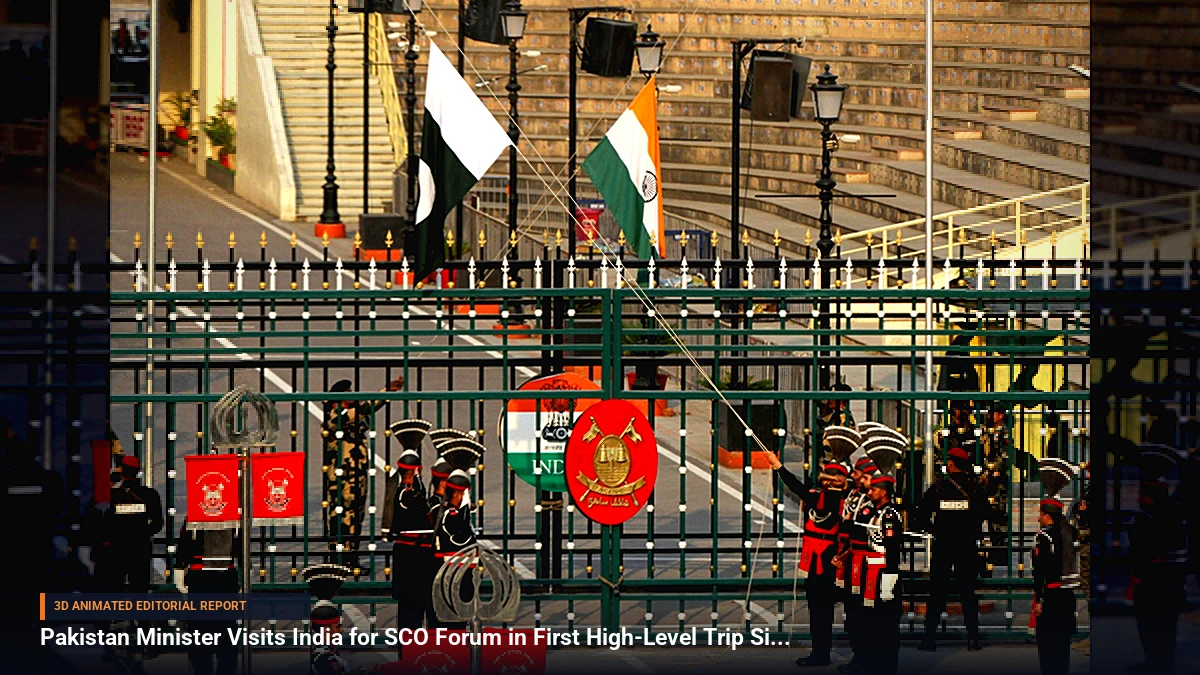
In a landmark diplomatic moment, a Pakistani cabinet minister arrived in New Delhi to participate in the Shanghai Cooperation Organisation (SCO) Civilisational Dialogue Forum. This engagement represents the first official ministerial-level visit from Pakistan to India since the armed conflict between the two nuclear-armed neighbors in 2025.
While the visit is formally framed under the multilateral umbrella of the SCO rather than a bilateral outreach, it has instantly triggered intense political and public interest. Security protocols and travel permissions surrounding the visiting minister have been tightly regulated. Indian authorities granted the Pakistani official clearance to visit prominent historical landmarks such as the Taj Mahal in Agra and Humayun’s Tomb in Delhi, though a requested trip to the historic Nizamuddin Dargah shrine was reportedly denied.
Despite the physical presence of a Pakistani minister on Indian soil, New Delhi has drawn a strict line between multilateral obligations and bilateral normalization. Indian government spokespersons explicitly stated that there has been "absolutely no change" in the country’s core positions regarding long-standing bilateral contentions, most notably the Indus Water Treaty.
Background & Key Context
Bilateral ties between India and Pakistan have remained in a deep freeze following the escalations of 2025. Tensions reached a boiling point after the April 22 Pahalgam terror attack, which tragically claimed 26 lives. In response to the attack and what New Delhi termed persistent cross-border terrorism, the Indian government took the unprecedented punitive measure of suspending the decades-old Indus Water Treaty—a landmark water-sharing pact that had survived multiple previous military conflicts.
Simultaneously, the diplomatic apparatus was heavily scaled back, and direct political dialogues were suspended. The current SCO forum, hosted by India under the framework of cultural and civilisational dialogue, has forced a reluctant resumption of high-level physical proximity, even if both Islamabad and New Delhi continue to insist that the visit does not signal an immediate thaw in bilateral diplomacy.
Key Takeaways
- First Ministerial Visit: The arrival of the Pakistani minister marks the initial high-level governmental visit to India since the 2025 war.
- Strictly Multilateral Scope: Both nations emphasize that the visit is confined to the SCO forum and does not represent formal bilateral peace talks.
- No Movement on Water Pact: India reaffirmed its rigid stance that the suspension of the Indus Water Treaty remains entirely in effect following the 2025 Pahalgam attack.
- Controlled Itinerary: The visiting dignitary received permissions for cultural sites like the Taj Mahal and Humayun’s Tomb, but faced restrictions on religious site visits.
- Domestic Political Friction: The Indian opposition Congress party has sharply criticized the Centre, questioning the wisdom of hosting a representative from a state accused of sponsoring terror.
Impact, Analysis & Global/National Reactions
The visit has exposed deep domestic political fault lines within India. The main opposition party, the Indian National Congress, launched a stinging critique against the ruling administration, publicly questioning the logic of extending hospitality to a Pakistani representative. Critics raised slogans echoing popular sentiment: “Why invite a country that sponsors terror?”
Conversely, geopolitical analysts note that India's willingness to host the minister under the SCO framework demonstrates its commitment to multilateral platforms in Central and South Asia, even when dealing with hostile neighbors. Prime Minister Narendra Modi, speaking at the inauguration of the SCO Civilisational Dialogue Forum, emphasized that cultural connections remain the strongest guarantee of global peace and that shared civilisational knowledge should be harnessed collectively.
Meanwhile, the visiting Pakistani minister struck an outwardly optimistic tone regarding regional stability, remarking to reporters that “the region is in flux, and all relationships will improve.” However, given the hardline positions articulated by New Delhi regarding counter-terrorism and water security, foreign policy experts view these remarks as diplomatic posturing rather than substantive policy shifts.
What's Next: Looking Ahead
As the SCO forum concludes, all eyes remain on whether this multilateral interaction can serve as a stepping stone for backchannel diplomacy or if it will remain an isolated event. Indian policymakers have made it clear that any future normalization of ties is strictly contingent upon verifiable action against anti-India terror networks originating from across the border.
Domestically, the ruling government will have to manage the political fallout from opposition parties demanding strict accountability. For now, the suspension of the Indus Water Treaty and frozen diplomatic channels remain firmly locked in place, signaling that genuine bilateral reconciliation remains a distant prospect.

Be the first to comment
Start a useful conversation around this story.