
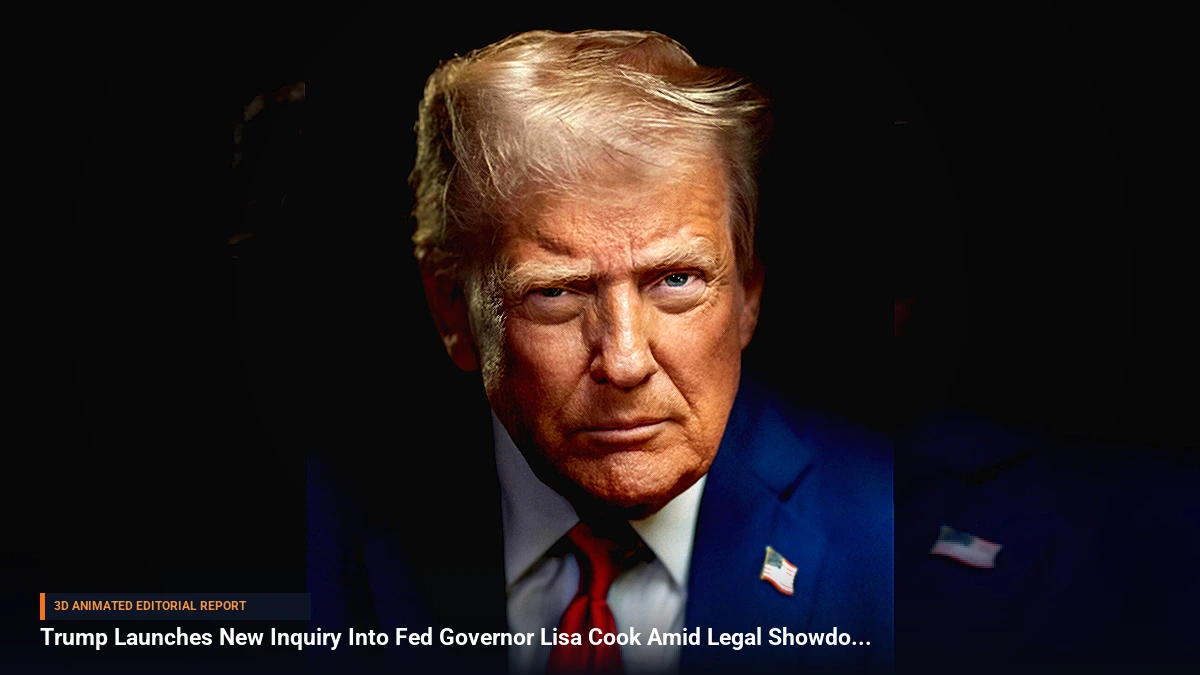
What Happened: The Core Developments
US President Donald Trump announced the establishment of a specialized White House committee to investigate Federal Reserve Governor Lisa Cook. The probe centers on unproven mortgage fraud allegations and represents a renewed, aggressive effort by the executive branch to remove a sitting central bank official. According to administration statements, the newly formed committee will coordinate closely with Department of Justice officials to evaluate whether sufficient legal "cause" exists to justify Cook's removal from the powerful Federal Reserve Board.
As part of this unprecedented inquiry, the White House has scheduled a closed, transcribed hearing for November 5. During this proceeding, the allegations against Cook will be formally examined. While the session will not be open to the public, procedural rules permit Cook and her legal representation to submit written evidence, deliver statements, and participate in examinations.
Background & Key Context
This executive action directly follows a turbulent multi-year conflict over the institutional independence of the US central bank. Trump's initial attempts to oust Cook from the Federal Reserve began in 2025, sparking intense legal battles over the executive branch's authority to discipline or dismiss independent monetary policymakers.
The conflict culminated in a landmark June Supreme Court ruling, which determined that the administration's earlier attempt to fire Cook was unconstitutional. By establishing an investigative committee to explicitly look for statutory "cause," the executive branch is attempting a novel procedural workaround to navigate the strict legal boundaries established by the high court regarding central bank governance.
Key Takeaways
- Executive Inquiry: President Trump has formed a dedicated committee to investigate Federal Reserve Governor Lisa Cook regarding alleged mortgage fraud.
- DOJ Consultation: The committee plans to work alongside Department of Justice officials to determine if valid legal "cause" for removal exists.
- Upcoming Hearing: A closed, transcribed White House hearing is officially scheduled for November 5 to review the allegations and examine evidence.
- Legal Precedent Tested: The move revives removal efforts following a June Supreme Court decision that struck down a previous attempt to fire Cook as unconstitutional.
- Ongoing Conflict: Tensions between the White House and the Federal Reserve have persisted since initial removal attempts began in 2025.
Impact, Analysis & Global/National Reactions
Legal and financial analysts view this committee as a high-stakes test of the institutional walls protecting the Federal Reserve from political interference. Under traditional norms, Federal Reserve governors enjoy strong statutory protections designed to insulate monetary policy from short-term political pressures. By utilizing a formal investigative panel and consulting with the Department of Justice, the administration is attempting to build a meticulous paper trail that could withstand judicial review if challenged.
Critics argue that utilizing White House-led investigative bodies to scrutinize independent regulators creates a dangerous precedent that could undermine global market confidence in the stability and neutrality of US monetary policy. Conversely, supporters of the executive action maintain that accountability mechanisms must exist for all federal officials, regardless of their agency's independent status. Institutional responses from financial markets have remained watchful, monitoring whether this procedural maneuver will trigger another wave of protracted constitutional litigation.
What's Next: Looking Ahead
All eyes are now focused on the November 5 White House hearing, which will serve as a crucial inflection point in this ongoing constitutional drama. Legal experts anticipate that regardless of the committee's findings or recommendations, any attempt by the administration to act upon the committee's conclusions will immediately face swift legal challenges in federal court. The outcome could permanently redefine the balance of power between the executive branch and independent regulatory agencies in the United States.





Be the first to comment
Start a useful conversation around this story.