
What Happened: The Core Developments
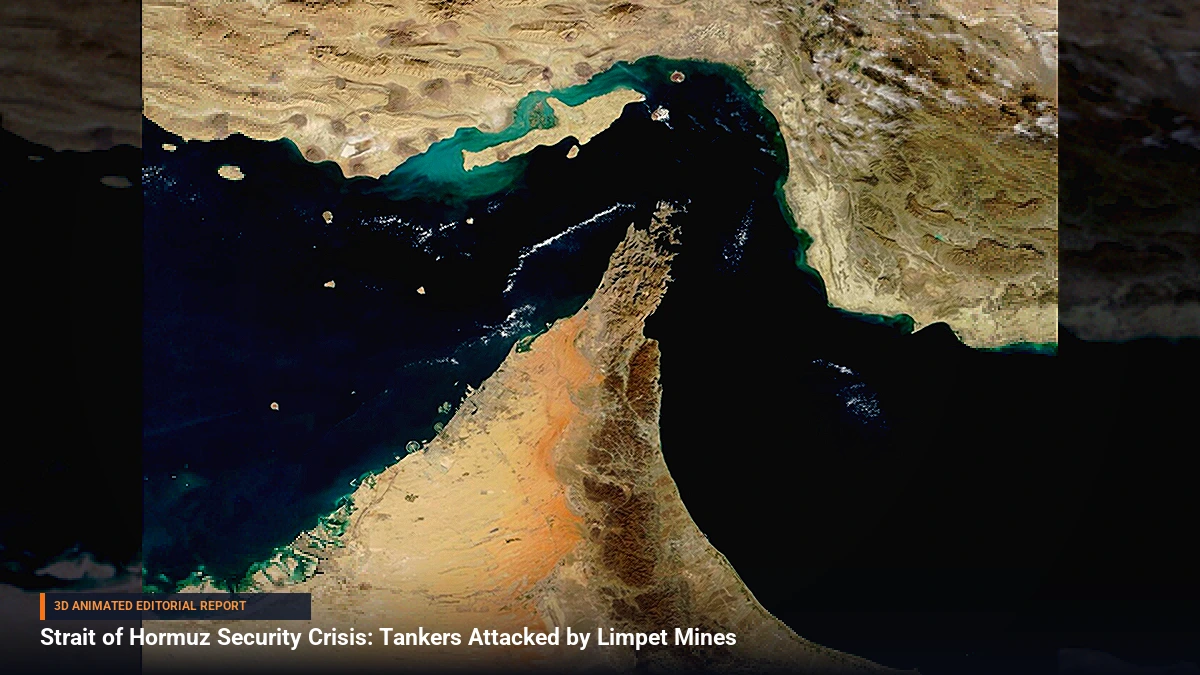
Maritime security in the vital energy corridor of the Strait of Hormuz has reached a critical juncture following targeted attacks on commercial vessels. According to regional intelligence and international security sources, at least one commercial tanker was struck by limpet mines while navigating the strategic waterway [24578].
The situation escalated rapidly when the Islamic Revolutionary Guard Corps (IRGC) asserted that a total of four tankers had been struck by naval mines after allegedly utilizing unauthorized navigation corridors [24243]. The attacks have triggered fires on board affected vessels and forced immediate emergency responses. In the wake of the blasts, Oman's navy deployed assets to the area off Musandam, successfully evacuating 25 crew members from a burning vessel [24578, 24741]. Concurrently, reports confirmed that one of the targeted commercial tankers was carrying a crew of 27 Indian seafarers, underscoring the immediate danger posed to international civilian personnel [24666].
Background & Key Context
The Strait of Hormuz remains the world's most critical oil transit chokepoint, carrying a significant percentage of globally traded petroleum. Previous tensions in the Persian Gulf and Gulf of Oman have frequently placed commercial shipping in the crosshairs of geopolitical disputes.
However, the deployment of limpet mines—magnetic explosive devices attached directly to a ship's hull—represents a sophisticated and targeted method of maritime sabotage. This latest flare-up occurs against a backdrop of heightened regional friction, ongoing geopolitical friction between Iran and Western powers, and heightened anxieties over regional trade route security.
Key Takeaways
- Targeted Sabotage: Commercial tankers navigating the Strait of Hormuz were struck by limpet mines, causing localized structural damage and fires [24578, 24644].
- Conflicting Casualty & Damage Reports: While independent security sources and Omani authorities confirmed specific vessel incidents and evacuations, the IRGC claimed that up to four tankers were impacted [24243, 24741].
- Humanitarian Impact: Oman's navy successfully rescued 25 crew members from a burning vessel off the coast of Musandam [24578, 24741].
- Multinational Crew Exposure: At least one of the affected tankers was manned by 27 Indian seafarers, highlighting the risks to global merchant mariners [24666].
- Immediate Market Reaction: Energy markets reacted swiftly to the maritime threat, with Brent crude prices surging past $117 per barrel amid supply disruption fears [24644].
Impact, Analysis & Global/National Reactions
The physical assaults on commercial shipping immediately reverberated across international commodities exchanges. Brent crude futures spiked to $117 per barrel as energy traders priced in the growing risk of prolonged disruptions to Middle Eastern oil exports [24644].
Defense analysts note that the use of limpet mines requires specialized underwater deployment capabilities, raising critical questions about regional deterrence and naval surveillance. Governments across Asia and Europe, whose economies rely heavily on uninterrupted oil flows through the Persian Gulf, have convened emergency security briefings to evaluate the safety of their respective merchant fleets.
What's Next: Looking Ahead
As salvage and firefighting operations continue in Omani territorial waters, international maritime authorities are issuing urgent navigational warnings to commercial shipping operators in the Persian Gulf and the Gulf of Oman. Stakeholders are closely monitoring whether coalition naval forces will step up escort duties through the chokepoint, while diplomats work behind the scenes to prevent a wider military escalation that could completely paralyze regional energy transit.




Be the first to comment
Start a useful conversation around this story.