
What Happened: The Core Developments
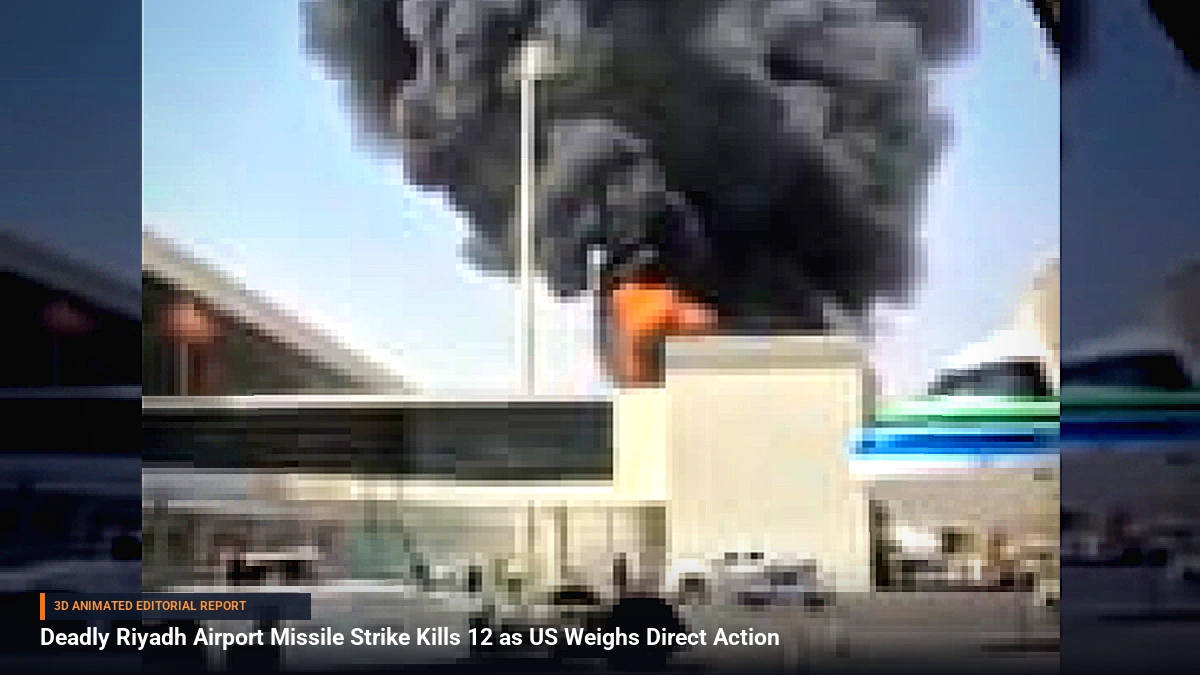
A missile strike hit the busy civil aviation hub of King Khalid International Airport in Riyadh, Saudi Arabia, resulting in a devastating civilian toll. According to official reports from the Saudi Civil Aviation Authority, the attack caused 12 deaths and over 300 injuries, marking one of the most severe escalations in the region.
The casualties include four Saudi nationals and eight foreign nationals, underscoring the international footprint within the capital's major transportation gateway. Emergency services rushed to the scene as operations at the airport were immediately suspended, plunging the passenger terminal into panic and sending shockwaves across the Gulf aviation sector.
Background & Key Context
Yemen's Houthi movement claimed responsibility for the assault, which follows a pattern of heightened cross-border hostility. The attack occurs against a volatile backdrop of broader regional confrontations tied to the ongoing Iran war.
Prior to this strike, Houthi forces had tested regional defenses with targeted projectiles, but the high casualty count at a primary international civilian airport represents a dangerous threshold crossed in the conflict. Concurrently, allied forces in Yemen have engaged in fierce battles, including attempts to recapture vital strategic locations like the Bab al-Mandab Strait.
Key Takeaways
- High Casualties: Exactly 12 individuals were killed, comprising four Saudi citizens and eight foreign nationals.
- Mass Injuries: More than 300 people sustained injuries, overwhelming local emergency and medical response teams.
- Infrastructure Impact: King Khalid International Airport suspended operations, disrupting travel and logistics in the Saudi capital.
- Attribution: Yemen's Houthi rebels launched the missile attack, prompting intense security and political fallout.
- Washington's Response: US President Donald Trump stated he is actively evaluating whether the United States should directly join Saudi retaliatory strikes.
Impact, Analysis & Global/National Reactions
The attack has radically altered the security calculus for the Gulf region. International observers note that striking a major civilian airport near the heart of the Saudi capital crosses a critical red line, shifting the nature of the conflict from regional skirmishes to a direct threat against international civil aviation and global commerce.
In Washington, the incident has accelerated high-level military and political debates. US President Donald Trump told reporters that his administration is weighing whether to directly join Saudi strikes against the Iran-backed Houthi rebels. Such a move could significantly broaden Western military entanglement in the broader Middle Eastern theater, drawing the US into coordinated offensive operations alongside Riyadh.
What's Next: Looking Ahead
Regional stakeholders and international allies are closely monitoring Washington's next steps regarding potential joint military actions. Diplomatic channels are working feverishly to prevent a wider conflagration, even as military planners in Riyadh and Washington review targeting options against Houthi infrastructure in Yemen.
For civil aviation authorities across the Middle East, enhanced security protocols, airspace monitoring, and emergency preparedness are being urgently implemented to safeguard passengers and critical transit hubs against further aerial threats.





Be the first to comment
Start a useful conversation around this story.