
What Happened: The Core Developments
On November 17, 2026, leaders of the Quad nations—comprising the United States, India, Japan, and Australia—convened for a high-profile multilateral summit focused on tightening security and technological cooperation across the Indo-Pacific. The discussions centered around collaborative frameworks addressing regional hegemony and strategic stability, featuring major announcements on joint maritime surveillance operations and fortified cybersecurity defenses.
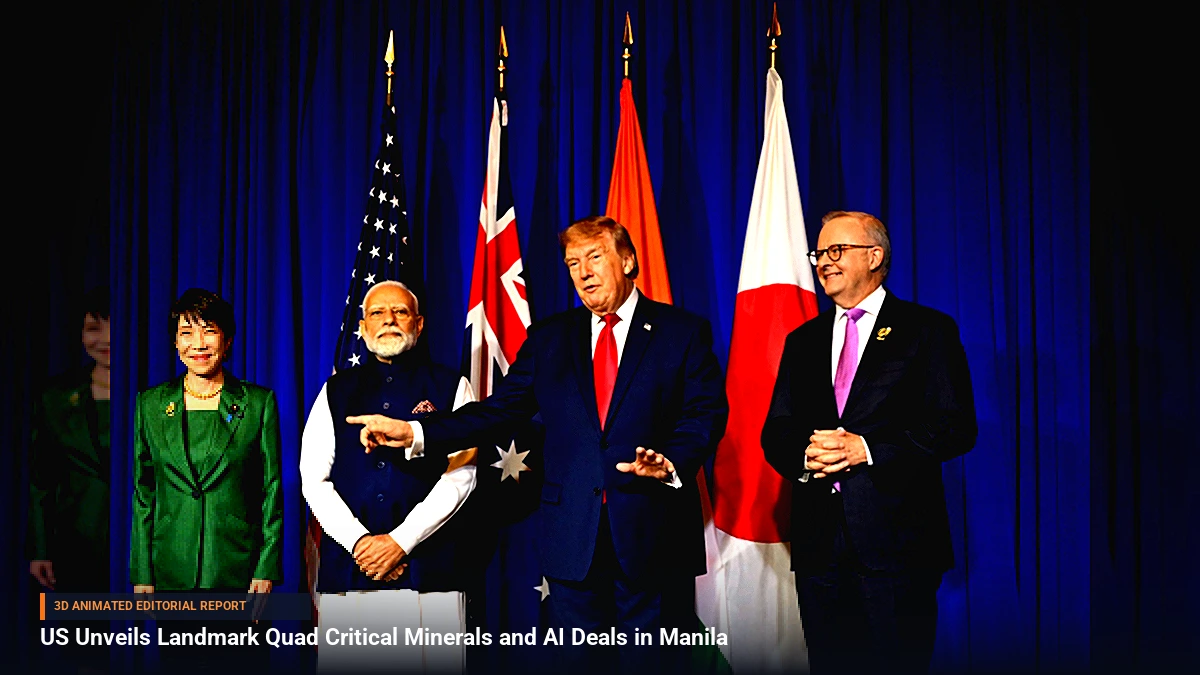
Beyond traditional security domains, the summit marked a notable push into advanced technological cooperation. US President Donald Trump spearheaded new artificial intelligence initiatives alongside his Quad counterparts, framing emerging tech partnerships as a vital counterweight in the escalating strategic competition with China. Amid the policy rollouts, the gathering also provided lighter or more unusual moments for observers; international media extensively highlighted an awkward exchange during a joint press briefing when Indian Prime Minister Narendra Modi visibly attempted to conclude a photo-op with President Trump.
Background & Key Context
The Quad—formally known as the Quadrilateral Security Dialogue—has evolved significantly from an ad-hoc coordination mechanism into a cornerstone of Indo-Pacific geopolitical architecture. Originally galvanized by disaster relief cooperation following the 2004 Indian Ocean tsunami, the grouping has steadily transitioned toward institutionalized deterrence, supply chain resilience, and technological sovereignty.
In recent years, the bloc has prioritized countering unilateral attempts to alter the status quo in the South China Sea and East China Sea. By weaving together maritime domain awareness networks and joint technology standards, member states aim to project a unified vision of a "free and open Indo-Pacific." The November 2026 summit served as a crucial stress test for how effectively these democratic allies can harmonize domestic political imperatives with collective strategic goals, particularly as regional tensions remain elevated.
Key Takeaways
- Advanced Technology Push: Quad leaders rolled out collaborative AI initiatives designed to secure technological supply chains and maintain democratic standards in emerging tech.
- Maritime & Cyber Security: New joint frameworks were established to enhance regional maritime domain awareness and harden critical infrastructure against sophisticated cyber threats.
- Strategic Signaling: The summit reinforced a clear "peace by strength" doctrine intended to deter aggressive maneuvers in the Indo-Pacific.
- Upcoming Economic Milestones: India announced it will host the inaugural Quad Business Forum meeting next year to deepen commercial integration among member states.
- Optics vs. Substance: High-level diplomatic friction, highlighted by the Modi-Trump photo-op incident, underscored the complex personal and political dynamics underpinning multilateral alliances.
Impact, Analysis & Global/National Reactions
Analysts note that while the public gaffes and staging mishaps often dominate immediate news cycles, the underlying policy architecture agreed upon during the summit represents a significant maturation of the Quad. By moving past mere rhetorical solidarity into concrete operational domains like AI governance and maritime surveillance, the alliance is proving its utility as a "trusted partnership delivering solutions," in the words of Prime Minister Modi.
Nevertheless, balancing strategic autonomy with alignment against major economic powers remains a delicate tightrope for regional democracies. Observers in financial and political capitals are closely analyzing how these newly minted intelligence-sharing and surveillance pacts will be received by rival nations, particularly Beijing, which has historically criticized the bloc as an "Asian NATO" designed to contain its rise.
What's Next: Looking Ahead
With the 2026 summit concluded, attention now shifts toward the implementation phase of the newly announced maritime and artificial intelligence pacts. Working groups are expected to finalize operational protocols ahead of upcoming legislative sessions and regional security dialogues.
Furthermore, the announcement that India will host the first-ever Quad Business Forum next year sets a definitive calendar marker for deepening private-sector engagement. Stakeholders will be watching closely to see whether corporate leaders can translate governmental strategic alignment into tangible cross-border investments and resilient supply chains.


Be the first to comment
Start a useful conversation around this story.