
What Happened: The Core Developments
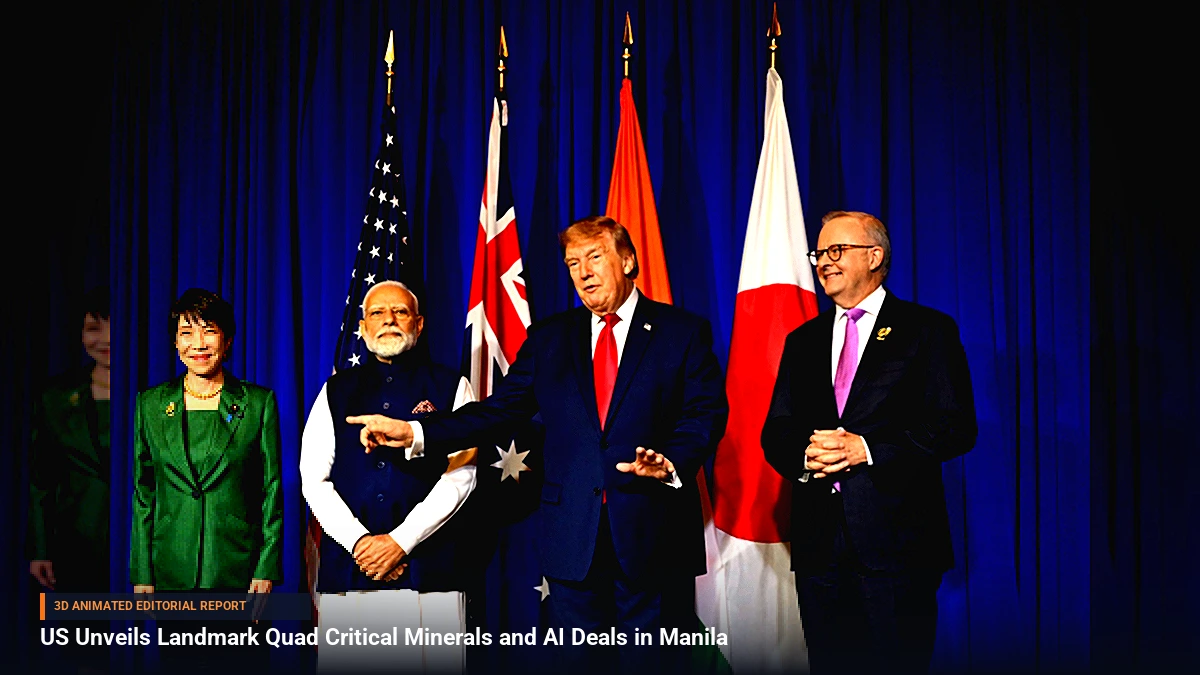
During a high-stakes Quad meeting convened in Manila, United States President Donald Trump unveiled a series of sweeping agreements centering on critical minerals supply chains and advanced technology collaboration. The summit brought together key regional leaders, including Australian Prime Minister Anthony Albanese, underscoring a united front among the democratic allies.
Central to the announcements was a new framework designed to secure critical mineral supply chains, which Trump explicitly noted are intended to prevent economic coercion by any single dominant foreign supplier. In tandem with the minerals pact, the administration touted an ambitious multicountry artificial intelligence initiative aimed at accelerating technological development and safeguarding digital infrastructure among partner nations. Furthermore, the leaders announced new cooperative military drills involving tough Asian allies to reinforce regional deterrence.
Background & Key Context
The Quad—comprising the United States, Australia, India, and Japan—has evolved significantly from its informal origins into a cornerstone of Indo-Pacific security and economic architecture. Over recent years, supply chain vulnerabilities exposed by global disruptions and the weaponization of trade dependencies have forced democratic nations to rethink their industrial reliance on monolithic manufacturing hubs, particularly China.
By leveraging the collective industrial, technological, and military capabilities of the Quad nations, the latest summit in Manila represents a concerted effort to institutionalize economic resilience. The integration of critical minerals pacts with cutting-edge artificial intelligence strategies highlights a recognition that modern geopolitical power relies as much on technological sovereignty and raw material security as it does on traditional defense postures.
Key Takeaways
- Critical Minerals Security: The US and its Quad partners finalized agreements to secure vital mineral supply chains and mitigate risks of single-supplier economic coercion.
- Technological Collaboration: Leaders launched a multicountry artificial intelligence initiative to foster joint innovation and secure emerging tech ecosystems.
- Enhanced Defense Cooperation: New joint military drills were announced with key Asian allies to demonstrate regional resolve and deterrence capabilities.
- Diplomatic Alignment: President Trump praised Australian Prime Minister Albanese during the summit, signaling robust bilateral and multilateral trust.
- Strategic Counterbalance: The sweeping package of economic and security measures directly addresses growing strategic competition in the Indo-Pacific.
Impact, Analysis & Global/National Reactions
Analysts view the Manila Quad summit as a decisive inflection point for Indo-Pacific trade and security policy. By directly targeting vulnerabilities in the critical minerals sector, the participating governments are taking concrete steps to insulate global supply chains from geopolitical volatility. The emphasis on artificial intelligence further signals that the alliance views technological leadership as non-negotiable for future economic stability.
Regional observers note that while the agreements are framed around cooperative growth and mutual resilience, they carry clear implications for Beijing's dominant market share in rare earths and refined materials. Institutional stakeholders and market analysts are closely watching how the operationalization of these mineral frameworks will alter global commodity pricing and industrial manufacturing pipelines.
What's Next: Looking Ahead
As the dust settles on the Manila declarations, attention turns toward the implementation and enforcement of the announced frameworks. Member states must now translate broad political commitments into specific legislative actions, budgetary allocations, and technical standards for both the critical minerals pacts and the AI collaborative push.
Upcoming diplomatic engagements and scheduled joint military exercises will serve as the immediate litmus test for the operational readiness and cohesion of the Quad. Stakeholders across industrial sectors will also monitor subsequent bilateral talks to gauge how private-sector entities will be integrated into these state-backed security and technology initiatives.



Be the first to comment
Start a useful conversation around this story.