
What Happened: The Core Developments
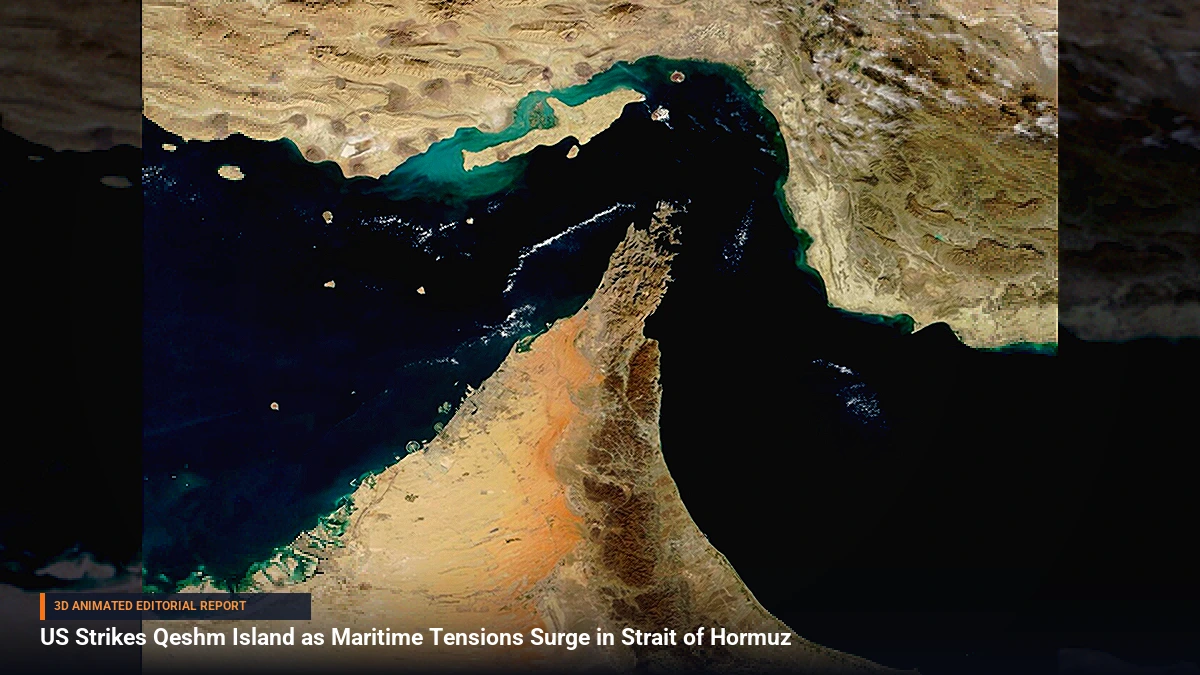
Military escalation in the Middle East reached a critical new threshold as United States armed forces executed targeted airstrikes against a designated missile-launch facility on Qeshm Island, situated strategically within the Strait of Hormuz. According to verified statements from U.S. military officials, fighter jets deployed to the area successfully struck the installation, which Washington viewed as an imminent threat to regional stability and commercial shipping lanes.
Simultaneously, state and regional monitors reported a dangerous maritime incident within the same critical waterway. Iranian media sources confirmed that two separate vessels caught fire after making impact with unidentified naval mines deployed across the narrow shipping corridor. These dual developments mark a severe intensification of hostilities, bridging direct military exchanges with asymmetric hazards to international maritime commerce.
Background & Key Context
The Strait of Hormuz serves as one of the world's most vital energy choke points, carrying a significant percentage of global petroleum consumption daily. For decades, the waterway has been a flashpoint for geopolitical friction between Western powers, regional allies, and Iran. The deployment of naval mines combined with targeted aerial bombardments echoes historical periods of heightened maritime insecurity, raising immediate alarms among international shipping conglomerates, energy traders, and defense analysts alike.
Prior friction in the region had already placed naval coalitions and regional defense forces on high alert. However, the direct targeting of infrastructure on Iranian territory such as Qeshm Island, paired with physical obstructions to navigation via maritime mines, represents a sharp departure from standard deterrence operations, moving the theater closer to open, multi-domain conflict.
Key Takeaways
- Targeted Strikes: U.S. military fighter jets executed precise airstrikes aimed directly at an Iranian missile-launch site located on Qeshm Island.
- Maritime Hazards: Two commercial or transit vessels suffered major fires following collisions with naval mines inside the Strait of Hormuz.
- Strategic Choke Point: The incidents directly threaten global energy supply chains and maritime transit through a critical global trade corridor.
- Escalating Complexity: The overlapping events combine conventional air operations with asymmetric naval warfare tactics.
- Heightened Alert: Regional actors, defense forces, and international monitors have drastically raised their threat assessments in response.
Impact, Analysis & Global/National Reactions
The convergence of direct military strikes on Iranian territory and active mine warfare in the Strait of Hormuz has sent shockwaves through international markets and diplomatic channels. Energy commodities experienced immediate volatility as traders factored in the growing risk profile of navigating the Persian Gulf and its surrounding waters.
Defense analysts note that the deployment of naval mines introduces an indiscriminate hazard that affects not only military vessels but also neutral commercial shipping, potentially drawing a broader coalition of nations into protective convoy operations. While official casualty figures and the exact registry of the stricken vessels remain under official verification, the psychological and economic impact on regional trade is already palpable.
What's Next: Looking Ahead
As the situation develops, international maritime agencies and defense departments are expected to issue urgent navigational warnings for vessels operating in and around the Persian Gulf. Observers will be closely watching for further retaliatory postures from Tehran, potential adjustments to U.S. and allied force deployments in the region, and emergency security consultations among major importing nations heavily reliant on the uninterrupted flow of energy through the Strait of Hormuz.



Be the first to comment
Start a useful conversation around this story.