
What Happened: The Core Developments
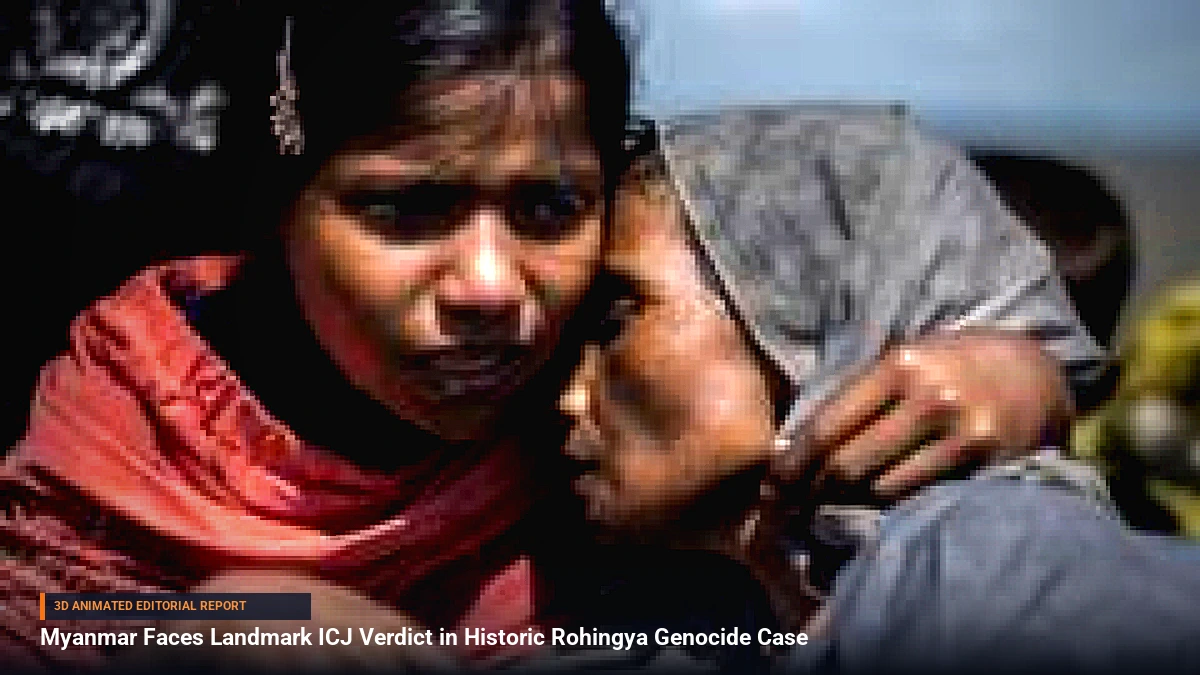
The International Court of Justice (ICJ), the highest judicial organ of the United Nations, is set to deliver a definitive ruling in the closely watched genocide case initiated by The Gambia against Myanmar. The legal battle centers on the systematic persecution, forced displacement, and mass atrocities inflicted upon the Muslim Rohingya minority.
The proceedings represent a monumental juncture for international criminal and humanitarian jurisprudence. Legal scholars, human rights advocates, and global stakeholders are watching closely as the UN’s top court prepares to weigh extensive testimonies, satellite evidence, and documentation detailing state-sponsored violence.
Background & Key Context
The case traces its origins to a devastating military crackdown launched by Myanmar’s security forces in 2017. That sweeping campaign of violence forced at least 730,000 Rohingya to flee their ancestral homes in Rakhine State, seeking refuge across the border in neighboring Bangladesh.
What makes this trial uniquely significant in the annals of international law is a stark historical reality: no state has ever been found guilty by an international court of committing genocide. While previous tribunals have prosecuted individuals for the crime of genocide—such as in the cases of Rwanda and the former Yugoslavia—holding an entire sovereign nation legally accountable under the 1948 Genocide Convention remains an uncharted legal frontier.
Key Takeaways
- Unprecedented Legal Threshold: The ICJ verdict could establish the first-ever formal judicial finding that a sovereign state has committed genocide.
- The Origin of the Case: The proceedings were formally brought to the UN court by The Gambia, a West African nation, backed by the Organisation of Islamic Cooperation (OIC).
- Mass Displacement: The legal action directly addresses the harrowing 2017 military operations that drove a minimum of 730,000 Rohingya into refugee camps in Bangladesh.
- Global Implications: A ruling against Myanmar could fundamentally shift how international human rights violations, state accountability, and universal jurisdiction are prosecuted globally.
Impact, Analysis & Global/National Reactions
Human rights organizations and international legal experts emphasize that a ruling against Myanmar would carry profound symbolic and practical weight. Although the ICJ lacks direct police powers to enforce its judgments, a definitive ruling establishing state responsibility for genocide would severely isolate Myanmar’s ruling apparatus on the global stage.
International relations analysts note that the case tests the resilience and effectiveness of multilateral institutions in holding sovereign governments accountable for mass atrocities. Representatives of the Rohingya community have expressed cautious hope that the verdict will provide a measure of historical validation and pave the way for long-delayed justice, reparations, and safe, voluntary repatriation.
What's Next: Looking Ahead
As the international community awaits the official release of the verdict, attention is already turning to the enforcement mechanisms and diplomatic fallout that will follow. If the court finds Myanmar responsible for breaches of the Genocide Convention, legal teams and UN bodies will need to navigate complex questions regarding reparations, non-repetition guarantees, and the broader implementation of provisional measures designed to protect the remaining Rohingya population inside Myanmar.

Be the first to comment
Start a useful conversation around this story.