
What Happened: The Core Developments
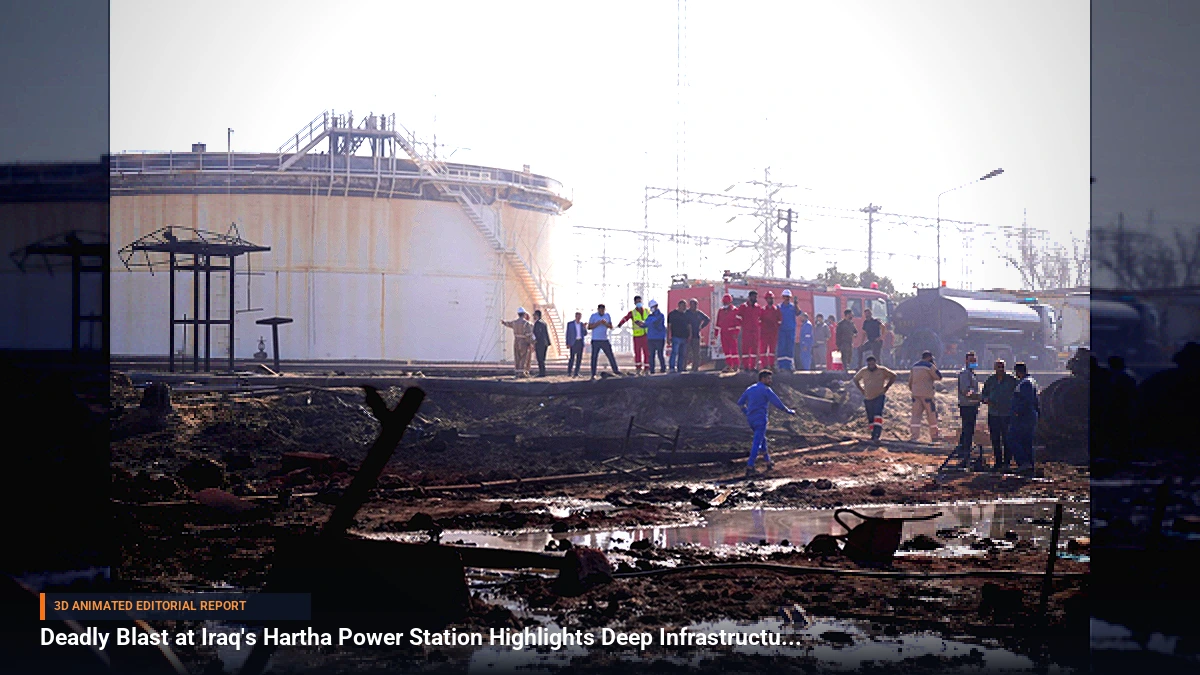
A massive fire followed by a powerful explosion erupted at the Hartha power station, located in Iraq’s oil-rich southern province of Basra. The sudden industrial disaster quickly escalated into a community tragedy as towering flames and thick black smoke engulfed the complex, ultimately jumping the facility's perimeter to tear through adjacent residential neighborhoods.
Initial reports from major wire services recorded a shifting casualty toll, with confirmed figures pointing to at least four fatalities. Furthermore, between 30 and 35 individuals sustained varying degrees of injuries, ranging from severe burns to smoke inhalation. Emergency response teams and civil defense units rushed to the scene, battling the raging inferno for hours while evacuating terrified residents from homes directly threatened by the spreading blaze.
Background & Key Context
The Al-Haritha (Hartha) plant is a cornerstone of the regional power infrastructure in southern Iraq, tasked with supplying crucial electricity to portions of Basra. However, the facility has long operated under severe strain due to decades of conflict, international sanctions, chronic underinvestment, and a lack of rigorous modernization programs.
Beyond internal equipment vulnerabilities, the incident highlights a pervasive urban planning crisis across Iraq: residential encroachment. Over the years, rapid and unregulated population growth has driven families to build homes perilously close to heavy industrial sites, oil pipelines, and power transmission infrastructure. This lack of safety buffers transforms standard industrial accidents into widespread humanitarian emergencies, putting civilian populations directly in the line of fire.
Key Takeaways
- Fatal Industrial Accident: A sudden explosion and fire at the Hartha power station in Basra resulted in at least four deaths.
- Mass Casualties: Between 30 and 35 people were injured, with many victims suffering from burns and smoke inhalation as the fire moved outward.
- Residential Devastation: The violent blaze did not remain contained within industrial boundaries, spreading directly into nearby residential areas and damaging homes.
- Infrastructure Vulnerability: The incident underscores the severe strain on Iraq's aging power grid and industrial maintenance protocols.
- Encroachment Crisis: The disaster has reignited intense political scrutiny regarding illegal or unregulated housing developments built dangerously close to critical energy networks.
Impact, Analysis & Global/National Reactions
The catastrophe at Hartha has sent shockwaves through Iraq's central government and local municipalities, bringing the invisible hazards of urban-industrial interface zones into sharp focus. National authorities face mounting public pressure to explain how an operational failure within a secure energy installation could result in such catastrophic civilian devastation.
In response to the tragedy, high-level directives have been issued across governmental tiers. Notably, leadership has instructed provincial governors to immediately identify, survey, and document residential encroachments along critical oil and energy infrastructure routes. Stakeholders and urban planners argue that long-term safety requires enforcing strict zoning laws, establishing mandatory buffer zones, and relocating vulnerable communities away from high-risk industrial facilities.
What's Next: Looking Ahead
As civil defense investigators sift through the charred remains of the Hartha power station to determine the exact technical trigger of the blast, federal and local agencies are pivoting toward policy enforcement. The primary focus moving forward will involve executing comprehensive surveys of homes situated near vital energy corridors.
For Basra province, repairing the damaged sections of the power station without triggering further grid instability remains an immense logistical challenge. Meanwhile, federal authorities face the politically sensitive task of balancing energy security with the humanitarian imperative of clearing residential neighborhoods from dangerous industrial perimeters.



Be the first to comment
Start a useful conversation around this story.