
What Happened: The Core Developments
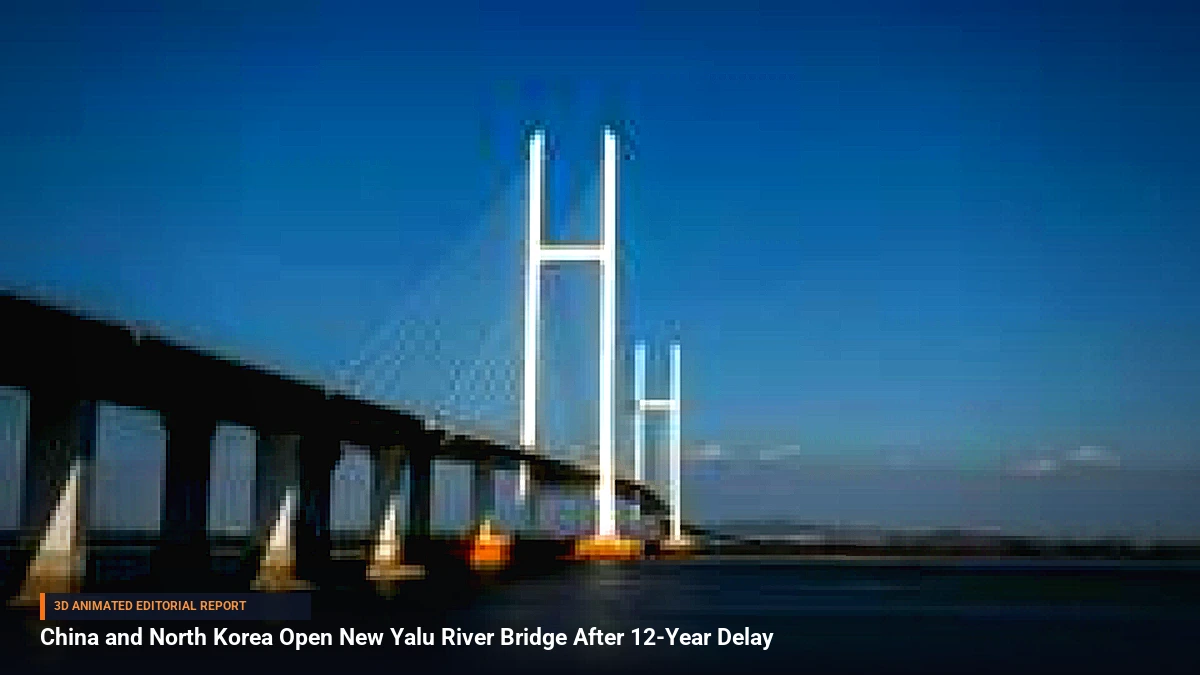
After sitting virtually complete yet unused for more than a decade, the New Yalu River Bridge has finally opened to cross-border traffic. Connecting the border city of Dandong, China, with Sinuiju, North Korea, the massive infrastructure project was inaugurated following state-media announcements from Beijing and Pyongyang.
The opening marks a significant milestone in bilateral logistics. For twelve years, structural completion met administrative, political, and logistical bottlenecks, leaving the multi-lane cable-stayed bridge largely dormant while regional trade relied on older, constrained crossing points. The launch of the bridge signals a renewed push by both neighboring nations to streamline cargo movement, upgrade commercial pathways, and facilitate smoother movement of goods across the border.
Background & Key Context
Construction on the New Yalu River Bridge originally began around 2011, with China footing a vast majority of the bill in an effort to spur economic cooperation and trade volume. However, despite physical completion years ago, the bridge remained unopened due to a combination of geopolitical shifts, changing diplomatic priorities, and a lack of connecting infrastructure on the North Korean side—particularly highway links leading away from Sinuiju.
China remains North Korea's largest trading partner, serving as an essential economic cushion against severe international sanctions. Historically, the bulk of bilateral commerce squeezed through the aging Sino-Korean Friendship Bridge nearby, a narrow structure built during the Japanese colonial era that is fundamentally unsuited for modern, high-volume container freight.
Key Takeaways
- Long-Awaited Launch: The New Yalu River Bridge has officially opened after a 12-year delay.
- Strategic Geography: The crossing directly links Dandong in China to Sinuiju in North Korea.
- Economic Lifeline: China is North Korea's largest trading partner, providing crucial economic support under heavy sanctions.
- Modernized Capacity: The new bridge is designed to replace aging, restricted infrastructure like the Sino-Korean Friendship Bridge.
- Geopolitical Timing: The opening arrives as North Korea balances deep economic reliance on Beijing with growing security and diplomatic alignment with Moscow.
Impact, Analysis & Global/National Reactions
International observers and regional analysts are closely scrutinizing the timing of the bridge's opening. While economic actors anticipate a surge in authorized commercial exchange, Western governments and sanctions monitors are raising questions regarding how the enhanced transport corridor might be utilized.
Trade analysts point out that the vastly superior freight capacity of the New Yalu River Bridge will allow for a much higher volume of raw materials, consumer goods, and industrial equipment to cross the border daily. This infrastructure upgrade comes at a crucial juncture for Pyongyang, which has simultaneously pursued a dramatic deepening of military and economic ties with Russia. By securing modernized trade corridors with China while forging closer security partnerships in Moscow, North Korea is strategically diversifying its diplomatic leverage.
What's Next: Looking Ahead
In the coming months, analysts will monitor the volume and type of traffic utilizing the New Yalu River Bridge to determine whether trade is expanding strictly within sanctioned parameters or if dual-use materials are slipping through. Furthermore, regional authorities in Dandong will be watching for infrastructural adjustments on the North Korean side to ensure that Sinuiju's internal transport network can effectively handle the newly unlocked cargo flow without creating severe logistics bottlenecks.






Be the first to comment
Start a useful conversation around this story.