
What Happened: The Core Developments
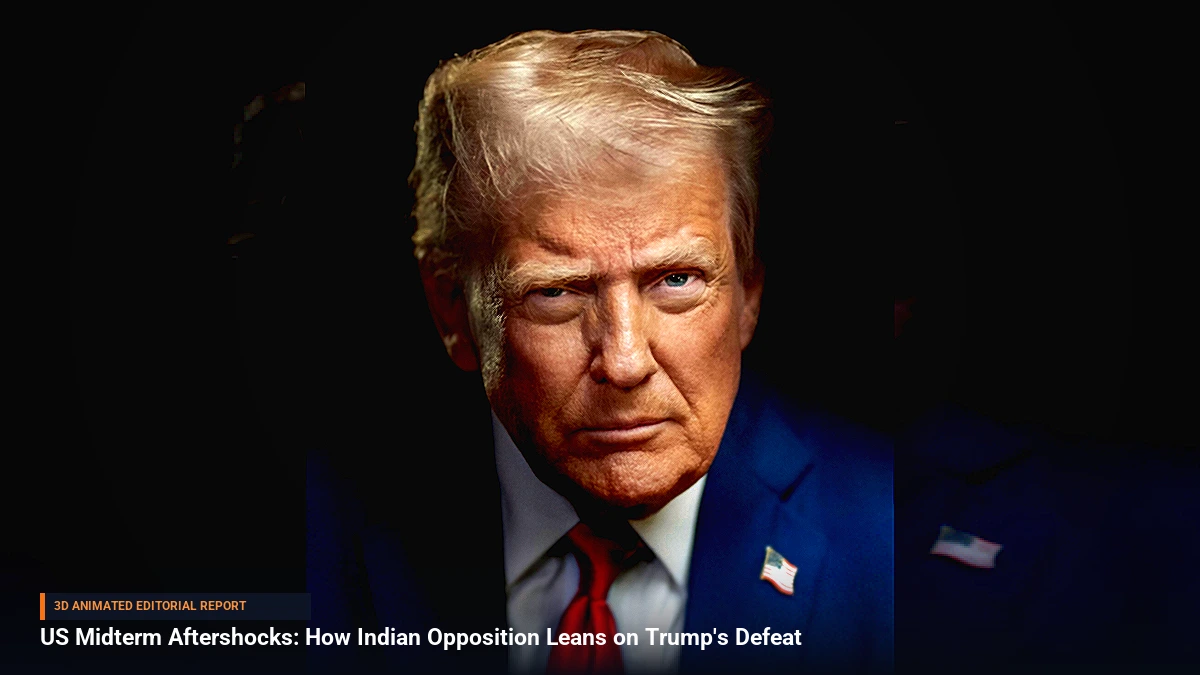
The 2026 United States midterm elections delivered a historic political earthquake, dealing a severe blow to President Donald Trump's administration. In a decisive electoral rejection characterized by a powerful 'blue wave', Donald Trump's Republican party lost control of both the Senate and the House to the Democrats. Despite the president's aggressive campaigning and his attempts to frame the midterms as a referendum on his leadership, handpicked candidates endorsed by the MAGA movement were swept aside across multiple states.
This dramatic reversal instantly crippled the administration's legislative agenda, casting the remainder of Trump's term into lame-duck status. However, the ripples of this American democratic exercise were felt immediately on an international scale, sparking intense political debates thousands of miles away in South Asia.
Background & Key Context
International political developments frequently serve as mirrors or talking points for domestic factions, but the 2026 US midterms have uniquely galvanized international opposition camps. In India, opposition parties—led prominently by the Indian National Congress—rapidly seized upon the American election outcome.
For months, the Indian political landscape has been consumed by fierce debates over structural governance reforms, most notably the ruling coalition's ambitious 'One Nation, One Election' proposal. Critics of the ruling party have consistently argued that simultaneous elections threaten federal structures and concentrate excessive power at the center. The sudden vulnerability of a seemingly entrenched leader in Washington provided these domestic critics with a tangible narrative: that political gravity applies to dominant leaders everywhere, and that seemingly invincible political machines can be dismantled at the ballot box.
Key Takeaways
- Historic US Reversal: The Republican party lost majorities in both the House and Senate following a massive surge of voter opposition.
- Global Echoes: Indian opposition leaders quickly integrated the US results into their own domestic messaging.
- Domestic Critique: The US outcome was explicitly used by opposition figures to challenge the controversial 'One Nation, One Election' initiative.
- Cautionary Perspectives: Some political analysts and commentators in India cautioned that drawing direct parallels between vastly different electoral systems is premature.
- Narrative Shift: The 'blue wave' provided a psychological boost to anti-incumbency movements worldwide, proving that change remains possible even against heavily financed political forces.
Impact, Analysis & Global/National Reactions
The utilization of foreign election results in domestic debates highlights the interconnected nature of modern political narratives. Indian opposition figures proclaimed that the US outcome demonstrated how public fatigue with centralization can manifest rapidly. Citing the midterm results, leaders within the Congress party argued that "change is in the air" and that democratic resilience remains robust enough to check overreaching executive authority.
By leveraging the American electorate's rebuke of Trump, these leaders targeted the 'One Nation, One Election' concept, framing it as an unnecessary disruption to India's pluralistic democracy. They argued that if an entrenched executive power in the world's oldest democracy could be humbled by voters, established political frameworks elsewhere are similarly susceptible to public correction.
However, domestic commentators and neutral political analysts offered a note of caution. Many pointed out that equating the structural dynamics of American midterm elections with India's complex, multi-party parliamentary system involves significant oversimplification. Some observers characterized the opposition's elation as premature, noting that local socio-economic factors dictate Indian electoral outcomes far more than overseas political trends.
What's Next: Looking Ahead
As the fallout from the US midterms settles, attention will pivot back to domestic legislative calendars. In India, the debate surrounding electoral reforms and simultaneous polls will continue to be a primary battleground between the ruling coalition and opposition parties.
While the immediate euphoria surrounding the US 'blue wave' may fade from daily headlines, the ideological framework it provided will likely persist. Opposition parties intend to carry this narrative of possible political upset into upcoming regional campaigns, using the American precedent as a symbolic reminder that voter sentiment can shift dramatically when citizens feel alienated by centralized authority.

Be the first to comment
Start a useful conversation around this story.