
What Happened: The Core Developments
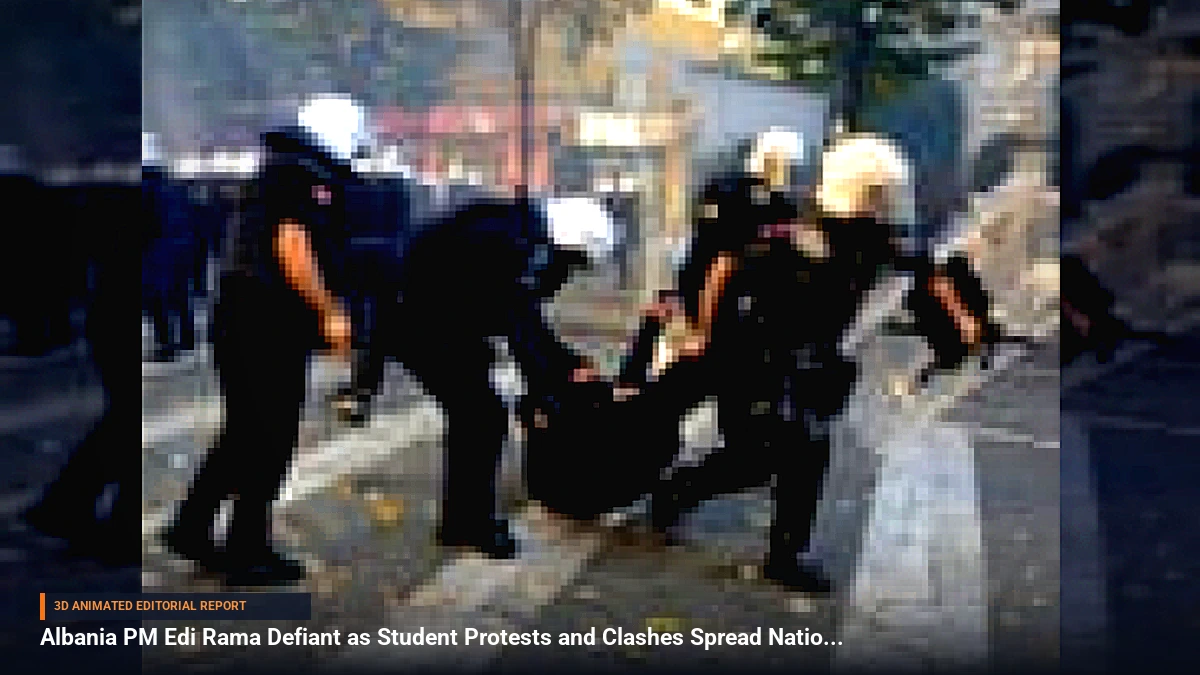
Tensions reached a boiling point across Albania as youth-led demonstrations transformed into intense street clashes for the third straight day. Prime Minister Edi Rama firmly dismissed escalating calls for his resignation, condemning the widespread unrest and public disorder taking place in the capital.
In Tirana, demonstrators flooded major thoroughfares, targeting government buildings and clashing directly with police forces. Law enforcement officials responded by deploying tear gas and water cannons to disperse crowds marching along primary roads. What initially began as localized campus frustrations quickly snowballed into fierce confrontations, with protests successfully jumping the capital's boundaries and sparking sympathetic demonstrations in cities across the nation.
Background & Key Context
The current crisis reflects underlying governance friction in Southeast Europe, where youth movements frequently serve as catalysts for broader societal discontent. Prime Minister Rama, who has navigated multiple political storms during his tenure, faces a profound test of institutional resilience as public frustration reaches a critical juncture.
Student-led mobilizations in the region often tap into deep-seated grievances regarding economic opportunity, institutional transparency, and public service delivery. The rapid transition from peaceful campus organization to fiery urban resistance underscores a widening chasm between the incumbent administration and the younger demographic segments demanding systemic reform.
Key Takeaways
- Resignation Refused: Prime Minister Edi Rama has publicly vowed to remain in office, rejecting all ultimatums issued by protesting groups.
- Escalating Unrest: Clashes between demonstrators and security forces have persisted for three consecutive days in the heart of Tirana.
- National Spread: Protests have broken out of the capital, with civil unrest and demonstrations reported in other major Albanian cities.
- Tactical Response: Police have utilized heavy-crowd control measures, including tear gas and water cannons, to secure key government corridors and clear major roads.
- Systemic Vulnerability: The protests highlight structural governance challenges and institutional weaknesses within Southeast European political frameworks.
Impact, Analysis & Global/National Reactions
The escalation of street violence presents serious implications for Albania's internal stability and its broader European integration trajectory. International observers are closely monitoring how the government manages the crisis, as democratic accountability and the handling of peaceful assembly remain critical benchmarks for regional governance.
Political analysts note that Prime Minister Rama's refusal to capitulate to street pressure is a high-stakes gamble. While yielding to demonstrators could destabilize the current governing coalition, standing firm risks further polarizing the public and entrenching opposition forces. Institutional stakeholders have called for immediate de-escalation, urging both state authorities and protest organizers to pursue constructive dialogue rather than physical confrontation.
What's Next: Looking Ahead
As the dust settles from three days of intense urban friction, all eyes turn to whether the student movement will formalize its leadership and articulate a unified legislative agenda or whether street demonstrations will continue to intensify.
With political pressure mounting both domestically and from international watchers, the Rama administration faces an urgent imperative to address the root causes of the youth mobilization. Observers will be tracking upcoming municipal security measures, potential emergency parliamentary sessions, and the response of opposition parties seeking to capitalize on the widening civil unrest.


Be the first to comment
Start a useful conversation around this story.