
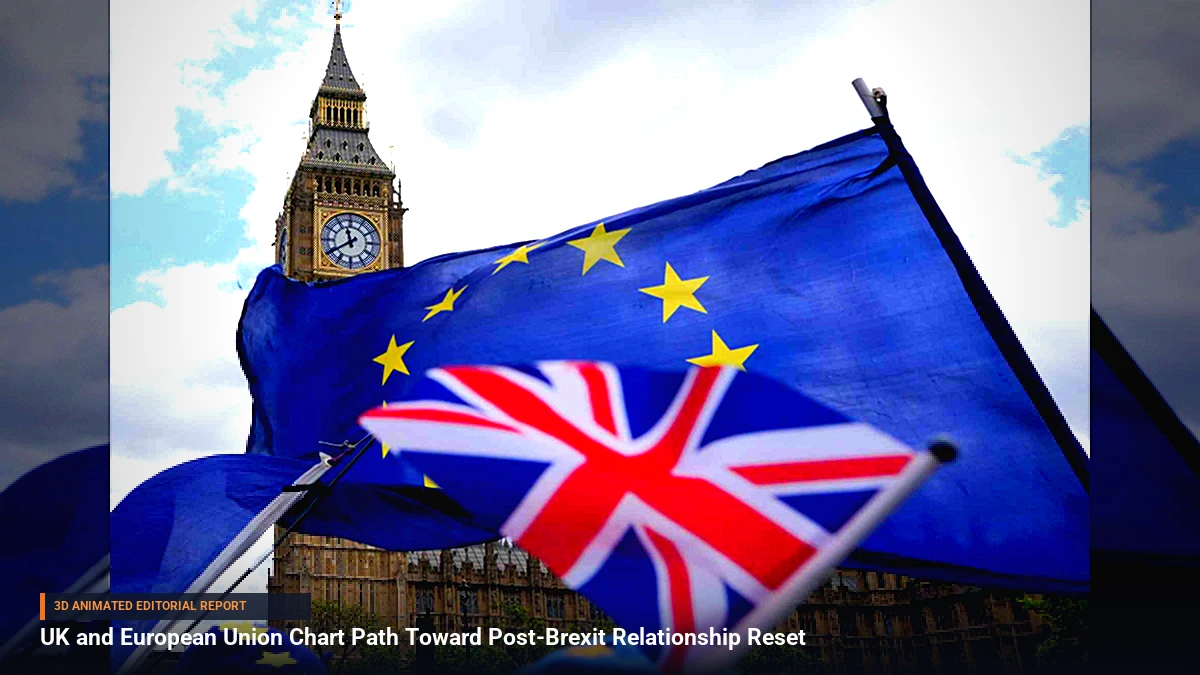
What Happened: The Core Developments
Nearly ten years after the transformative Brexit referendum and subsequent departure, Britain and the European Union are formally poised to agree on concrete steps toward resetting their strained bilateral relations. Diplomats and leaders from both sides are engaging in high-level discussions aimed at turning the page on a decade of often fractious post-separation management. London has signaled a notable shift in tone, demonstrating an active willingness to align more closely with European Union policies across several key areas.
However, this diplomatic thaw does not mean a complete smoothing over of all past grievances. Significant policy divisions continue to persist between Westminster and Brussels, highlighting the delicate balancing act required by both administrations as they navigate domestic political sensitivities alongside geopolitical realities.
Background & Key Context
The landscape of UK-EU relations has remained complex and heavily guarded ever since the formal conclusion of Brexit. For years, the political discourse in both London and European capitals was dominated by trade friction, regulatory divergence, and disputes over sovereignty and legal jurisdiction. Yet, as global economic pressures mount and security challenges multiply across the European continent, both British policymakers and EU officials have increasingly recognized the mutual benefits of a pragmatic rapprochement.
Domestically, the debate over Europe has re-entered the national conversation with renewed vigor. Regional leaders and political figures—such as Greater Manchester Mayor Andy Burnham—have begun outlining forward-looking options for the UK's long-term relationship with the bloc, prompting intense discussions and nervous anticipation across various political factions about the true scope of what lies ahead.
Key Takeaways
- Bilateral Reset: Britain and the EU are finalizing an agreement on initial steps to recalibrate their diplomatic and economic relationship.
- Policy Alignment: London is signaling a renewed openness to aligning more closely with European standards and frameworks a decade after Brexit.
- Persistent Friction: Despite the positive momentum toward a reset, fundamental divisions and structural disagreements remain between the two sides.
- Domestic Debate: The UK political landscape is seeing a resurgence of discussions regarding long-term integration and European cooperation.
- Strategic Realities: Evolving geopolitical and economic pressures are driving both London and Brussels toward pragmatic, cooperative engagement.
Impact, Analysis & Global/National Reactions
The movement toward a renewed partnership carries profound implications for European stability, trade flows, and diplomatic cooperation. Analysts suggest that while neither side is looking to reverse the foundational realities of Brexit, both London and Brussels recognize that isolation is no longer a viable long-term strategy for addressing transnational challenges.
Institutional stakeholders have cautiously welcomed the diplomatic thaw, noting that closer policy coordination could significantly reduce trade friction and enhance security collaboration. At the same time, political observers emphasize that any formal steps toward closer alignment will face intense scrutiny from domestic constituencies on both sides of the English Channel, where skepticism of European integration remains a potent political force.
What's Next: Looking Ahead
As the framework for the EU-UK summit in Brussels takes shape, attention will quickly turn to the specific policy sectors targeted for initial cooperation. Regional leaders and policymakers are expected to release more detailed proposals regarding long-term relationship options in the coming weeks, setting the stage for formal negotiations and legislative debates that will define the next chapter of British-European relations.


Be the first to comment
Start a useful conversation around this story.