
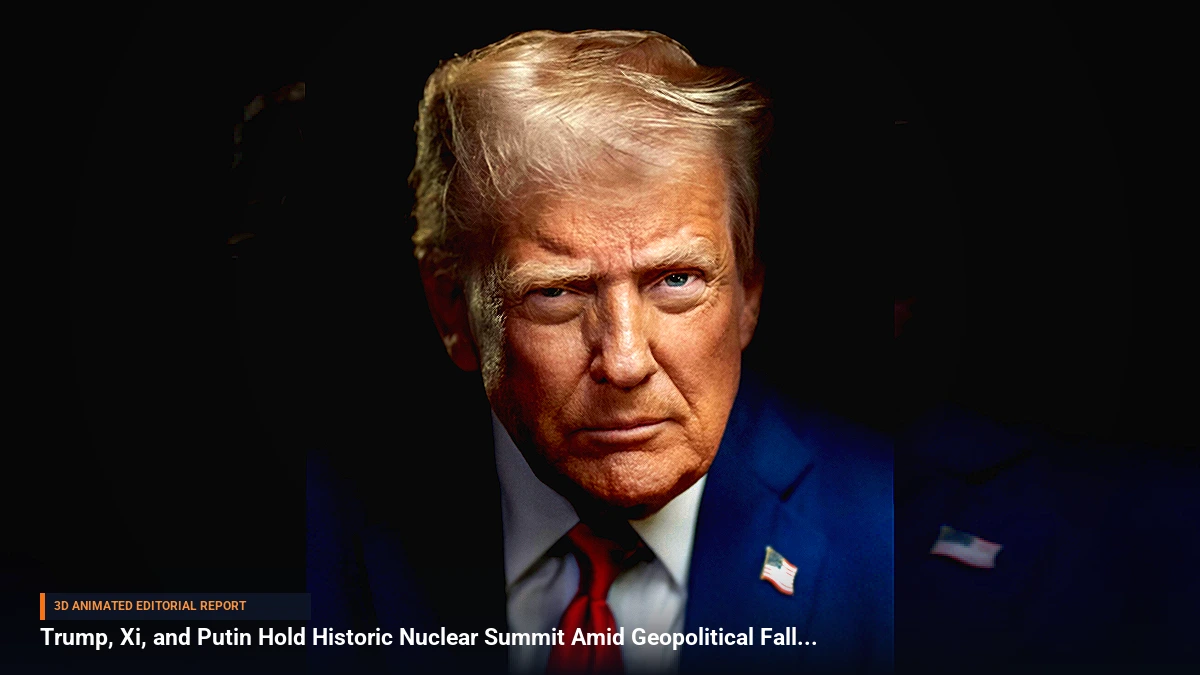
What Happened: The Core Developments
In a rare and closely watched gathering, US President Donald Trump, Chinese President Xi Jinping, and Russian President Vladimir Putin convened a high-stakes three-way summit. Held against the backdrop of rising global tensions, the primary agenda for the meeting centered squarely on nuclear risks and non-proliferation strategies among the world's most formidable atomic powers.
Despite the unprecedented nature of the encounter, diplomatic sources confirmed that the talks concluded without delivering any major breakthroughs or binding disarmament agreements. While the optics of the three leaders sitting together captured global headlines and revived historical comparisons to past Cold War-era summits, the lack of a formal joint statement underscored the profound structural divides that continue to separate Washington, Beijing, and Moscow.
Background & Key Context
The idea of high-level trilateral engagement to curb nuclear proliferation has long been a subject of intense strategic calculation. Analysts noted that the summit represented the absolute limits of personalized diplomacy, attempting to mirror the lofty ambitions of past disarmament frameworks. However, geopolitical realignments over the past decade have made a unified consensus on arms control exceptionally difficult.
For Beijing and Moscow, the trilateral format was viewed by regional observers as a symbolic validation of a multipolar "new world order," projecting an image of global governance dictated primarily by a select group of superpowers. Meanwhile, Washington sought to directly address escalating modern nuclear arsenals and delivery systems, though deep-seated strategic distrust ultimately precluded any substantive policy shifts during the session.
Key Takeaways
- Historic Trilateral Meeting: US, Chinese, and Russian leaders met face-to-face in Shenzhen to explicitly discuss global nuclear risks.
- Absence of Breakthroughs: Despite the high-profile optics, the talks concluded without producing formal non-proliferation agreements or binding treaties.
- Domestic Political Fallout: The summit immediately reverberated outside the core participating nations, sparking sharp political debates abroad.
- Critique from Indian Opposition: Indian opposition leader Rahul Gandhi targeted Prime Minister Narendra Modi, labeling him a "compromised PM" and critiquing India's absence from major power circles.
- Shifting Geopolitical Dynamics: Observers noted that the summit highlighted an evolving global hierarchy where traditional middle powers risk being sidelined by direct superpower negotiations.
Impact, Analysis & Global/National Reactions
The ripple effects of the Shenzhen summit extended far beyond US-China-Russia relations, igniting a fierce domestic controversy in India. Prominent opposition figure Rahul Gandhi seized upon the imagery of the "G3" meeting to launch a scathing critique of Prime Minister Narendra Modi’s foreign policy administration.
Sharing the photograph of Trump, Xi, and Putin, Gandhi asserted that a "compromised PM can never sit at this table," characterizing India's current geopolitical standing as that of a mere "side player." The remarks drew an immediate and furious counter-offensive from the ruling Bharatiya Janata Party (BJP), who dismissed the opposition's commentary and accused critics of undermining India's strategic autonomy.
International relations analysts suggest that the summit's psychological impact on regional powers like India is profound. Even in the absence of policy breakthroughs, the visual of the world's premier nuclear-armed states negotiating security architectures bilaterally or trilaterally signals anxieties for emerging economies striving to maintain independent multilateral leverage.
What's Next: Looking Ahead
As the dust settles from the Shenzhen talks, foreign policy experts will be closely monitoring whether bilateral backchannels between the US, China, and Russia can salvage any actionable arms control frameworks. With major nuclear treaties facing expiration and modernization programs accelerating globally, the imperative for risk-reduction mechanisms remains high.
For international observers, attention will now pivot to upcoming international forums and security dialogues to see if the trilateral momentum translates into formal diplomatic engagements or if it remains merely a momentary exercise in high-stakes theater.

Be the first to comment
Start a useful conversation around this story.