
What Happened: The Core Developments
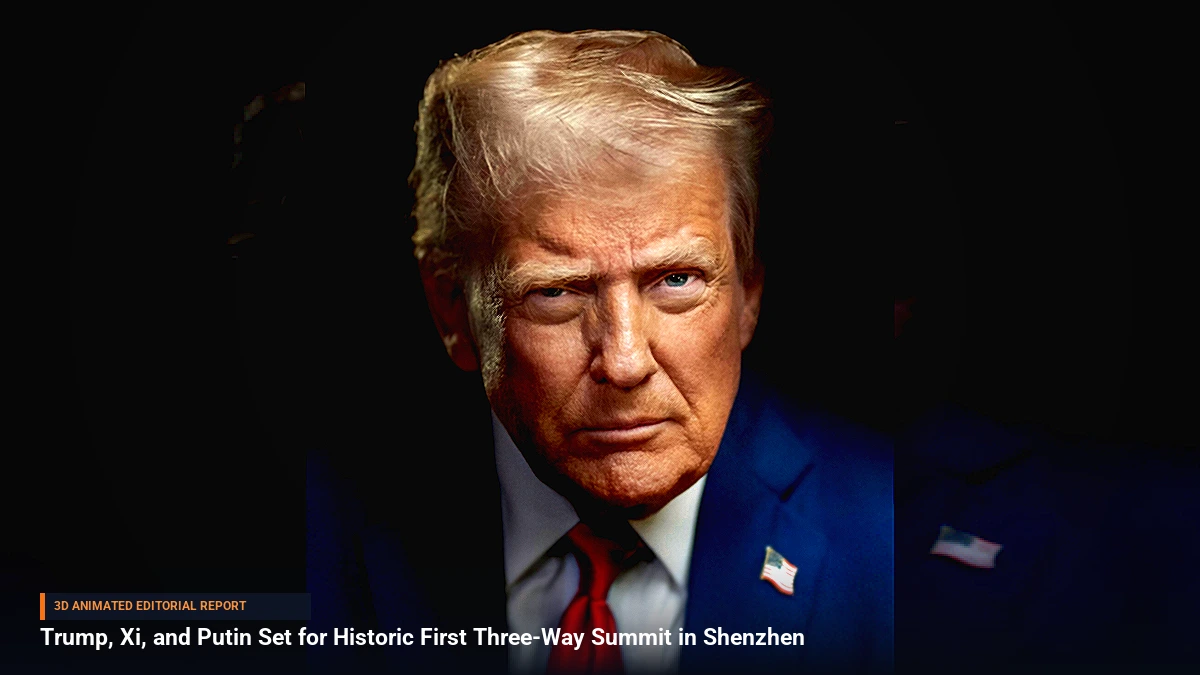
In a landmark alignment of global leadership, US President Donald Trump, Chinese President Xi Jinping, and Russian President Vladimir Putin are preparing to gather in the Chinese technology hub of Shenzhen for a historic first-ever trilateral summit. Operating alongside the broader Asia-Pacific Economic Cooperation (APEC) meetings, this three-way diplomatic encounter brings together three of the world’s most powerful heads of state to address pressing international security and economic architectures.
White House officials confirmed that President Trump plans to aggressively table discussions concerning nuclear-arms reductions during his engagements with Putin and Xi. The inclusion of critical arms control treaties comes amid broader diplomatic maneuvers aimed at recalibrating strategic stability between Washington, Beijing, and Moscow.
Background & Key Context
The Shenzhen trilateral represents a dramatic shift in contemporary great-power politics, drawing immediate historical comparisons to the 1945 Yalta Conference where Allied leaders carved out spheres of influence. For years, direct, three-way engagement of this magnitude was largely considered politically unfeasible given the deep-seated structural rivalries, trade wars, and military standoffs dividing the United States, China, and Russia.
The timing of the summit also coincides with domestic and regional realignments. President Trump arrives in Asia looking to cement diplomatic leverage and project global influence, while navigating complex multilateral dynamics. Meanwhile, Beijing has positioned itself as a central diplomatic venue, hosting global heavyweights in an effort to showcase its central role in steering twenty-first-century geopolitics.
Key Takeaways
- First-Ever Trilateral Meeting: Donald Trump, Xi Jinping, and Vladimir Putin are meeting for a landmark three-way summit in Shenzhen, China.
- APEC Backdrop: The discussions are taking place concurrently with the Asia-Pacific Economic Cooperation summit.
- Nuclear-Arms Focus: The White House has confirmed that President Trump intends to press for nuclear-arms reduction cuts during talks.
- Strategic Divergence: The summit has drawn starkly contrasting reactions from international allies, reflecting deep global divisions over security.
Impact, Analysis & Global/National Reactions
The announcement of the Shenzhen summit has triggered a sharp fracture in international response patterns, separating Indo-Pacific optimism from acute European anxiety.
Australian Prime Minister Anthony Albanese publicly welcomed the high-level dialogue, expressing a pragmatic view that "dialogue is a good thing" when managing global friction. However, the sentiment in European capitals and Kyiv is vastly different. European leaders, alongside Ukrainian President Volodymyr Zelenskyy, have voiced explicit reservations, warning against any potential backroom deals or redistribution of global influence that could compromise Ukrainian sovereignty after more than four years of war following Russia's full-scale invasion.
Political analysts note that the summit embodies a classic balance-and-bargain strategy. While Washington seeks to tackle strategic nuclear stabilization and manage broader bilateral friction with Beijing and Moscow, vulnerable regional stakeholders fear being sidelined in a modern iteration of great-power politics.
What's Next: Looking Ahead
As the delegations finalize closed-door agendas in Shenzhen, attention will quickly shift to the specific outcomes of the trilateral talks. Markets and foreign policy observers will be parsing the joint statements and bilateral readouts for any concrete progress on nuclear arms control treaties, trade adjustments, or shifts in the diplomatic posture regarding ongoing conflicts.
Ultimately, the success or failure of the Shenzhen summit will be measured not just by the handshakes captured on the global stage, but by whether the resulting frameworks can withstand the intense scrutiny of allied nations and prevent further destabilization in Europe and the Indo-Pacific.

Be the first to comment
Start a useful conversation around this story.