
What Happened: The Core Developments
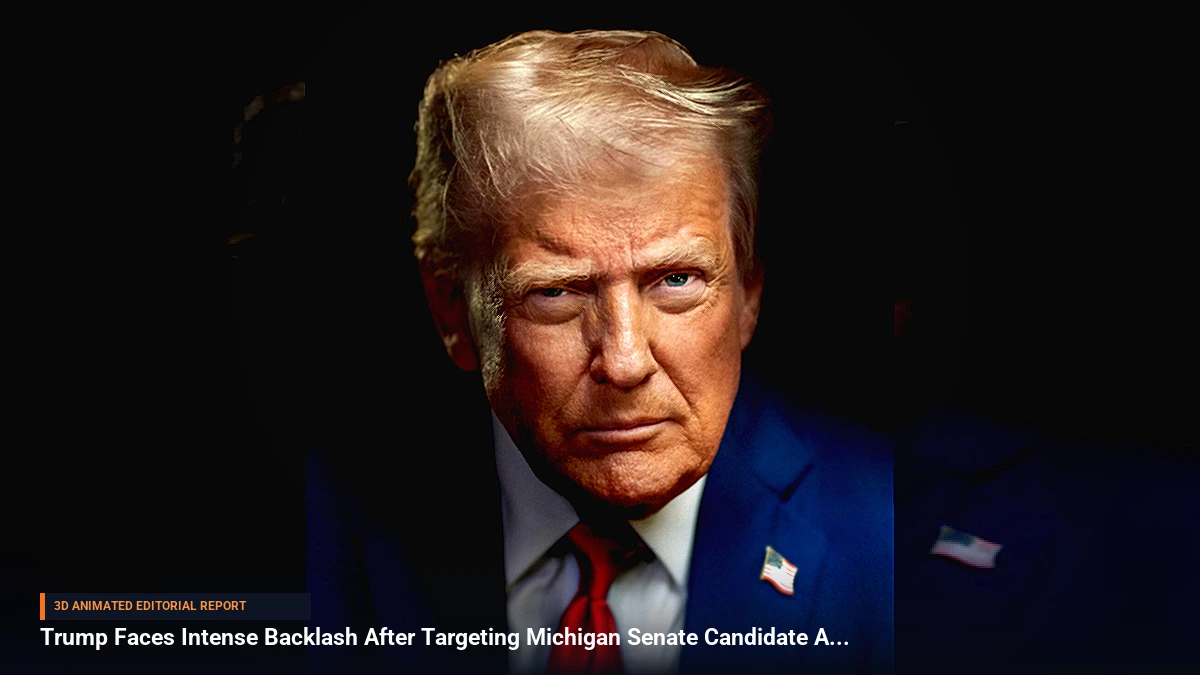
During a heated campaign stop ahead of the upcoming midterm elections, political discourse took a sharp turn toward polarization as former US President Donald Trump directed severe rhetoric at Michigan Senate candidate Abdul El-Sayed. Speaking before a packed crowd of supporters, Trump referred to El-Sayed as a 'jihadist' and publicly questioned his patriotism and fundamental loyalty to the United States.
In an escalation of his campaign rhetoric, Trump invoked the tragic events of September 11, using the national trauma as a rhetorical device to urge Michigan voters to reject the Democratic candidate. The speech quickly drew national scrutiny, setting off an intense wave of condemnation across the political spectrum for its reliance on overt Islamophobic tropes and the weaponization of a foundational national tragedy against a minority candidate.
Background & Key Context
The controversy unfolds against the backdrop of an intensely competitive electoral map where control of the US Senate hangs in the balance. Michigan has long served as a vital battleground state featuring diverse voter demographics, including a substantial Arab-American and Muslim population. Abdul El-Sayed’s campaign has captured significant national attention as a historic bid for representation, highlighting both the growing political engagement of minority communities and the enduring challenges faced by candidates of color in major legislative races.
Historically, the invocation of post-9/11 security narratives has been utilized in American politics to cast doubt on the civic allegiance of Muslim public figures. However, political analysts note that deploying such stark sectarian labeling directly against a major-party Senate contender represents an acute escalation in contemporary campaign tactics, reflecting how deeply polarized modern electoral battles have become.
Key Takeaways
- Escalated Rhetoric: Donald Trump publicly labeled Michigan Senate candidate Abdul El-Sayed a 'jihadist' during a campaign rally.
- Invocation of Tragedy: The speech explicitly tied the candidate to the events of September 11 to urge voters against supporting him.
- Bipartisan and Cross-Party Backlash: The remarks sparked immediate and forceful condemnation from El-Sayed, Senator Bernie Sanders, and other key political figures.
- Electoral Stakes: The clash highlights the intense national focus on Michigan's Senate race and the weaponization of identity politics in midterm elections.
Impact, Analysis & Global/National Reactions
The fallout from the rally was swift, with civil rights organizations, community leaders, and political figures rallying to condemn the remarks. Abdul El-Sayed hit back firmly against the attacks, rejecting the accusations and framing the rhetoric as a desperate attempt to divide communities through fear and bigotry rather than engaging on policy issues.
Prominent lawmakers also weighed in. Senator Bernie Sanders and other high-profile figures voiced fierce opposition to Trump’s statements, arguing that normalizing Islamophobia and exploiting national tragedies damages the democratic fabric of the country. Political scientists observe that while such aggressive rhetoric aims to energize a specific base of voters, it risks alienating moderate suburban constituencies and galvanizing minority turnout, potentially altering the competitive dynamics in the Michigan race.
What's Next: Looking Ahead
As the midterm election cycle nears its climax, the incident is expected to remain a focal point in the Michigan Senate contest. Campaign strategists on all sides will be monitoring how the controversy influences voter turnout, fundraising numbers, and local polling trends. Civil rights advocates are calling for greater accountability in political discourse, while community groups in Michigan organize get-out-the-vote efforts to counter the divisive narrative with civic participation.






Be the first to comment
Start a useful conversation around this story.