
What Happened: The Core Developments
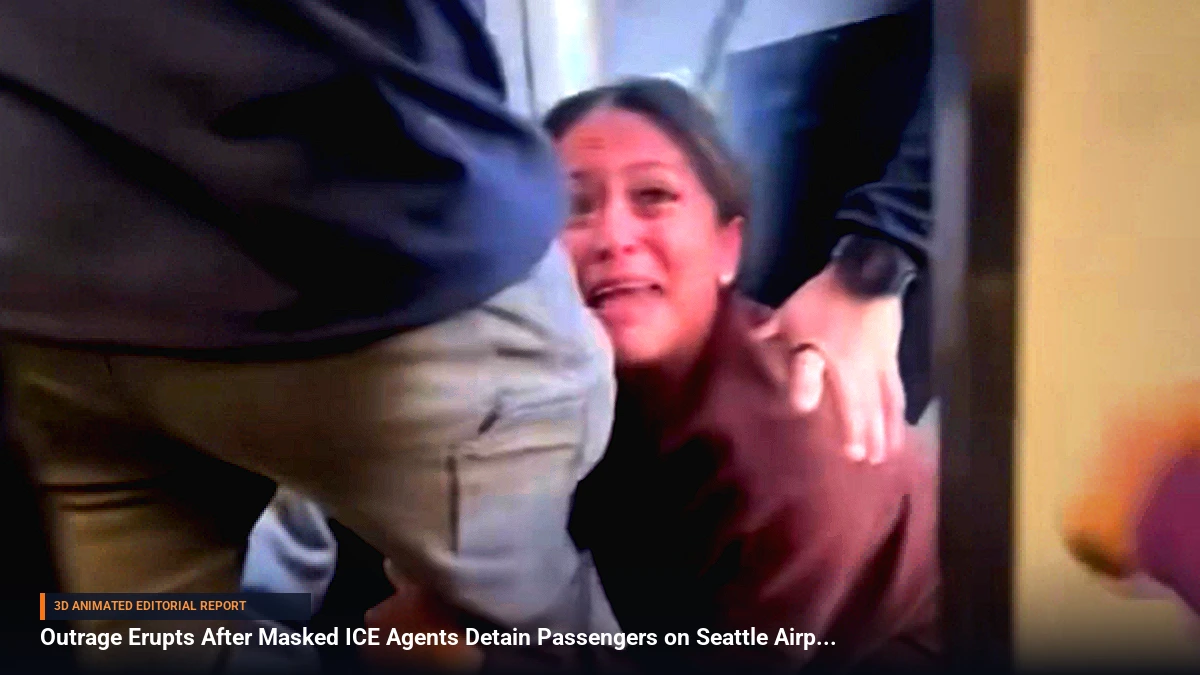
Operational friction between federal immigration enforcement and local municipal authorities reached a boiling point following a dramatic enforcement action at Seattle-Tacoma International Airport (SEA). Masked ICE agents intercepted and detained two passengers directly on an airport jet bridge as travelers were actively boarding an outgoing Alaska Airlines flight.
Captured on video by stunned onlookers, the operation caused immediate chaos inside the transit corridor. The masked operatives moved quickly to secure the individuals, blocking the boarding path and leaving fellow passengers bewildered. While federal authorities conducted the raid under standard operational parameters, the choice of a commercial jet bridge—a secure, semi-enclosed transit area—instantly escalated tensions between local stakeholders and federal agencies.
Background & Key Context
Airports represent complex jurisdictional boundaries where federal security agencies, local port authorities, and private airlines intersect. While federal immigration bodies possess broad enforcement powers across domestic ports of entry, operations conducted without prior coordination with local airport operators frequently strain inter-agency relations.
The latest incident at SEA mirrors a broader national debate over the methods and visibility of immigration enforcement actions. Local jurisdictions, particularly in progressive metropolitan hubs like Seattle, have long maintained strict boundaries regarding local cooperation with federal immigration policies. Executing a high-visibility raid inside a commercial boarding bridge bypasses standard local communication channels, directly igniting institutional friction.
Key Takeaways
- Direct Jet Bridge Raid: Masked ICE agents detained two travelers on an active Alaska Airlines boarding bridge at Seattle-Tacoma International Airport.
- Operational Chaos: The midday ambush startled passengers and created severe bottlenecks during the boarding process.
- Local Backlash: Port of Seattle officials, regional union representatives, and state leaders expressed profound outrage over the maneuver.
- Jurisdictional Tension: The incident underscores deep-seated friction between federal enforcement tactics and local municipal oversight.
- Unanswered Questions: Key details regarding the exact legal rationale and the identities of the detained individuals remain under intense scrutiny.
Impact, Analysis & Global/National Reactions
The immediate fallout from the SEA Airport incident transcended local headlines, sparking a wave of national condemnation from political leaders and civil rights advocates alike. Port of Seattle officials swiftly issued statements denouncing the operation, arguing that executing unannounced enforcement actions within commercial passenger spaces jeopardizes public trust and airport security protocols.
Regional political figures characterized the operation as heavy-handed and alarming. Governor-level and municipal critics labeled the enforcement style "out of control," arguing that staging such dramatic arrests in confined public transit zones creates unnecessary panic. Conversely, federal defenders of immigration enforcement maintain that agents must retain tactical flexibility when tracking targets who utilize commercial aviation networks.
What's Next: Looking Ahead
As civil liberties groups and municipal authorities demand greater transparency from federal agencies, the incident is expected to fuel legislative scrutiny over federal jurisdiction at regional airports. Stakeholders are pushing for clearer inter-agency protocols to prevent future high-impact operations inside secure commercial travel zones, setting the stage for prolonged legal and political debates regarding federal enforcement boundaries.



Be the first to comment
Start a useful conversation around this story.