
What Happened: The Core Developments
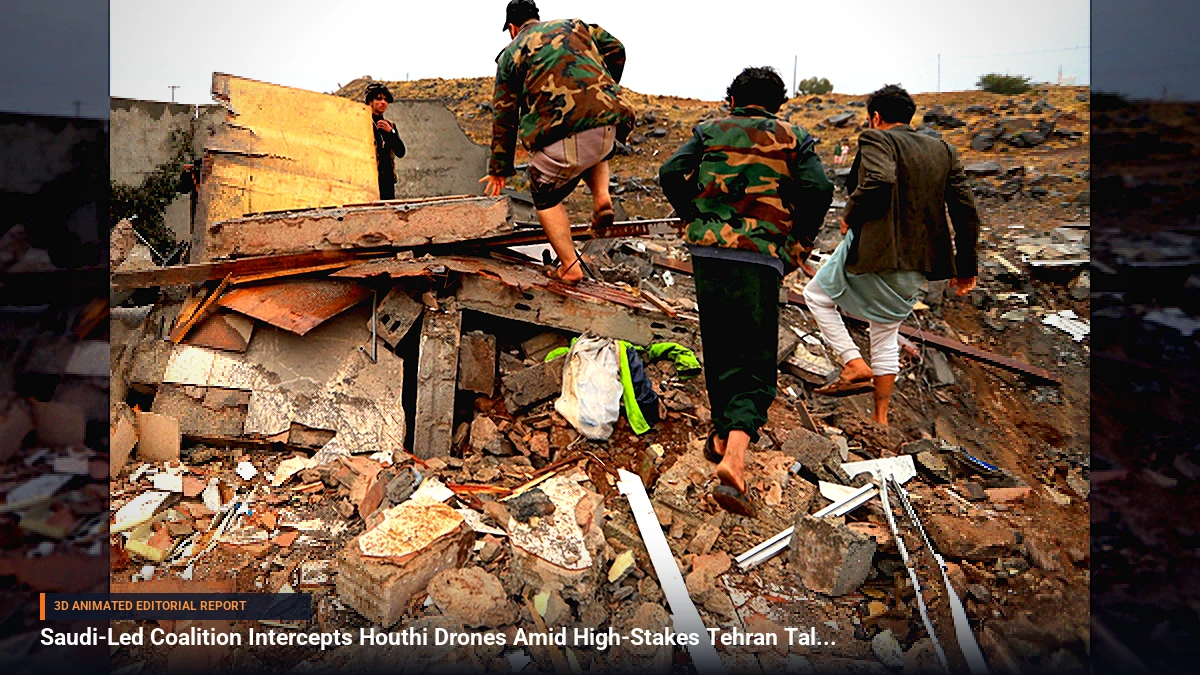
Tensions across the Arabian Peninsula have spiked following a coordinated wave of aerial assaults and subsequent defensive counter-operations. The Saudi-led coalition announced that it successfully intercepted and downed multiple Houthi missiles and drones aimed at critical infrastructure within the kingdom.
Concurrently, Yemen's Houthi movement asserted that it had successfully struck the vital Ras Tanura oil refinery utilizing a ballistic missile. While the coalition maintains that incoming projectiles were intercepted or destroyed before meeting their targets, the physical impact of the engagement was clearly felt on the ground. In the Saudi city of Khamis Mushait, falling debris from intercepted missiles resulted in localized property damage.
In response to the aerial incursions, the coalition launched targeted retaliatory strikes against military infrastructure in Yemen. According to official briefings, these operations destroyed several Houthi ballistic missile launchers, underground tunnels, and dedicated weapons storage depots designed to shelter offensive armaments.
Background & Key Context
This latest military friction highlights the persistent fragility of security architectures in the Gulf, unfolding against a complex backdrop of regional diplomacy. Strikingly, the cross-border attacks occurred while top-tier diplomatic delegations from Saudi Arabia, Turkey, Pakistan, and Iran were gathered in Tehran.
The primary agenda of the Tehran meetings centered on diplomatic de-escalation, regional confidence-building, and mitigating the broader fallout of protracted conflicts across the Middle East. The juxtaposition of high-level peace talks alongside active battlefield escalations underscores the immense challenge of synchronizing diplomatic breakthroughs with ground-level military compliance from non-state actors.
Key Takeaways
- Aerial Interceptions: The Saudi-led coalition reported intercepting multiple drones and missiles targeting the kingdom.
- Contradictory Claims: While Riyadh claims successful defense operations, the Houthis insist they landed a direct hit on the Ras Tanura oil refinery.
- Collateral Damage: Falling debris from intercepted ordnance caused measurable property damage in the Saudi city of Khamis Mushait.
- Coalition Retaliation: Precision airstrikes by the coalition destroyed Houthi missile launchers, storage depots, and underground tunnels in Yemen.
- Diplomatic Paradox: The attacks transpired simultaneously with high-stakes regional peace and de-escalation talks hosted in Tehran.
Impact, Analysis & Global/National Reactions
The simultaneous occurrence of high-level diplomatic engagement in Tehran and aggressive tactical maneuvers on the ground illustrates a profound friction point in regional security. Analysts note that while regional powers like Saudi Arabia and Iran are actively exploring channels for stability, proxy dynamics and autonomous military postures continue to threaten fragile truces.
The conflicting reports regarding the status of the Ras Tanura facility—a cornerstone of global energy supply chains—remains a central point of concern for international markets. Although the Saudi-led coalition maintains that its air defense grid neutralized the threat, the psychological and economic jitters associated with infrastructure targeting continue to reverberate among global stakeholders.
What's Next: Looking Ahead
As the dust settles from the latest exchange of aerial fire, international observers will closely monitor the trajectory of the Tehran-hosted diplomatic consultations. The core question facing regional negotiators is whether diplomatic frameworks can effectively translate into enforceable ceasefires on the ground.
Market analysts and security experts will likewise track potential updates concerning energy facility security and any subsequent statements from international monitors regarding the structural integrity of targeted Saudi industrial sites. Further diplomatic rounds are expected, but their efficacy will likely hinge on the immediate restraint demonstrated by combatants in Yemen and their external backers.


Be the first to comment
Start a useful conversation around this story.