
What Happened: The Core Developments
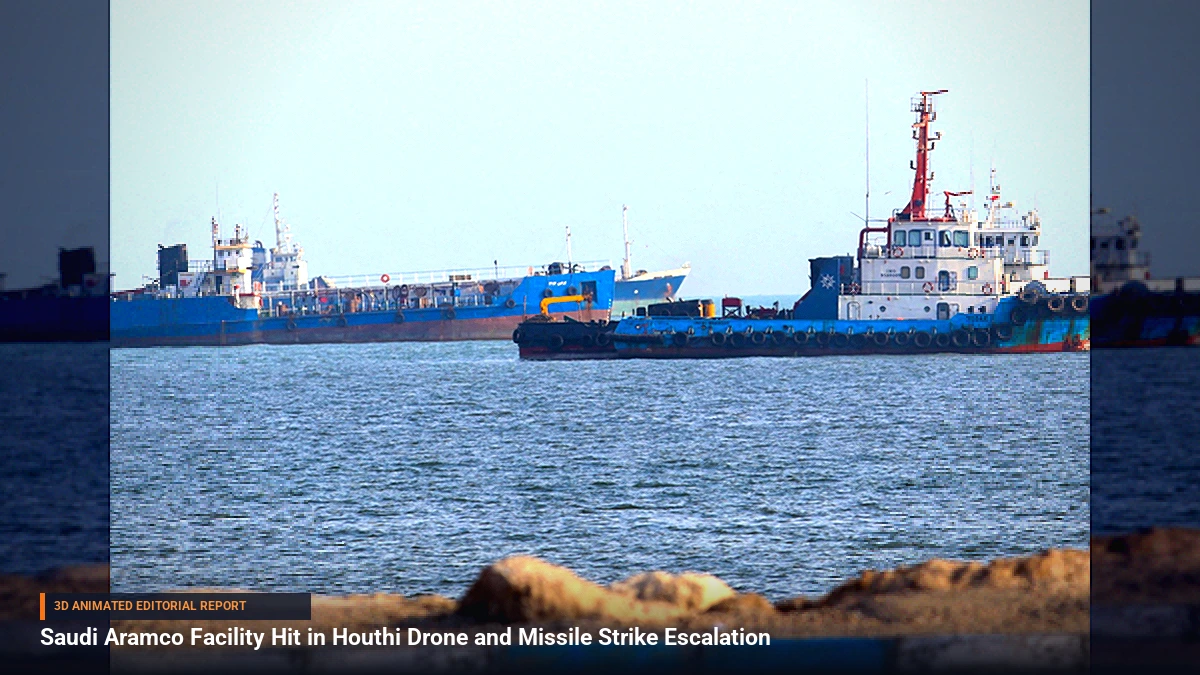
Tensions across the Middle East escalated sharply following a coordinated wave of cross-border attacks directed at strategic locations within Saudi Arabia. A primary Saudi Aramco administrative and operational building located in the eastern hub of Dhahran sustained a direct hit, resulting in a localized fire. Emergency responders and structural teams were quickly deployed to the site to contain the blaze and secure the perimeter.
Simultaneously, Saudi air defense systems engaged multiple incoming projectile threats. Military authorities confirmed the successful interception of several ballistic missiles and explosive-laden drones aimed at major population and economic centers, including the capital city of Riyadh and the eastern energy hub of Dhahran. While interception rates remained high, falling shrapnel and debris from the neutralized projectiles resulted in structural damage on the ground and multiple civilian injuries across targeted zones.
Background & Key Context
This recent flare-up represents a dangerous intensification of hostilities connected to the broader regional conflict involving Iran-backed Houthi forces in Yemen. Over recent years, energy infrastructure within the Kingdom—specifically facilities tied to Saudi Aramco, one of the world's largest petroleum enterprises—has frequently featured as a strategic target in regional power struggles. The latest offensive breaks a relative lull in direct long-range aerial attacks against Saudi territory, testing the Kingdom's sophisticated multi-layered air defense architecture.
In swift response to the bombardment, the Saudi-led military coalition launched retaliatory counter-offensives, focusing heavily on vital Houthi-held military assets, command nodes, and launch sites situated in the Yemeni capital of Sanaa. Meanwhile, Houthi leadership has publicly vowed to expand operations against regional energy installations and transportation hubs, signaling that further provocations and defensive responses are likely in the immediate future.
Key Takeaways
- Aramco Facility Impact: A critical Saudi Aramco building in Dhahran was directly struck, triggering a localized fire and raising immediate concerns over energy security.
- Air Defense Interceptions: Saudi defense systems successfully intercepted incoming missiles targeting Riyadh and Dhahran, though falling debris caused ground injuries and localized property damage.
- Coalition Retaliation: The Saudi-led military coalition responded rapidly with targeted airstrikes against Houthi military positions in Sanaa, Yemen.
- Domestic Disruptions: The security crisis has directly impacted public life, forcing the postponement of three major Saudi Pro League football matches, including a high-profile fixture featuring Cristiano Ronaldo's Al Nassr.
- Heightened Regional Threat: Houthi officials have issued warnings of continued strikes against regional airports and oil infrastructure.
Impact, Analysis & Global/National Reactions
The immediate fallout of the Dhahran strike extends beyond military and security circles, directly touching civilian life and the domestic economy. In a rare intersection of geopolitical conflict and professional sports, the Saudi Pro League committee announced the postponement of three high-profile football fixtures. Among the affected games was a heavily anticipated match featuring Al Nassr, spotlighting how widespread security alerts are disrupting everyday normalcy within the Kingdom.
Energy market analysts and international observers are closely monitoring the situation for potential ripple effects on global petroleum supply chains. While physical production levels at Aramco have not suffered catastrophic halts, repeated targeting of key administrative and processing installations underscores the persistent vulnerability of critical Middle Eastern energy infrastructure to asymmetric drone and missile warfare.
What's Next: Looking Ahead
As security forces maintain a heightened state of alert across Riyadh, Dhahran, and other vital urban centers, diplomatic and military channels are weighing their next moves. The Saudi-led coalition is expected to sustain its campaign of precision airstrikes in Yemen to degrade Houthi launch capabilities. Meanwhile, international stakeholders are urging restraint to prevent a wider regional conflagration that could destabilize global energy markets and international shipping lanes.



Be the first to comment
Start a useful conversation around this story.