
What Happened: The Core Developments
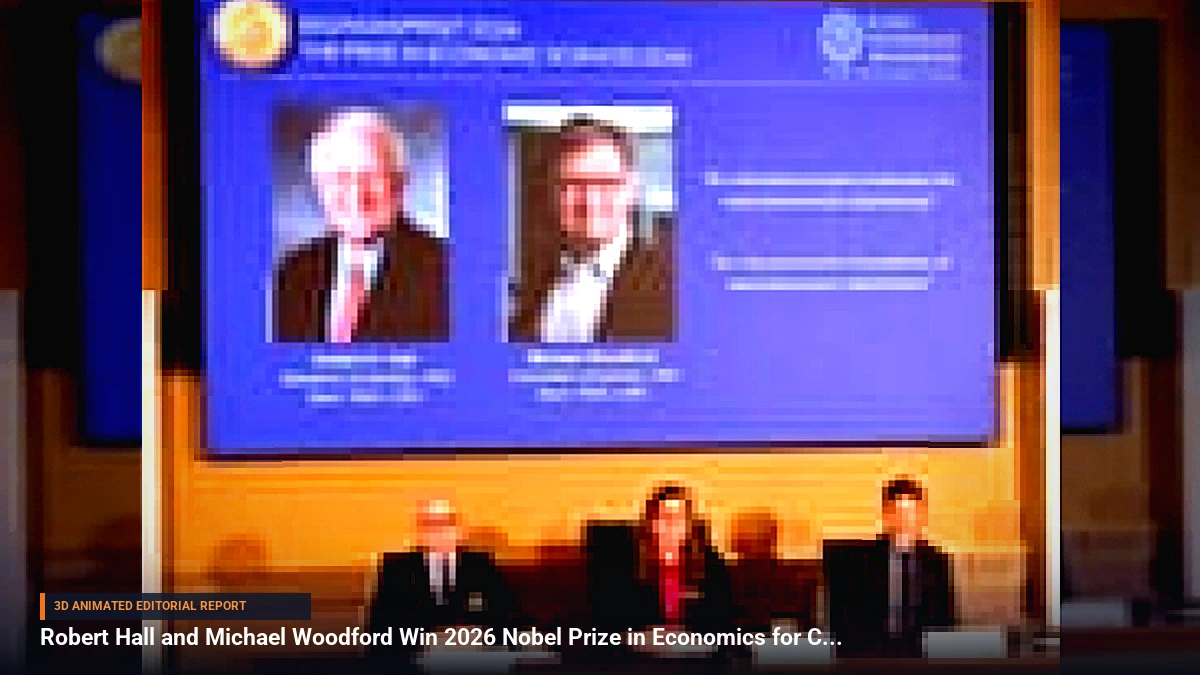
The 2026 Nobel Prize in Economic Sciences has been jointly awarded to Robert Hall of Stanford University and Michael Woodford of Columbia University. Announced by the award committee, the prestigious prize recognizes their groundbreaking contributions toward establishing the microeconomic foundations of macroeconomic stabilization.
By building sophisticated theoretical models rooted in individual economic behavior, Hall and Woodford successfully transformed how finance ministers and central bankers manage national economies. Their insights have become indispensable tools for preventing prolonged economic slumps and reining in runaway inflation during periods of acute volatility.
Background & Key Context
For decades, economic theory struggled to bridge the gap between individual decision-making—microeconomics—and large-scale economic performance—macroeconomics. Traditional models often fell short when predicting how populations would react to sudden shocks, supply chain disruptions, or shifts in central bank interest rates.
Robert Hall and Michael Woodford pioneered the New Keynesian framework, integrating realistic assumptions about consumer behavior, corporate pricing, and wage adjustments into monetary policy models. Their work demonstrated how central banks could systematically "smooth out" the volatile business cycles of peaks and troughs, steering financial systems toward sustainable growth without triggering structural collapses.
Key Takeaways
- The Laureates: Robert Hall (Stanford University) and Michael Woodford (Columbia University) share the 2026 honor.
- The Core Contribution: Developing microeconomic foundations for macroeconomic stabilization.
- Policy Impact: Their models equip central bankers and finance ministers with frameworks to avert deep recessions and curb runaway inflation.
- Theoretical Evolution: Advanced the New Keynesian economic model by connecting individual choices directly to national monetary outcomes.
Impact, Analysis & Global/National Reactions
The recognition of Hall and Woodford underscores a crucial shift in modern economic policy, especially as global markets continue to grapple with post-pandemic inflation, shifting labor dynamics, and geopolitical shocks. Economists worldwide have praised the selection, noting that modern monetary policy—including inflation targeting and forward guidance practiced by institutions like the U.S. Federal Reserve and the European Central Bank—owes a heavy intellectual debt to Woodford's comprehensive treatises on interest rate rules.
Institutional analysts point out that without these advanced stabilization models, central banks would lack the rigorous analytical backing needed to deploy emergency interventions swiftly during global crises.
What's Next: Looking Ahead
As central banks worldwide face ongoing pressures from shifting interest rate environments and emerging financial technologies, the principles established by Hall and Woodford will remain at the forefront of academic and policy debates. Policymakers are expected to draw heavily on these foundational frameworks as they reevaluate how monetary policy tools interact with evolving labor markets and globalized supply chains in the years ahead.






Be the first to comment
Start a useful conversation around this story.