
What Happened: The Core Developments
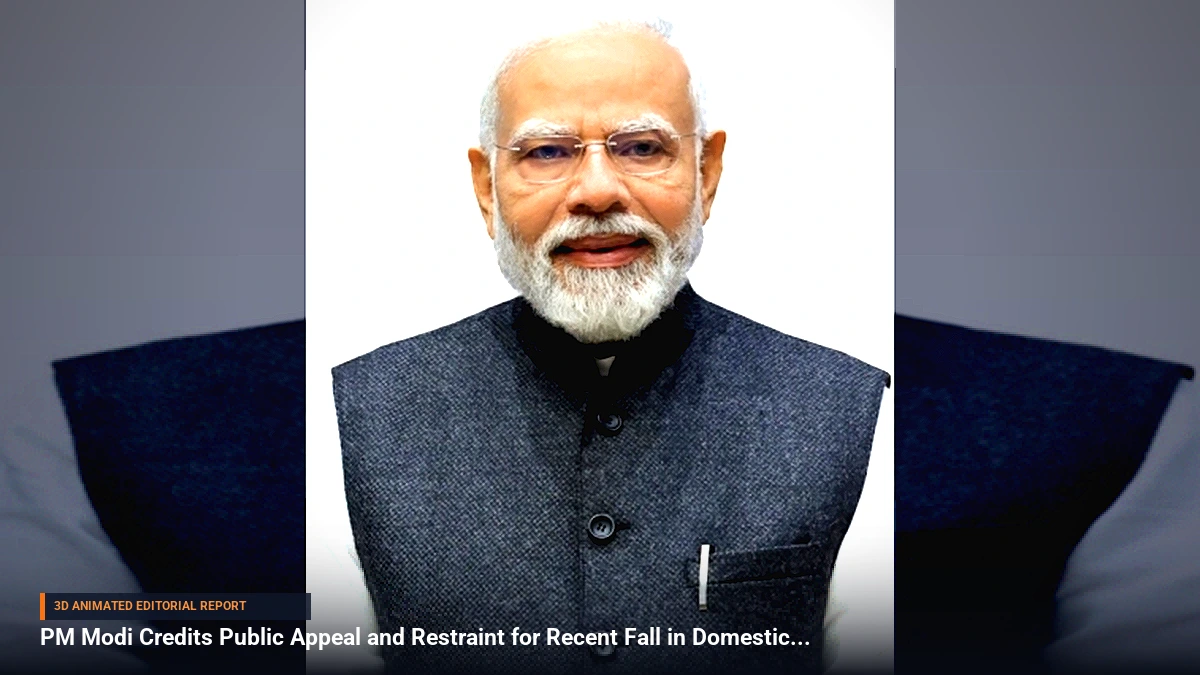
Prime Minister Narendra Modi recently highlighted a notable downward shift in domestic gold prices, directly attributing the market correction to the cooperative restraint shown by Indian consumers. According to the Prime Minister, a public response to his May appeal—urging citizens to curtail heavy gold purchases during a volatile economic window—played a decisive role in reducing retail demand and easing bullion prices.
The initial advisory was issued during a period when India's foreign exchange reserves faced severe macro headwinds, exacerbated by escalating geopolitical tensions in the Middle East and a sharp spike in international crude oil prices. By voluntarily curbing non-essential gold acquisitions, the domestic populace helped stabilize domestic fiscal metrics.
Background & Key Context
Gold holds profound cultural, social, and economic significance in India, traditionally serving as both a primary retail investment hedge and a store of family wealth. However, massive physical gold imports historically exert immense pressure on India's current account deficit (CAD) and foreign exchange reserves.
In May, external shocks involving volatile energy markets and currency depreciation forced policymakers to look at structural and behavioral solutions to safeguard national financial stability. Prime Minister Modi's appeal functioned as an unconventional moral suasion strategy, prompting citizens to reconsider immediate bullion purchases in favor of broader national monetary health.
Key Takeaways
- Consumer Restraint: Prime Minister Modi credited the Indian public's conscious decision to buy less gold for the subsequent price correction.
- Macroeconomic Triggers: The original May appeal was prompted by severe pressure on India's foreign exchange reserves driven by Middle East conflicts and high crude oil prices.
- Trade Body Endorsement: A prominent trade organization publicly thanked the Prime Minister, asserting that his guidance successfully preserved the hard-earned capital of hundreds of thousands of families.
- Productive Asset Shifting: Union Minister Piyush Goyal noted that the advisory effectively channeled capital away from idle bullion and toward productive national assets, simultaneously curbing overall gold imports.
- Political Fallout: The Bharatiya Janata Party (BJP) leveraged the market outcome to target the opposition Congress party, demanding apologies over previous criticisms regarding government economic advisories.
Impact, Analysis & Global/National Reactions
The economic implications of this consumer-led demand suppression extend far beyond simple retail price adjustments. Union Minister Piyush Goyal emphasized that shifting domestic investment preferences away from passive precious metal hoarding and toward productive economic assets helps rein in heavy import bills, defending the rupee against external shocks.
Trade bodies have strongly backed the narrative, pointing out that moderating speculative buying protected everyday families from purchasing gold at market peaks. Meanwhile, the political arena has seen sharp exchanges. The BJP launched targeted political counter-offensives against the Congress party, arguing that the positive outcomes of the advisory validate the administration's economic management while discrediting earlier opposition criticism.
What's Next: Looking Ahead
As global supply chains navigate ongoing geopolitical uncertainties and fluctuating energy benchmarks, India's macroeconomic managers continue to monitor foreign exchange stability and trade deficits closely. Analysts expect retail gold patterns to remain sensitive to international currency movements and central bank reserve strategies. Whether moral suasion will remain a foundational tool for managing domestic consumption habits during future economic squeezes remains a critical question for economic observers and policymakers alike.





Be the first to comment
Start a useful conversation around this story.