
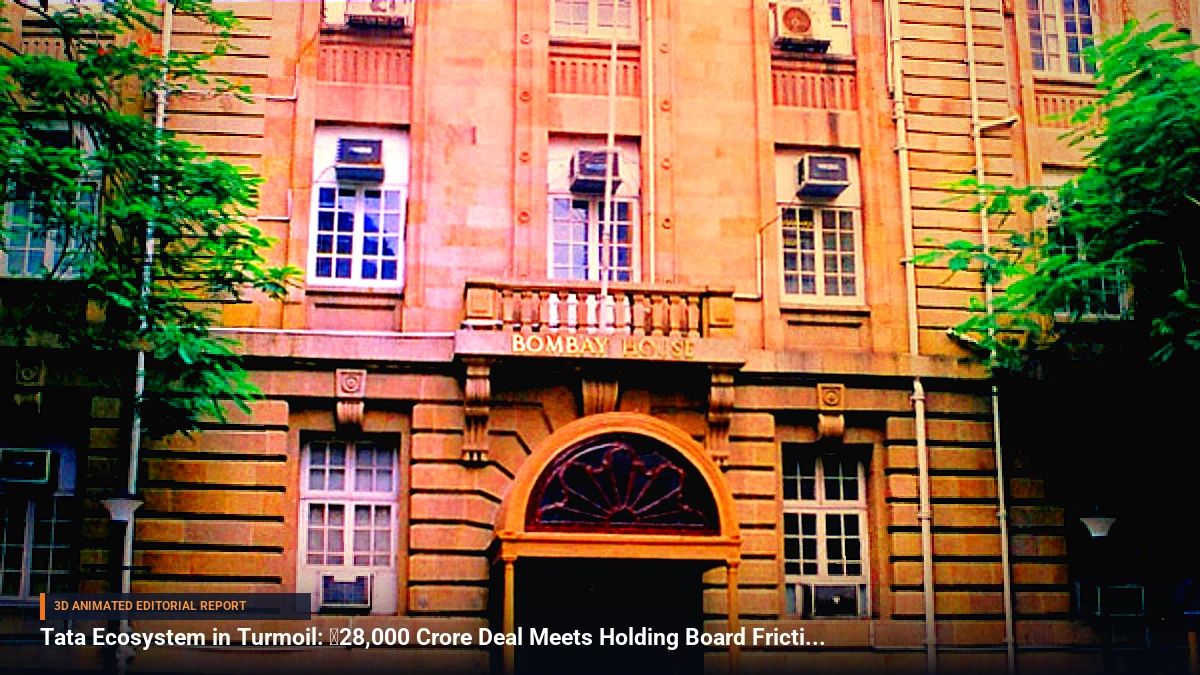
What Happened: The Core Developments
The broader Tata corporate ecosystem finds itself at the center of intense market speculation and internal friction following simultaneous high-stakes developments. On the industrial front, a massive business arrangement valued at approximately ₹28,000 crore involving Tata Steel and APL Apollo Tubes has emerged. While detailed reporting outlines a major transaction concerning specific manufacturing units, asset restructuring, and strategic stakes, market interpretations have varied regarding the exact directional flow of the multi-billion-rupee deal.
Concurrently, at the apex holding company level, Noel Tata has initiated a strong procedural challenge. Through a detailed communication directed at the Tata Sons board, he raised critical governance objections. His intervention demands strict accountability, including formal access to board meeting recordings and official clarifications regarding voting procedures and high-level reappointments, setting the stage for significant boardroom friction.
Background & Key Context
The intersection of large-scale industrial portfolio optimization and foundational governance debates underscores the complex nature of India's largest conglomerates. Tata Steel has consistently pursued portfolio streamlining to focus on core, high-margin operations while divesting or consolidating peripheral business lines. Simultaneously, structural relationships between operating companies and holding entities like Tata Sons have historically faced scrutiny to ensure alignment with minority shareholder interests, regulatory mandates, and institutional protocols.
Noel Tata’s recent governance salvo reflects a heightened focus on procedural rigor within the Tata Trusts and Tata Sons ecosystem. Observers note that leadership transitions and strategic realignment often spark rigorous debates over voting rights, executive reappointments, and transparency in minutes management, directly influencing investor sentiment.
Key Takeaways
- Massive Valuation: The industrial transaction between Tata Steel and APL Apollo Tubes carries a staggering estimated valuation of ₹28,000 crore.
- Asset Rebalancing: The deal focuses on specific business units, tubes manufacturing divisions, or strategic equity stakes, showcasing ongoing portfolio adjustments.
- Governance Friction: Noel Tata’s formal communication to the Tata Sons board challenges existing procedural norms and demands rigorous transparency.
- Boardroom Scrutiny: Key areas of contention involve meeting recordings, voting validity during leadership reappointments, and regulatory correspondences.
- Market Impact: Investors are closely monitoring both the strategic execution of the industrial deal and the potential ramifications of holding-level governance debates.
Impact, Analysis & Global/National Reactions
Corporate analysts suggest that these concurrent developments illustrate the dual pressures faced by legacy conglomerates: maintaining aggressive growth and portfolio restructuring while adhering to the highest standards of corporate governance.
Market participants have reacted with cautious watchfulness. While the scale of the ₹28,000-crore arrangement signals robust industrial demand and strategic repositioning in the metals and tubes sector, holding-level disputes introduce short-term volatility and questions surrounding boardroom consensus. Corporate governance experts emphasize that transparent communication from leadership will be vital to preserving institutional confidence and stabilizing stakeholder expectations.
What's Next: Looking Ahead
As the corporate calendar advances, all eyes remain fixed on forthcoming board proceedings and official corporate filings. Stakeholders will be tracking whether definitive structures for the Tata Steel and APL Apollo arrangement are formally finalized and cleared by regulatory authorities. Additionally, the resolution—or escalation—of Noel Tata’s governance demands during upcoming board sessions will serve as a crucial bellwether for the future direction of decision-making within the Tata ecosystem.


Be the first to comment
Start a useful conversation around this story.