
What Happened: The Core Developments
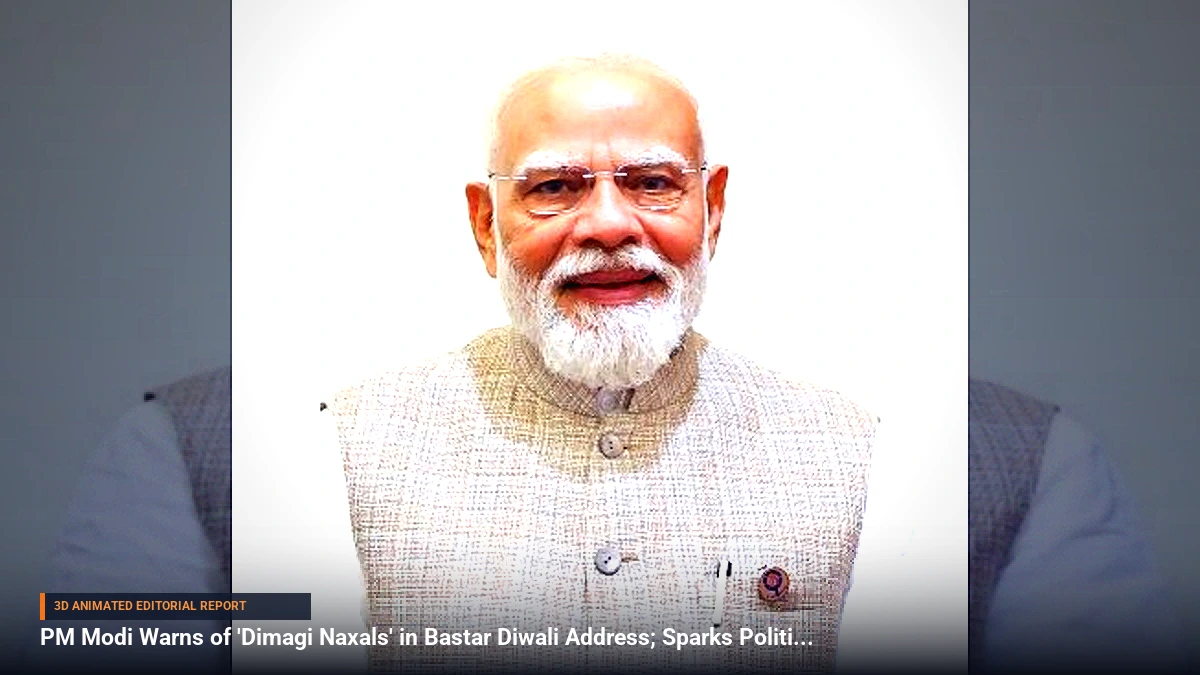
During his traditional Diwali celebrations with frontline security personnel, Prime Minister Narendra Modi traveled to the CoBRA Operations Base located in Karanpur, Bastar, Chhattisgarh—a region historically recognized as a central stronghold for Maoist insurgency. Surrounded by elite commandos and jawans, the Prime Minister acknowledged the significant sacrifices made by security forces over decades of conflict to reclaim these territories.
However, the focal point of his address quickly turned from battlefield victories to a more insidious internal security concern. PM Modi explicitly warned that while armed combatants have been cleared out from the dense jungles, the threat matrix has evolved. He coined and emphasized the concept of 'dimagi Naxals' (intellectual or ideological Naxals), asserting that these sympathizers have stealthily infiltrated various civic, educational, and political organizations to propagate destabilizing agendas.
Simultaneously, other top-tier cabinet officials marked the festival of lights on high-alert frontiers. Defence Minister Rajnath Singh spent Diwali with Army troops along the Indo-China border in Sikkim, paying glowing tributes to the nation's bravehearts and emphasizing the critical need for continued operational readiness against emerging proxy, cyber, and drone threats.
Background & Key Context
For decades, India's internal security apparatus has focused heavily on counter-insurgency operations in the 'Red Corridor,' particularly across Chhattisgarh, Jharkhand, and Odisha. The Bastar region, in particular, stood for years as an impenetrable bastion for Left-Wing Extremism (LWE), characterized by frequent ambushes, landmine blasts, and heavy casualties among security personnel.
In recent years, an aggressive push by federal and state security forces, bolstered by forward operating bases and specialized jungle warfare units like the CoBRA battalions, has systematically dismantled the physical infrastructure of Maoist groups. Entire leadership hierarchies have been neutralized or driven out of their forest sanctuaries. Yet, as kinetic military operations successfully reduce armed resistance to historic lows, security planners and political leadership have increasingly turned their analytical gaze toward urban networks, funding channels, and ideological front organizations that sustain the movement's ecosystem from behind the scenes.
Key Takeaways
- Shift in Security Focus: Prime Minister Modi declared that armed Maoism in forest strongholds has been effectively dismantled.
- The 'Dimagi Naxal' Warning: The government has flagged ideological and intellectual sympathizers inside civilian structures as the next frontier of internal security management.
- Bastar Celebrations: The Prime Minister spent Diwali with elite CoBRA forces in Karanpur, reinforcing solidarity with frontline personnel in a formerly high-threat zone.
- Simultaneous Border Outreach: Defence Minister Rajnath Singh celebrated Diwali with troops in Sikkim, highlighting modern defense challenges including cyber and drone warfare.
- Rapid Political Backlash: Opposition parties, notably the Congress party, immediately condemned the Prime Minister's remarks, framing them as a sign of political desperation.
Impact, Analysis & Global/National Reactions
The Prime Minister's remarks in Bastar have ignited a vigorous national debate regarding the boundaries between legitimate civil dissent and ideological subversion. Security analysts point out that transitioning from physical counter-insurgency to investigating urban networks is a logical phase in counter-terrorism doctrines globally. However, critics and political opponents argue that the terminology is overly broad and risks criminalizing institutional dissent, human rights advocacy, and lawful political opposition.
Reacting sharply to the statements, leadership from the Congress party dismissed the warnings as a political gimmick. Opposition spokespersons argued that rhetoric targeting 'dimagi Naxals' reflects mounting administrative anxiety and political vulnerability, asserting that the current administration's time in power is drawing to a close.
Conversely, supporters of the ruling administration argue that ignoring ideological sympathizers leaves the nation vulnerable to proxy radicalization and coordinated civil disruption. Security experts emphasize that modern insurgencies rarely survive on forest combat alone; they rely on urban logistics, propaganda, and legal shielding, making the scrutiny of non-violent enablers a vital component of holistic national security.
What's Next: Looking Ahead
As India moves past the festive season, the debate over how state and central agencies will legally and administratively define and handle 'dimagi Naxals' remains wide open. Legal scholars and civil liberties organizations are closely watching for any formal policy directives, investigative guidelines, or legislative proposals that might emerge from the Ministry of Home Affairs regarding urban networks.
At the same time, security forces are expected to maintain heavy vigilance in formerly LWE-dominated pockets like Bastar to prevent any resurgence or regrouping of armed factions, even as focus broadens toward digital monitoring, financial tracking, and counter-propaganda measures nationwide.





Be the first to comment
Start a useful conversation around this story.