
What Happened: The Core Developments
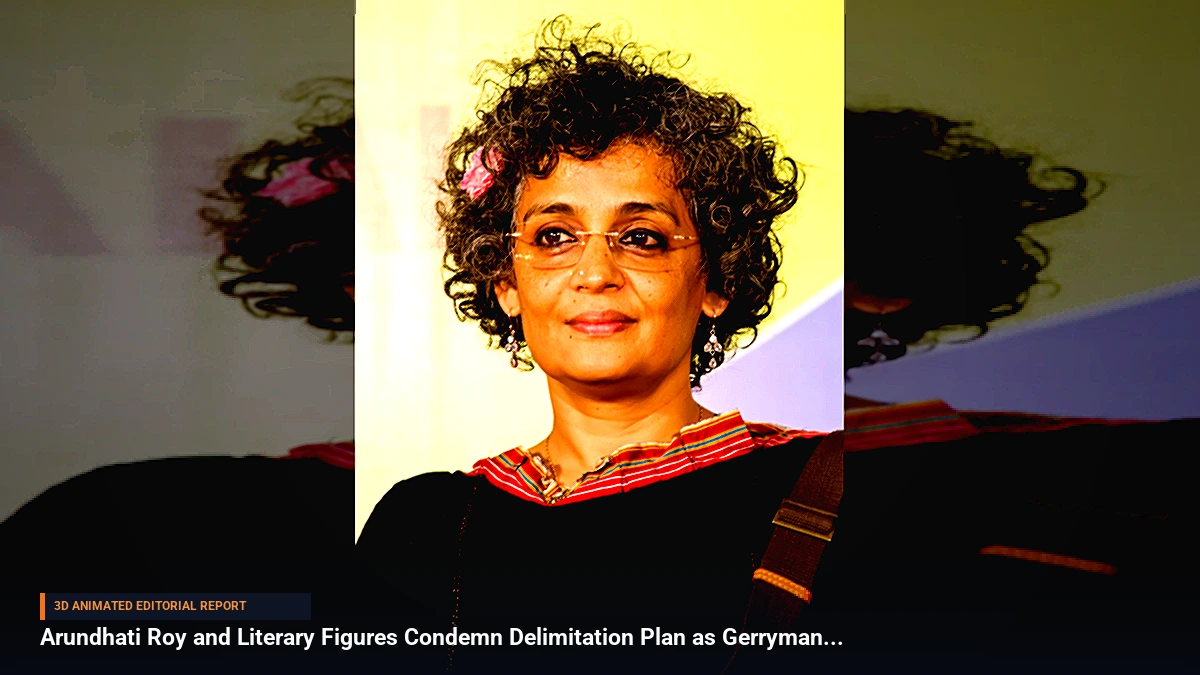
Prominent civil society voices, led by acclaimed author Arundhati Roy and noted poet Ashok Vajpeyi, gathered in New Delhi for a high-profile convention aimed at defending democratic norms and constitutional integrity. During the sessions, the discourse heavily centered on the impending delimitation exercise—a process traditionally used to redraw constituency boundaries.
Roy delivered a scathing critique of the initiative, arguing that framing the exercise around women’s reservation is merely a smokescreen. Instead, she characterized the policy as a calculated form of gerrymandering designed to alter the political landscape permanently. Alongside other artists, intellectuals, and activists, the speakers warned that unchecked administrative realignments pose a profound threat to India's foundational pluralism and democratic structures.
Background & Key Context
Delimitation in India involves readjusting the seats and boundaries of legislative constituencies based on population shifts. While constitutionally mandated to ensure equal representation, the upcoming exercise has sparked immense debate regarding its potential impact on federalism. Critics, including various regional stakeholders and civil rights groups, have expressed deep apprehension that states successfully controlling population growth might face a reduction in parliamentary representation compared to states with higher growth rates.
Over recent years, intellectuals and cultural figures have increasingly stepped into the public sphere to voice concerns over shrinking civic spaces, legislative centralization, and institutional pressures. This latest convention adds significant intellectual weight to the ongoing national discourse surrounding the future balance of power between the center and the states.
Key Takeaways
- Gerrymandering Allegations: Arundhati Roy explicitly labeled the proposed delimitation plan as a political gerrymandering tactic rather than a genuine step toward women's empowerment.
- Defense of Constitutional Values: Cultural icons, including Roy and Ashok Vajpeyi, united in New Delhi to sound the alarm on what they described as a persistent assault on democratic institutions.
- Federal Balance Concerns: Speakers highlighted how constituency redrawing could structurally disadvantage certain regions, raising questions about equity and federal representation.
- Mobilization of Civil Society: The convention serves as a focal point for writers, artists, and citizens seeking to organize pushback against perceived authoritarian tendencies.
Impact, Analysis & Global/National Reactions
The intervention by literary figures highlights a growing divide between institutional policy agendas and intellectual accountability. Analysts note that while ruling administrations often market such major legislative overhauls through the lens of progressive reform—such as female political representation—critics continue to scrutinize the underlying arithmetic and long-term electoral consequences.
Civil rights organizations and legal experts have pointed out that reshaping electoral maps without transparent, broad-based consensus risks deepening regional alienation. By framing the policy as a structural shift toward permanent political dominance, speakers at the Delhi convention have forced a broader national conversation on how democratic guardrails are maintained amidst legislative transformations.
What's Next: Looking Ahead
As the debate surrounding delimitation intensifies, civil society groups plan to continue organizing public forums, legal analyses, and awareness campaigns to dissect the mechanics of the proposed changes. Observers will be closely monitoring how political opposition parties incorporate these intellectual critiques into their parliamentary strategies as legislative timelines draw closer.


Be the first to comment
Start a useful conversation around this story.