
What Happened: The Core Developments
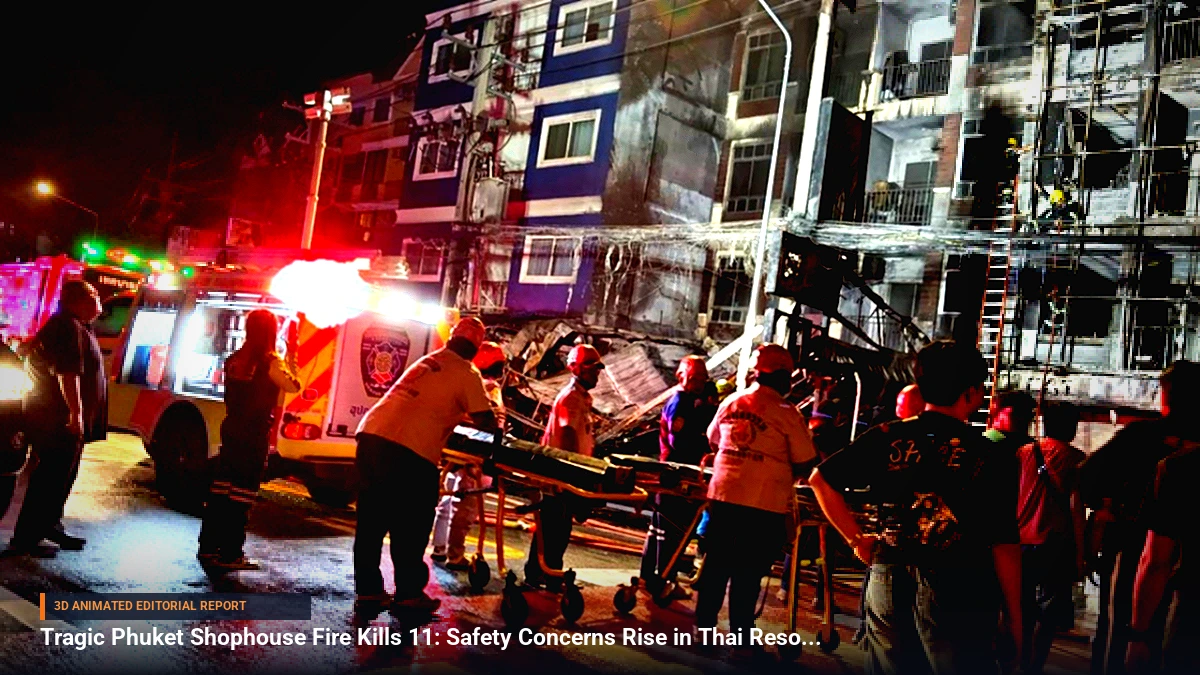
A catastrophic fire broke out in the popular tourist hub of Patong on Thailand's Phuket island, leaving a trail of destruction and immense grief. The fast-moving blaze tore through five contiguous shophouses—buildings that uniquely combine commercial storefronts on the ground floor with residential living quarters above.
Emergency responders rushed to the scene as thick, toxic smoke and towering flames engulfed the densely packed structures. Despite rapid interventions by local fire and rescue teams, at least 11 individuals lost their lives in the inferno. In addition to the fatalities, 16 people sustained injuries ranging from smoke inhalation to severe burns, and were swiftly transported to nearby medical facilities for urgent treatment.
Preliminary investigations led by local law enforcement and forensic experts have definitively ruled out arson as a potential cause. Authorities are currently focusing their inquiries on a suspected electrical short circuit, a recurrent hazard in aging urban and commercial architectures across Southeast Asia.
Background & Key Context
The shophouse architectural model is a staple of urban and semi-urban commercial life throughout Thailand and broader Southeast Asia. Typically narrow, deep, and attached in long rows, these buildings maximize land use by housing retail outlets, workshops, or restaurants downstairs while owners or employees sleep upstairs.
While economically vital for small-business owners and thriving tourist economies like Phuket, this dual-use architecture presents distinct structural safety vulnerabilities. Historically, many of these buildings feature aging electrical wiring, limited emergency exits, and a lack of modern fire suppression systems. When an electrical fault occurs, the combination of commercial inventory, tight interior spaces, and upstairs residential quarters can quickly convert these buildings into dangerous smoke traps.
Key Takeaways
- High Death Toll: At least 11 people were killed in the fast-moving Patong fire.
- Injuries Reported: A total of 16 individuals sustained injuries and required hospital treatment.
- Structural Impact: Five multi-purpose shophouses were severely damaged or gutted.
- Cause Under Investigation: Investigators have ruled out foul play and arson, suspecting an electrical short circuit.
- Resort Vulnerability: The incident highlights ongoing public safety and building code enforcement challenges in major tourist destinations.
Impact, Analysis & Global/National Reactions
The disaster has sent shockwaves through Phuket's local community and drawn intense scrutiny from national safety advocates. Patong, globally renowned for its vibrant nightlife, tourism infrastructure, and dense commercial strips, relies heavily on visitor safety and confidence.
Urban planning and safety experts note that rapid commercial expansion often outpaces municipal safety enforcement. In high-density districts, aging electrical infrastructure remains a ticking time bomb. Stakeholders in Thailand’s vital tourism sector are now pressing for urgent infrastructural audits, stricter compliance with fire safety regulations, and mandatory installation of modern smoke detectors and fire escapes in all commercial-residential hybrid buildings.
What's Next: Looking Ahead
As forensic teams finalize their investigations into the exact electrical point of failure, municipal authorities in Phuket are expected to announce comprehensive safety inspections across commercial zones in Patong and surrounding districts.
Property owners and local businesses face the prospect of tighter regulatory oversight, potential retrofitting mandates, and increased compliance costs. For travelers and residents alike, the tragedy serves as a grim reminder of the urgent need to modernize urban infrastructure in fast-growing resort destinations.





Be the first to comment
Start a useful conversation around this story.