

What Happened: The Core Developments
In a dramatic escalation of political tensions in South Asia, Pakistani authorities have arrested and jailed three sisters of incarcerated former Prime Minister Imran Khan—Aleema Khan, Uzma Khan, and Noreen Niazi. The high-profile detentions occurred in the eastern city of Lahore amid a heavy-handed state response to looming opposition mobilization. Legal representatives for the family confirmed that the three women were handed 30-day jail sentences under official warrants alleging that their activities constituted a direct threat to public order.
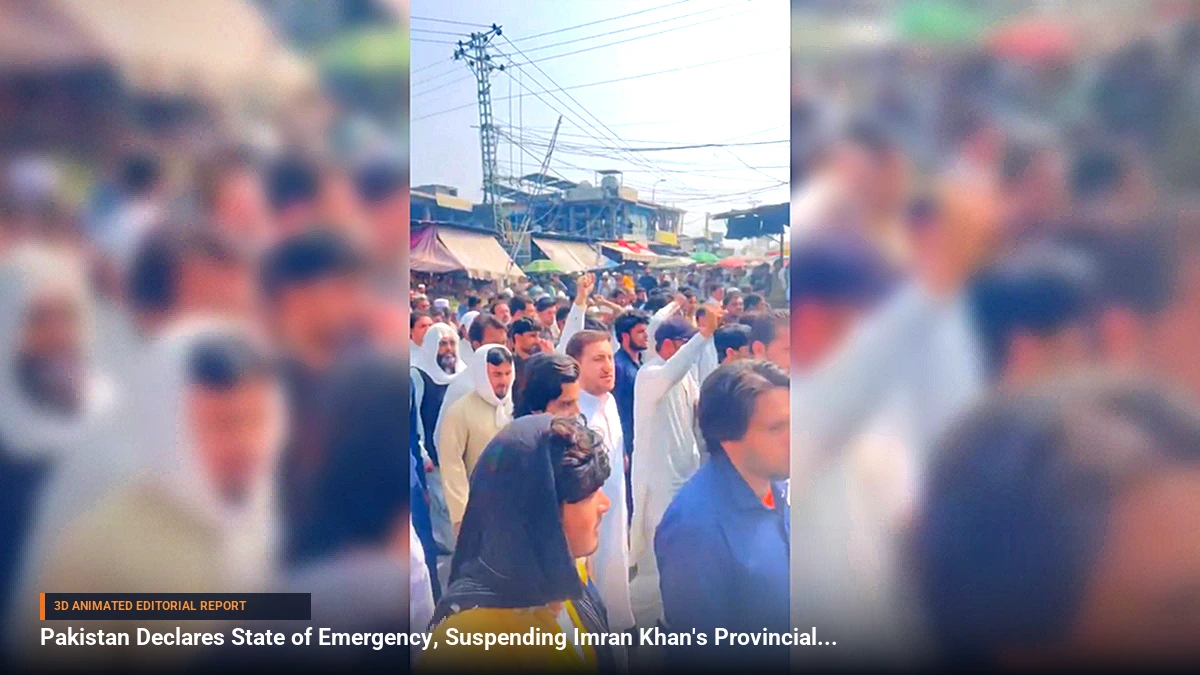
The swift police action is widely perceived as a preventive sweep aimed at neutralizing leadership within the Pakistan Tehreek-e-Insaf (PTI) support network. Party organizers had scheduled sweeping nationwide protests and a major march toward Islamabad to demand the immediate release of the former premier, who remains behind bars facing a battery of disputed legal charges. Eyewitness accounts and family statements indicate that security forces moved rapidly to secure key areas and restrict movement, effectively cutting off prominent family figures from rallying the public.
Background & Key Context
Imran Khan, a former cricket star turned populist politician, was ousted from power through a parliamentary no-confidence vote in 2022. Since his removal, Khan and his political party have engaged in a protracted, high-stakes standoff with the country's powerful establishment and the incumbent coalition government. Despite being imprisoned for an extended period, Khan retains massive grassroots popularity, and his supporters continue to pressure state machinery through coordinated demonstrations.
In Khan's absence, his family members—particularly his sisters—have increasingly stepped into the political vacuum, serving as vital conduits for his messaging and helping to organize mass mobilization efforts. The state’s decision to target immediate family members marks a significant hardening of government tactics, shifting from political containment to direct legal and physical suppression of Khan’s inner circle.
Key Takeaways
- Immediate Family Targeted: Three sisters of Imran Khan—Aleema Khan, Uzma Khan, and Noreen Niazi—were arrested in Lahore.
- Preventive Detention: Each woman has been jailed for 30 days under warrants citing threats to public order.
- Protest Catalyst: The arrests were executed directly ahead of planned nationwide demonstrations and an Islamabad march demanding Khan's freedom.
- Escalating State Crackdown: Human rights observers and PTI lawyers note that the detentions reflect a growing intolerance for dissent and opposition mobilization.
- Leadership Vacuum: With core family advocates sidelined, the PTI faces heightened challenges in maintaining unified command structures for upcoming street protests.
Impact, Analysis & Global/National Reactions
The preemptive incarceration of Khan's sisters has drawn sharp criticism from PTI loyalists and civil rights advocates, who argue that the government is weaponizing the legal system to stifle legitimate political expression. Legal counsels representing the family have condemned the public order warrants as legally baseless pretexts designed solely to curb free assembly. Meanwhile, supporters have amplified allegations that authorities are intentionally worsening conditions for the former prime minister inside prison, further inflaming public sentiment.
Political analysts suggest that while these sweeping arrests may temporarily disrupt logistical planning for the opposition, they risk further polarizing the political landscape. By removing moderate family leadership from the equation, the state may inadvertently drive the protest movement toward more decentralized and volatile forms of resistance.
What's Next: Looking Ahead
All eyes remain fixed on the scheduled dates for the nationwide protests and the proposed Islamabad march. Legal teams for the detained sisters are expected to challenge the 30-day detention orders in high courts, arguing that the public order rationale is an unconstitutional infringement on personal liberty. As the state maintains its high-security posture across major urban centers, the coming weeks will test the resilience of the PTI's grassroots network and determine whether the leadership vacuum can be effectively managed amid ongoing state pressure.



Be the first to comment
Start a useful conversation around this story.