
What Happened: The Core Developments
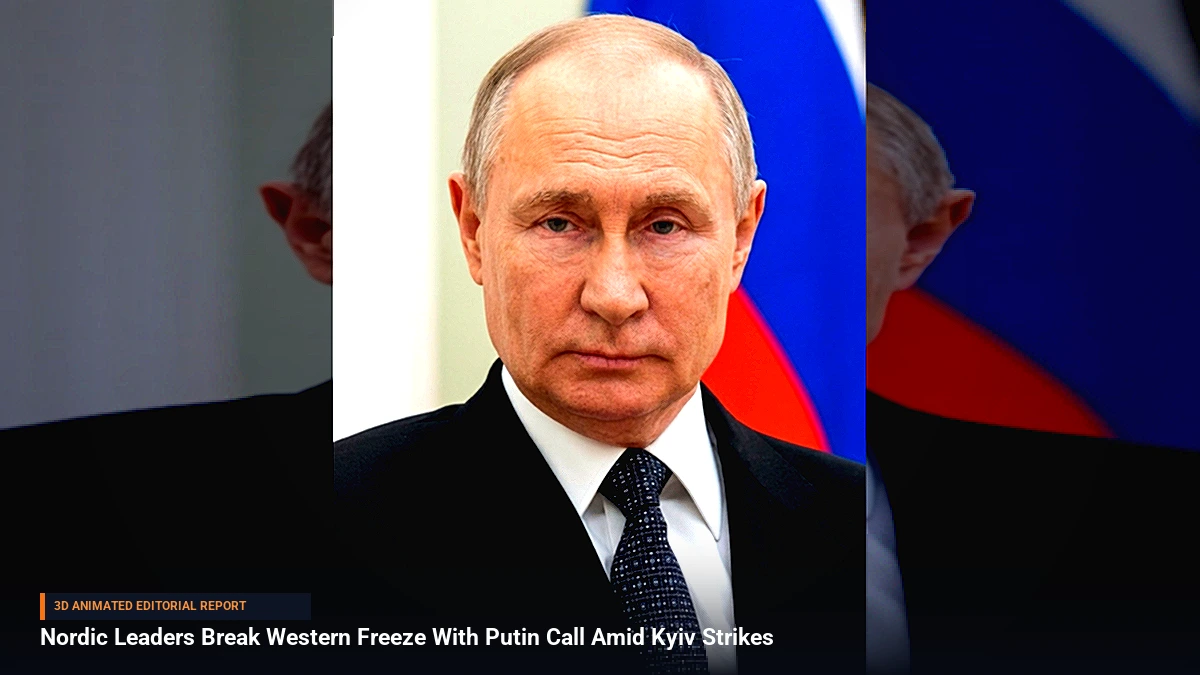
In a diplomatic pivot that surprised international observers, Finnish President Alexander Stubb and Norwegian Prime Minister Jonas Gahr Støre initiated a rare phone call with Russian President Vladimir Putin to discuss potential pathways toward ending the protracted war in Ukraine. This engagement marked the first time Western European heads of state or government have held direct communications with the Russian leader in over twelve months.
While described by Nordic officials as a "frank and substantive" discussion focusing on future negotiations and upcoming diplomatic tracks, the dialogue unfolded against a backdrop of ongoing violence. Simultaneously, Russian missile and drone campaigns struck the Ukrainian capital of Kyiv, severely targeting vital infrastructure, including a major bridge within the city. Following their conversation with the Kremlin, Stubb and Støre immediately briefed Ukrainian President Volodymyr Zelenskyy to maintain allied transparency.
Background & Key Context
For more than a year, Western nations maintained a strict diplomatic quarantine against direct talks with Moscow, arguing that any engagement would legitimize ongoing military aggression. However, mounting fatigue, economic strains, and shifting geopolitical calculations have prompted various regional actors to reassess direct channels.
Concurrently on the ground, localized humanitarian efforts saw rare breakthroughs. A temporary local ceasefire held in the Russian-occupied southern Ukrainian city of Oleshky, situated along the Dnipro River near Kherson. This localized truce successfully halted drone attacks and combat operations, paving the way for the evacuation of approximately 2,000 trapped civilians.
Key Takeaways
- Direct Diplomatic Break: Finnish and Norwegian leaders broke a year-long Western leadership communication freeze with Vladimir Putin.
- Substantive Yet Divided: The call addressed prospective peace frameworks, though leaders admitted significant differences remain between Moscow and Western positions.
- Immediate Allied Coordination: Stubb and Støre promptly briefed Ukrainian President Volodymyr Zelenskyy on the contents of the Kremlin call.
- Simultaneous Escalation: The diplomatic overture coincided with heavy Russian airstrikes hitting infrastructure targets in Kyiv.
- Humanitarian Truce: A rare, localized ceasefire in Oleshky allowed for the safe evacuation of roughly 2,000 trapped civilians.
Impact, Analysis & Global/National Reactions
The Nordic initiative has drawn a spectrum of reactions across European capitals. While Kyiv expressed cautious optimism that the outreach could inject new momentum into peace efforts, other NATO allies voiced deep skepticism. British Defence Secretary Wes Streeting warned that Moscow continues to test Western resolve through hybrid threats and state-sponsored actions, emphasizing that the alliance must remain combat-ready against potential escalations.
International relations analysts note that Finland and Norway—both sharing strategic borders or close proximity to Russia—are uniquely positioned to test the waters of diplomacy, though doing so risks fracturing a unified Western stance. Critics argue that direct talks without immediate concessions from Moscow risk playing into Kremlin narratives, while proponents insist that diplomatic avenues must remain open to prevent endless attrition.
What's Next: Looking Ahead
As diplomatic shockwaves from the Stubb-Støre-Putin call reverberate through Brussels, Washington, and Kyiv, attention shifts toward upcoming international forums and prospective talks, including planned diplomatic tracks in Abu Dhabi. Stakeholders will closely monitor whether this Nordic engagement remains an isolated experiment or signals a broader, albeit reluctant, return to multi-lateral backchannel negotiations with Moscow.

Be the first to comment
Start a useful conversation around this story.