
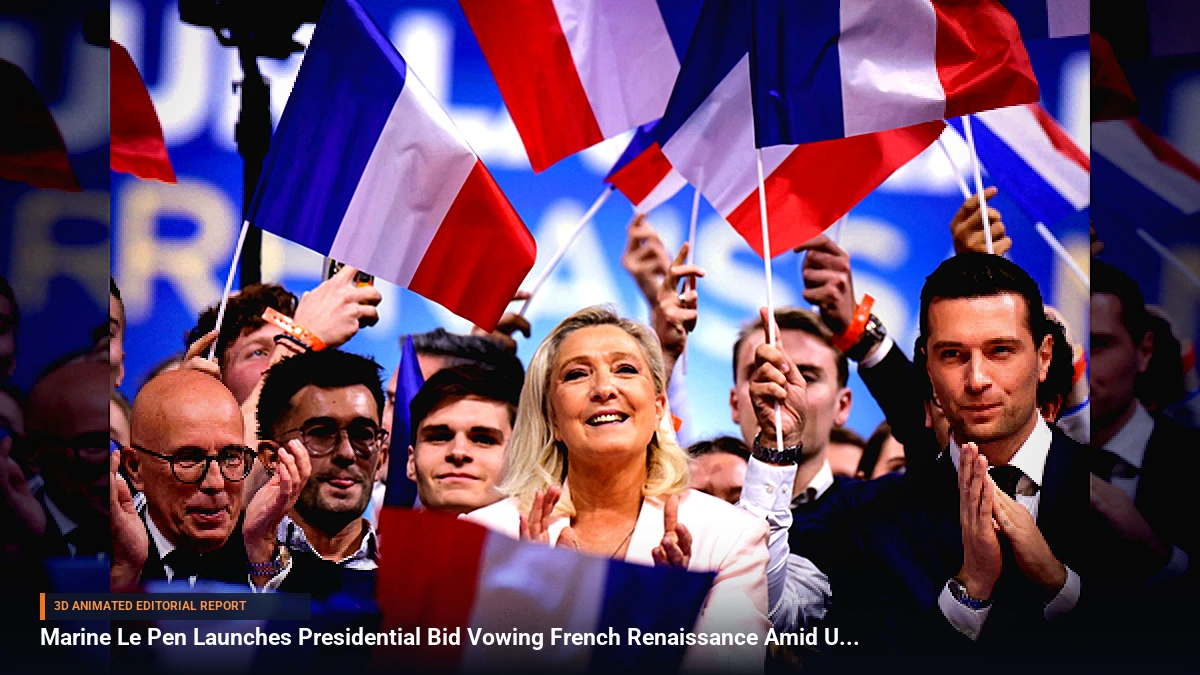
What Happened: The Core Developments
Marine Le Pen has officially launched her high-profile presidential campaign, centering her platform on a promise of a French "renaissance" and national "renewal." This critical political move comes at a tumultuous time for France, unfolding against a volatile backdrop of ongoing protests, localized riots, and widespread economic and social anxiety. As various sectors of the French populace express deep discontent with the current sociopolitical trajectory, the National Rally leader is actively seeking to channel this widespread frustration into electoral momentum.
The campaign kickoff marks a pivotal moment in French politics, as the far-right movement attempts to capitalize on systemic instability. By framing her platform around national renewal, Le Pen is directly appealing to voters who feel alienated or left behind by traditional governance, positioning her political camp as the primary alternative to the political establishment.
Background & Key Context
For years, Marine Le Pen and her party have steadily shifted from the political fringes into the mainstream of French electoral politics, achieving historic gains in previous parliamentary and presidential contests. The current campaign builds upon a multi-year strategy aimed at normalizing nationalist policies, softening the party's image, and capitalizing on recurring public demonstrations against government reforms.
France has a long history of utilizing street mobilization and public protest as a barometer of political dissatisfaction. In recent years, overlapping crises—ranging from inflation and cost-of-living pressures to labor disputes and public sector strikes—have created a fertile ground for populist and nationalist narratives. Le Pen's latest bid relies heavily on the premise that institutional politics are failing ordinary citizens, leveraging economic grievances to build a broad-based coalition of disgruntled voters.
Key Takeaways
- Official Campaign Launch: Marine Le Pen has formally kicked off her presidential bid with a promise of a national "renaissance."
- Backdrop of Unrest: The launch coincides with severe social and economic discontent, including protests and riots rattling the nation.
- Far-Right Ambitions: The National Rally is aggressively positioning itself to transition from opposition force to holding the ultimate seat of national power.
- Strategic Messaging: Le Pen's rhetoric centers on systemic renewal, appealing directly to voters disillusioned by traditional political parties.
- Socioeconomic Grievances: Persistent inflation, economic strain, and public dissatisfaction form the core pillars fueling the campaign's momentum.
Impact, Analysis & Global/National Reactions
Political analysts view Le Pen's campaign launch as a crucial stress test for the French Republic's political establishment. The strategy of leveraging domestic unrest and socioeconomic hardship has proven effective for populist movements across Europe, but it also deepens societal polarization. Observers note that by aligning her political identity with the ongoing protests, Le Pen is attempting to present herself as the voice of the streets against a perceived out-of-touch elite.
Critics from mainstream political parties argue that exploiting social friction risks worsening public order and dividing the country further. However, supporters maintain that the widespread unrest is an undeniable symptom of deep-seated systemic failures that current governance has failed to resolve. Institutional responses from centrist and left-wing factions emphasize the need to address economic inequalities directly, while simultaneously warning voters about the perceived risks of far-right governance.
What's Next: Looking Ahead
As the presidential campaign gathers pace, all eyes will be on how the French government responds to both the ongoing social discontent and Le Pen's rising political challenge. Upcoming policy debates, public opinion polls, and potential legislative battles will serve as vital indicators of whether the far-right's momentum can be sustained or if traditional parties can successfully recalibrate their messages.
Stakeholders across European financial markets and political institutions will closely monitor France's political trajectory, given the country's central role in the European Union. The coming months will require candidates to unveil concrete policy proposals beyond broad slogans, testing the durability of Le Pen's promise of a national renaissance against rigorous public scrutiny.

Be the first to comment
Start a useful conversation around this story.