
What Happened: The Core Developments
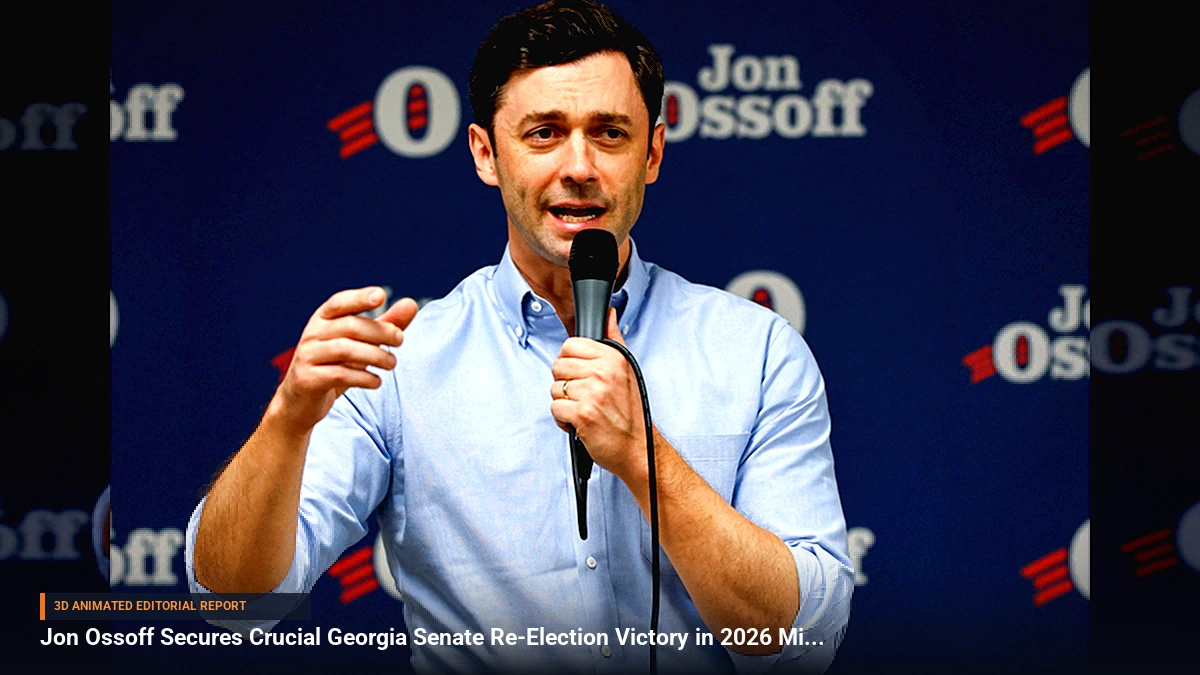
In a closely watched showdown that captured the attention of political analysts nationwide, Democratic incumbent Jon Ossoff won re-election to the United States Senate from Georgia in November 2026. Ossoff successfully fended off a robust challenge from Republican opponent Mike Collins. The race, which stood as one of the most critical battlegrounds of the midterm election cycle, preserves a crucial legislative foothold for Democrats as both parties vie for control of the upper chamber.
Background & Key Context
Georgia has firmly established itself as a premier political swing state over recent election cycles, shifting from a reliably conservative stronghold to a fiercely contested purple state. Jon Ossoff first made history by winning his initial Senate term, entering office as the nation's youngest senator. Throughout his first term, he positioned himself as a central figure within the Democratic caucus, focusing heavily on economic initiatives, infrastructure investments, and regional development. His 2026 defense was widely viewed by political strategists as a litmus test for the durability of the Democratic coalition in the American South.
Key Takeaways
- Major Democratic Defense: Jon Ossoff secured re-election to the United States Senate from Georgia in November 2026.
- Defeated Challenger: Ossoff successfully turned back the challenge mounted by Republican candidate Mike Collins.
- Battleground Significance: The victory preserves a pivotal seat for the Democratic Party during a high-stakes midterm election cycle.
- National Profile: As one of the youngest members of the Senate, Ossoff's successful retention of his seat immediately reinvigorates discussions regarding his long-term political trajectory.
Impact, Analysis & Global/National Reactions
Political analysts note that Ossoff's victory provides an essential psychological and strategic boost to the Democratic Party. Retaining Georgia demonstrates that progressive and moderate coalitions can remain competitive in traditionally leaning southern suburban environments when mobilizing strong turnout. Institutional observers have highlighted that the outcome underscores the enduring polarization of the electorate in the state, where campaigns routinely demand massive financial investments and meticulous ground operations from both national parties.
What's Next: Looking Ahead
With the 2026 midterm elections concluding, attention will swiftly turn toward the shifting balance of power in Washington, D.C., and how legislative priorities will be negotiated in the new congressional session. Furthermore, Ossoff's decisive holding of a premier swing-state seat naturally fuels speculation surrounding his future national ambitions, positioning him as an influential voice within the Democratic Party's next-generation leadership.






Be the first to comment
Start a useful conversation around this story.