
What Happened: The Core Developments
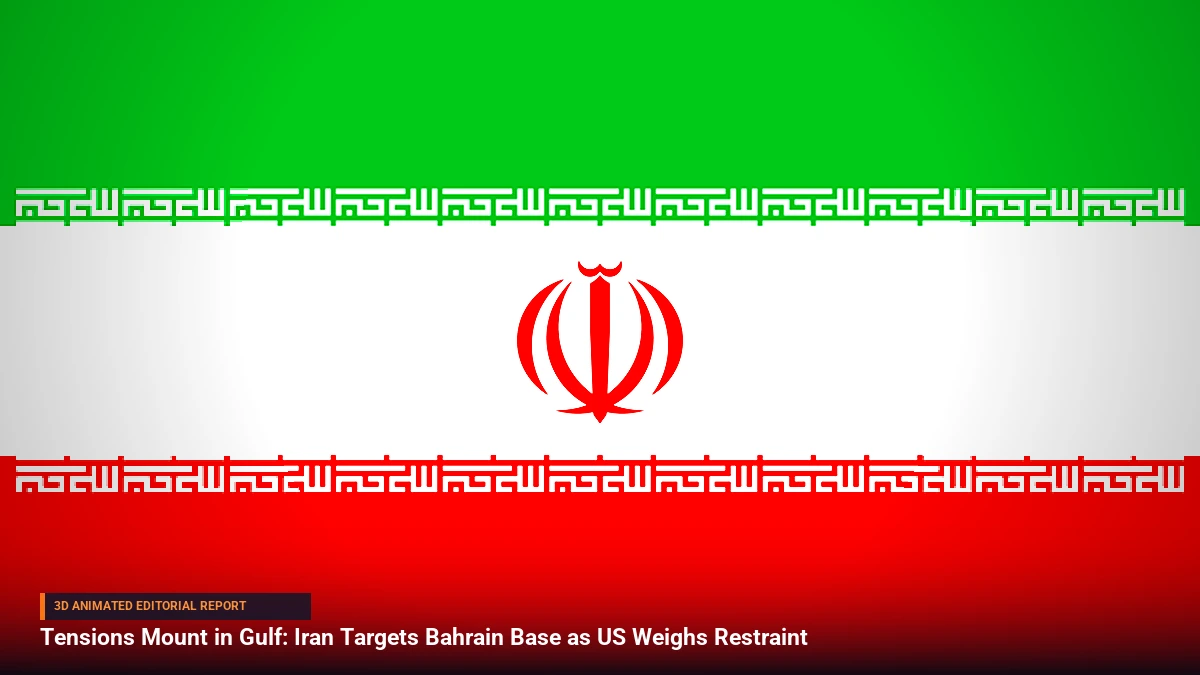
The security situation across the Arabian Gulf has escalated sharply following a coordinated aerial attack by Iran's Islamic Revolutionary Guard Corps (IRGC) targeting coalition infrastructure. According to official reports, the IRGC launched six drones directed specifically at a crucial US air defence radar installation situated at the Al-Rifaa helicopter base in Bahrain. Sirens echoed across the region as Bahraini air defense systems mobilized rapidly to counter the incoming threat.
The Bahrain Defence Force (BDF) formally announced that its defensive networks successfully thwarted and intercepted several hostile aerial incursions. While Iranian state media touted the operation as a direct retaliatory measure against perceived hostile American actions in the theater, regional authorities and local monitors have scrambled to assess potential damage and structural impacts at the targeted base. The incident marks a dangerous new flashpoint, directly drawing regional host nations deeper into the expanding cycle of drone and missile exchanges.
Background & Key Context
This latest provocation arrives against a complex backdrop of shifting diplomatic postures and persistent proxy conflicts spanning the Middle East. Bahrain—situated directly across the Persian Gulf from Iran—holds immense strategic value as the host nation for the United States Navy Fifth Fleet, making any assault on its military infrastructure a major red line for Washington and its allies.
Concurrently, diplomatic and intelligence channels indicate a delicate calculus inside the White House. Reports surfaced revealing that US President Donald Trump has informed his national security advisers that he may exercise restraint and hold off on launching direct kinetic attacks against Iranian targets, provided Tehran avoids initiating new, large-scale provocations. However, this calculated pause by Western leadership is continuously tested by decentralized kinetic actions, including Houthi missile and drone launches intercepting near Saudi Arabia alongside these direct IRGC deployments.
Key Takeaways
- Direct IRGC Assault: Iran's Revolutionary Guards launched six drones explicitly targeting a US air defence radar facility at Bahrain's Al-Rifaa helicopter base.
- Defensive Interception: The Bahrain Defence Force confirmed that its active air defence grid successfully thwarted multiple incoming aerial attacks.
- US Strategic Calculus: Sources indicate the White House is currently leaning toward restraint regarding direct retaliatory strikes on Iran, contingent upon the absence of fresh provocations.
- Regional Spillover: The wider crisis continues to generate multi-front pressures, including simultaneous drone and missile activity targeting strategic assets in neighboring Saudi Arabia.
- Strategic Importance of Bahrain: As the operational hub for the US Navy Fifth Fleet, Bahrain remains a primary focal point for regional security and deterrence operations.
Impact, Analysis & Global/National Reactions
Military analysts and international relations experts note that the strike on Bahrain represents a calculated escalation by Tehran, designed to test the threshold of US deterrence without necessarily triggering an all-out regional war. By utilizing proxy networks and direct drone deployments against radar installations, Iran seeks to blind or disrupt regional early-warning systems while gauge Washington's appetite for a wider engagement.
"The strategy we are witnessing is a high-stakes game of brinkmanship," remarked a regional security analyst monitoring Gulf developments. "Iran is pushing kinetic boundaries while Western leaders weigh the heavy domestic and international costs of expanding the conflict. Yet, each intercepted drone brings the region closer to an unintended tipping point."
Global markets and shipping lanes have responded with heightened volatility, reflecting deep anxiety over the security of energy transit corridors through the Strait of Hormuz. Allies in the Gulf continue to urge diplomatic de-escalation, warning that sustained drone and missile attacks threaten the fragile economic stability of the entire peninsula.
What's Next: Looking Ahead
As intelligence agencies evaluate the debris from the intercepted drones over Bahrain, all eyes remain fixed on Washington and Tehran. The immediate future depends heavily on whether the Iranian leadership interprets the reported US diplomatic hesitation as a sign of weakness or an opportunity to de-escalate.
Defense officials are closely monitoring telemetry data from the Al-Rifaa base to determine the precise capabilities demonstrated by the incoming drones. Meanwhile, regional diplomats are working furiously behind the scenes to establish renewed deterrence frameworks, aiming to prevent a localized drone skirmish from metastasizing into a broader, uncontrollable regional conflagration.



Be the first to comment
Start a useful conversation around this story.