
What Happened: The Core Developments
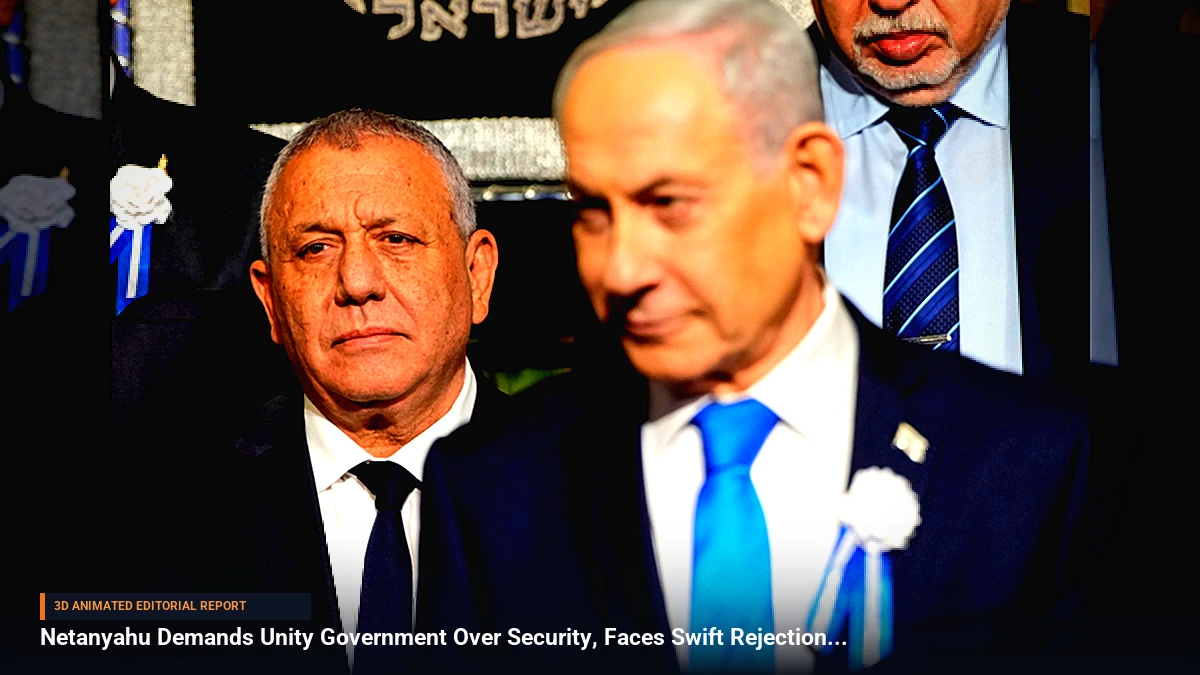
In a high-stakes political development across Israel's parliamentary landscape, Prime Minister Benjamin Netanyahu has called for the immediate establishment of a unity government. According to statements released from official and media channels, Netanyahu emphasized that forging a broad coalition is the only definitive way to guarantee the nation's security amidst rising regional tensions.
However, this urgent plea was met with immediate pushback. Gadi Eisenkot, who is currently tasked with efforts to form a government and leads opposing political factions, firmly rejected the Prime Minister's appeal. Eisenkot characterized Netanyahu's overture not as a genuine attempt at national reconciliation, but rather as political "spin" and tactical "tricks" designed to alter the ongoing legislative dynamics.
Background & Key Context
The friction between Netanyahu and Eisenkot unfolds against a complex backdrop of parliamentary maneuvering, contentious Knesset speaker votes, and overarching security concerns involving external threats. As Israel's newly sworn-in parliament attempts to navigate a fragile political ecosystem, coalition-building has become an intensely contested arena. Netanyahu’s call for unconditional unity talks comes at a time when leadership and executive authority are under intense public scrutiny, with various political actors jockeying for leverage.
Key Takeaways
- Unity Appeal: Benjamin Netanyahu publicly urged the formation of a unity government, claiming it is essential for national security.
- Swift Rejection: Opposition leader Gadi Eisenkot dismissed the plea outright, labeling the proposal as political trickery.
- Parliamentary Friction: The dispute highlights deep divisions within Israel's newly sworn-in parliament as governance talks proceed.
- Strategic Posturing: The public exchange underscores the high-stakes maneuvering surrounding coalition formation and Knesset leadership votes.
Impact, Analysis & Global/National Reactions
The deadlock over a potential unity government illustrates the deep fractures persisting within Israel's political leadership. Analysts note that while external security threats traditionally foster bipartisan cooperation, the profound lack of trust between Netanyahu and key opposition figures like Eisenkot continues to block broad-based political alliances. Stakeholders across the political spectrum view these developments as critical indicators of whether the current parliamentary term will achieve stable governance or fall into prolonged gridlock.
What's Next: Looking Ahead
As political actors continue their behind-the-scenes negotiations, attention shifts toward upcoming parliamentary votes, particularly concerning the selection of the Knesset speaker and formal government-forming deadlines. Observers will be closely watching whether Eisenkot's faction can successfully assemble an alternative coalition or if mounting security pressures will force a reconsideration of cross-party talks in the near future.


Be the first to comment
Start a useful conversation around this story.