
What Happened: The Core Developments
A wave of youth-driven and Gen Z demonstrations sweeping across Western Europe has taken a destructive turn, shifting from peaceful marches into intense urban clashes with law enforcement. Nations such as Germany, France, and Switzerland have become hotspots for mass mobilizations fueled by mounting frustration over the cost of living and economic stagnation.
In Germany, particularly in the financial hub of Frankfurt, protests targeting skyrocketing inflation and economic pressures boiled over into rioting. Demonstrators damaged commercial storefronts and engaged in looting, prompting senior German government officials to pledge swift and uncompromising legal action against the perpetrators.
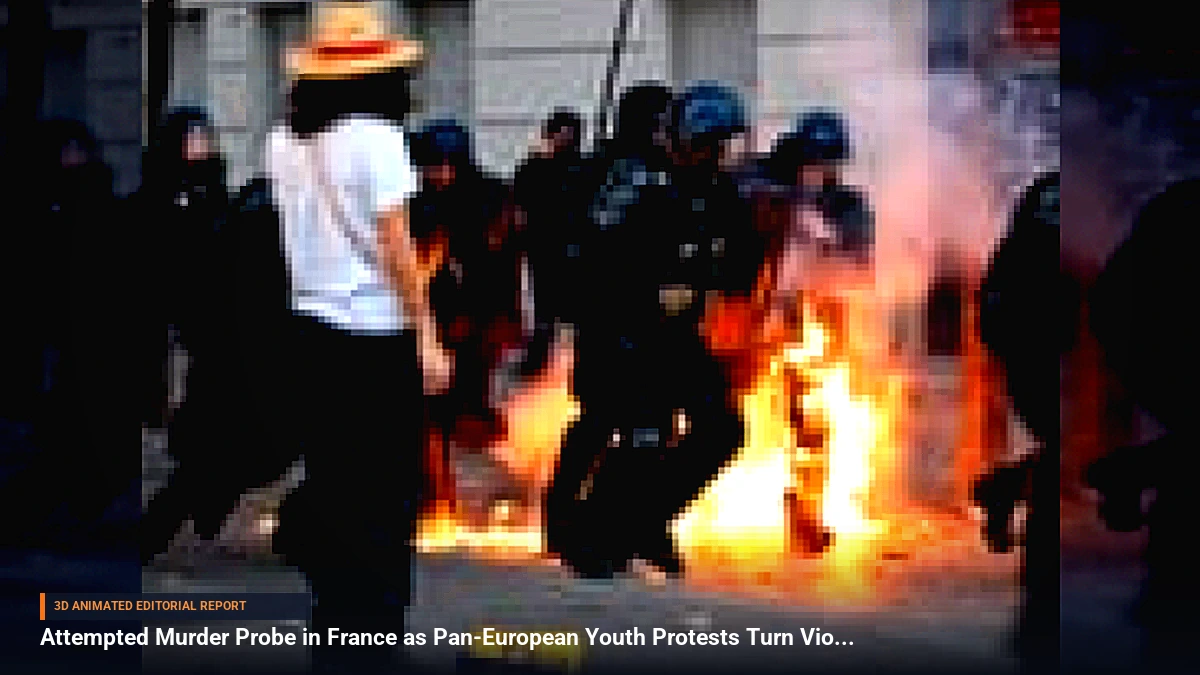
Meanwhile, France entered its third consecutive weekend of widespread protests. Hundreds of thousands of demonstrators marched through major cities, including Paris. While many gatherings began peacefully, isolated factions broke away, deploying fireworks and engaging in running battles with security forces. In one of the most severe escalations, a petrol bomb or Molotov cocktail was hurled directly at a police officer in the French capital, prompting authorities to launch a formal attempted murder investigation.
Background & Key Context
The current wave of youth-led unrest does not emerge in a vacuum; it represents the culmination of years of compounding economic pressures. Post-pandemic inflation, soaring energy costs, and a tightening housing market have disproportionately impacted younger Europeans, many of whom face precarious employment conditions and stagnant wages.
Generational discontent has steadily built up across the continent. Gen Z and younger millennial demographics increasingly feel alienated by mainstream political processes and traditional economic policies, which they argue fail to address structural inequalities and the declining purchasing power of working-class households. While initial expressions of discontent took the form of digital activism and small-scale rallies, the movement has rapidly metastasized into large-scale street demonstrations that are increasingly difficult for local authorities to contain.
Key Takeaways
- Pan-European Scope: Youth-led protests have intensified simultaneously across multiple Western European countries, most notably in Germany, France, and Switzerland.
- Economic Roots: The primary catalyst driving demonstrators into the streets is the severe cost-of-living crisis, exacerbated by inflation and high housing and energy expenses.
- Escalation to Violence: What frequently begin as peaceful marches have repeatedly fractured into aggressive confrontations involving structural damage, looting, and projectiles.
- Severe Legal Fallout: Law enforcement agencies are taking a harder line, exemplified by French authorities opening attempted murder probes following attacks on police officers.
- Government Pushback: Political leaders in affected nations are warning of strict crackdowns and enhanced security protocols to prevent further urban decay.
Impact, Analysis & Global/National Reactions
The convergence of youth-led civil disobedience across borders highlights a systemic vulnerability in Western European economic stability. Analysts note that traditional safety nets are failing to insulate younger populations from macroeconomic shocks, driving a wedge between the electorate and state institutions.
German government ministers have strongly condemned the destruction in Frankfurt, vowing that public disorder and the targeting of private businesses will be met with the full force of the law. In France, the deployment of aggressive tactics such as Molotov cocktails has drawn sharp rebukes from interior security officials, who emphasize that violent fringe elements are hijacking legitimate economic grievances.
"The systemic pressure on the younger generation is palpable, but targeted violence and destruction of public and private property cross a definitive red line," noted a security analyst specializing in European domestic stability. Municipal leaders are now grappling with the dual challenge of addressing underlying economic anxieties while maintaining public order.
What's Next: Looking Ahead
As European capitals brace for subsequent weekends of potential mobilization, policymakers are under intense pressure to formulate tangible economic reliefs that can de-escalate tensions. Law enforcement agencies are scaling up intelligence-gathering operations to preempt coordinated violence and identify key instigators.
Upcoming legislative sessions in Berlin and Paris are expected to focus heavily on cost-of-living adjustments, inflation mitigation packages, and enhanced urban security measures. However, unless structural economic reforms materialize, observers warn that the current wave of youth unrest may become a persistent feature of the European sociopolitical landscape.



Be the first to comment
Start a useful conversation around this story.