
What Happened: The Core Developments
Between 400 and 500 schools throughout France are scheduled to be closed or partly closed as the country braces for another intense wave of student-led demonstrations. Education Minister Édouard Geffray announced the sweeping operational shutdowns, noting that security conditions have simply "not been fulfilled" to keep these academic facilities fully functional and safe.
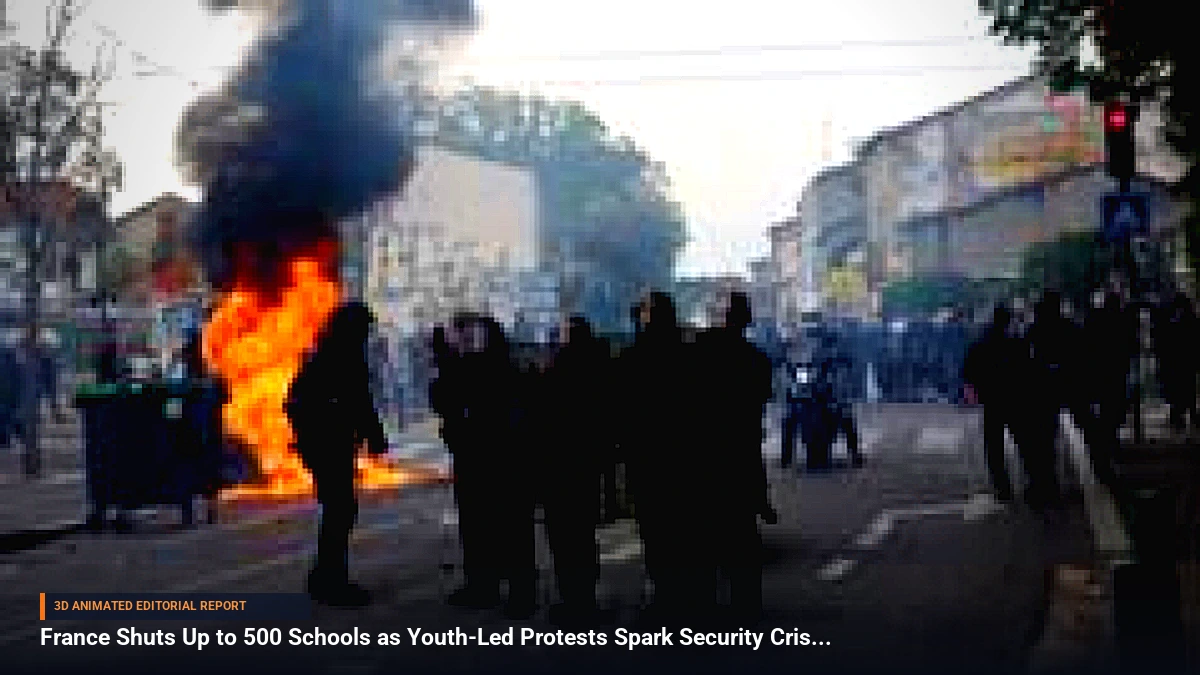
The decision comes on the heels of weeks of volatile street demonstrations and increasingly violent confrontations between riot police and student protesters. According to government tallies, the civil unrest has taken a heavy physical toll on the nation's educational infrastructure. Since the demonstrations erupted last month, at least 24 schools have been subjected to arson, ransacking, or severe structural damage. Furthermore, 78 educational staff members have sustained injuries amidst the chaos, prompting emergency security evaluations nationwide.
Law enforcement agencies have responded with a heavy hand, leading to massive detentions. At least 5,000 individuals—predominantly teenagers—have been arrested since the movement began. Dozens of students and teachers have also been reported injured during clashes that have severely tested the resilience of local security forces.
Background & Key Context
France has a long and deeply ingrained tradition of student activism and labor strikes spilling over into public thoroughfares. However, the intensity and velocity of the current youth-led movement have caught national authorities off-guard. What began as localized student mobilization rapidly metastasized into widespread unrest, exposing structural vulnerabilities within French high schools and urban educational districts.
As protests gathered momentum through consecutive weeks, confrontations with riot police escalated from verbal defiance to physical blockades, vandalism, and direct attacks on school buildings. The recurring cycle of mobilization has disrupted the academic calendar for thousands of students, raising profound questions about public safety, institutional resilience, and the government's capacity to maintain order without infringing upon the right to peaceful assembly.
Key Takeaways
- Massive School Closures: Between 400 and 500 schools across France will suspend classes totally or partially.
- Severe Infrastructure Damage: At least 24 schools have been burnt or ransacked since the unrest began last month.
- Mounting Casualties and Arrests: Over 5,000 people, mostly teenagers, have been arrested, while 78 staff members and numerous students have sustained injuries.
- Official Security Assessment: Education Minister Édouard Geffray stated that mandatory security conditions could not be met to guarantee student and staff safety.
- Unabated Protests: Organizers have called for a fresh resumption of demonstrations, signaling that the civil unrest is far from over.
Impact, Analysis & Global/National Reactions
The widespread disruption of the educational system has triggered a national debate over the balance between maintaining public order and protecting the constitutional rights of young citizens. Stakeholders, including teachers' unions and parent associations, have expressed mounting alarm over the physical safety of campuses.
Security analysts note that the heavy-handed policing tactics, highlighted by thousands of teenage arrests, risk further radicalizing the student body rather than dampening the unrest. The targeting of educational infrastructure—ranging from administrative offices to classrooms—underscores a dangerous breakdown in institutional respect. Government officials are under immense pressure to formulate a cohesive strategy that addresses youth grievances while restoring absolute safety to learning environments.
What's Next: Looking Ahead
As organizers push forward with calls for renewed protests, the immediate priority for French authorities is containing potential flashpoints around major metropolitan school districts. The Ministry of Education will continuously reassess security protocols on a region-by-region basis to determine when shuttered facilities can safely reopen.
Long-term, the crisis demands a comprehensive political and administrative reckoning. Lawmakers face the daunting task of repairing fractured relations with student organizations, addressing the root causes of the youth discontent, and allocating emergency funds to rebuild or repair the dozens of schools ravaged during weeks of turmoil.





Be the first to comment
Start a useful conversation around this story.