
What Happened: The Core Developments
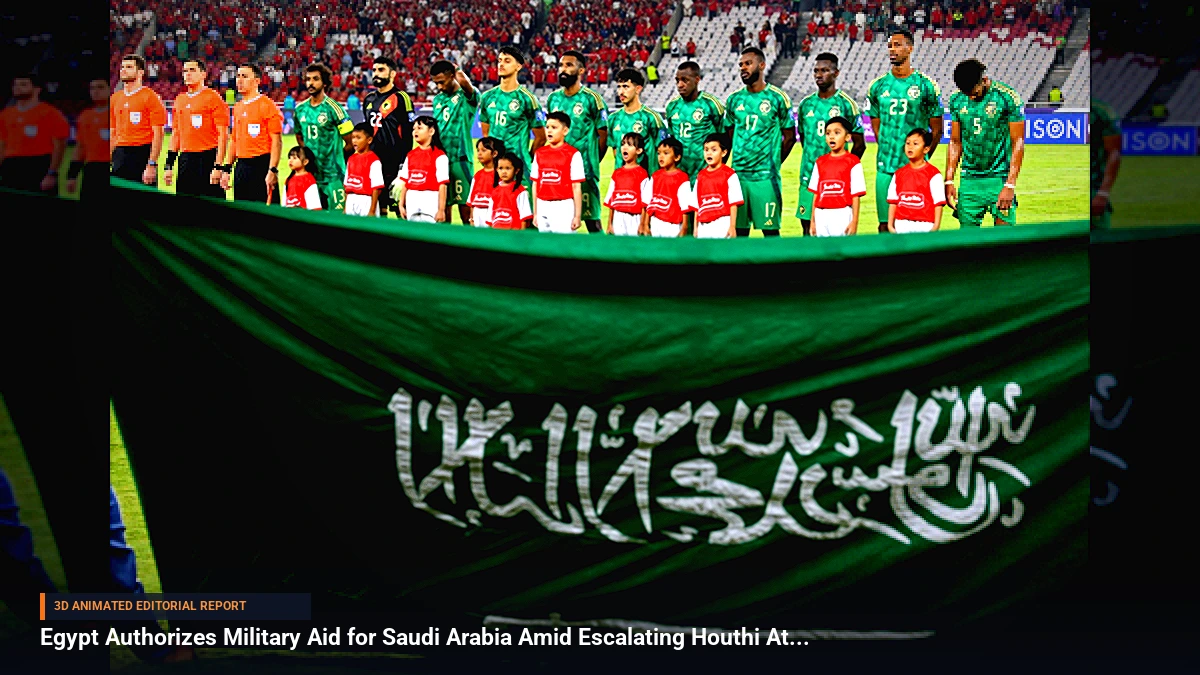
Tensions across the Gulf region have reached a critical juncture following a coordinated wave of aerial attacks targeting critical Saudi infrastructure. Houthi forces claimed responsibility for strikes directed at oil installations, refineries, and major airports within Saudi territory. Interception debris has been reported in sensitive areas, including the vicinity of Mecca and Medina, prompting intense regional and international concern. While the militant group has publicly denied deliberately targeting the holy cities, Saudi defense forces have remained on high alert, intercepting multiple incoming projectiles overhead.
In direct response to the escalating threat landscape, Egypt’s parliament voted overwhelmingly to authorize President Abdel Fattah el-Sisi to implement all necessary security measures and provide comprehensive military support to Riyadh. However, political analysts and diplomatic sources emphasize that Cairo has intentionally drawn a distinct strategic boundary: while legislative backing enables robust defense assistance, Cairo has firmly ruled out executing direct offensive military strikes inside Yemen.
Background & Key Context
The current round of hostilities represents a volatile chapter in the prolonged regional fallout from the conflict in Yemen. For years, the security architecture of the Arabian Peninsula has faced recurring challenges from asymmetric drone and missile technologies utilized by non-state actors. Saudi Arabia, as a primary economic and logistical hub in the Middle East, has consistently invested in bolstering its multi-layered air defense networks.
Concurrently, broader global security dynamics are shifting. Nations outside the immediate theater, such as India, are accelerating their own defense modernization programs—evidenced by recent in-principle approvals for massive domestic military acquisitions totaling $22 billion (approximately 2.12 lakh crore INR). These parallel developments underline a global climate of heightened defense readiness, where regional flare-ups directly influence strategic calculations worldwide.
Key Takeaways
- Legislative Authorization: Egypt's parliament granted President Abdel Fattah el-Sisi the legal mandate to provide strategic and military assistance to Saudi Arabia.
- Operational Limits: Cairo has explicitly declined to deploy direct offensive military strikes within Yemen, focusing instead on defensive cooperation.
- Infrastructure Threats: Recent Houthi missile and drone campaigns have targeted vital Saudi oil facilities, refineries, and civilian airports.
- Contested Targets: While interception debris fell near Mecca and Medina, Houthi representatives denied deliberately targeting the holy sites.
- Event Resilience: Despite the security climate, Saudi authorities have officially confirmed that the Asian Cup 2027 will commence as scheduled on January 7.
Impact, Analysis & Global/National Reactions
The intersection of regional instability and major international hosting duties presents a complex test for Saudi Arabia's leadership. Despite ongoing security incidents, the Asian Football Confederation (AFC) and Saudi organizers have moved to project absolute normalcy and stability. Riyadh confirmed that the marquee tournament will kick off on January 7, with the host nation slated to face Palestine in the opening match in Riyadh. This decision signals a clear intent to insulate cultural and sporting milestones from geopolitical volatility.
Strategically, Egypt's formal entry into the defense calculus alongside Saudi Arabia reinforces a united Arab diplomatic and security front against cross-border terrorism and militant aggression. International observers note that Cairo's measured approach—offering logistical and defensive backing while avoiding entanglement in a protracted ground or air campaign in Yemen—reflects lessons learned from past regional conflicts.
What's Next: Looking Ahead
Stakeholders and regional diplomats will closely monitor the implementation of the Egypt-Saudi defense coordination framework to determine what specific hardware, intelligence-sharing protocols, or logistical support will be deployed. At the same time, regional security committees remain focused on securing vital energy corridors and safeguarding civilian aviation routes.
On the cultural and athletic front, attention will pivot toward the logistical preparations for the January 2027 Asian Cup. Organizers will need to reassure participating federations, global fans, and commercial partners regarding safety protocols, ensuring that the tournament proceeds seamlessly against a backdrop of complex regional geopolitics.



Be the first to comment
Start a useful conversation around this story.