
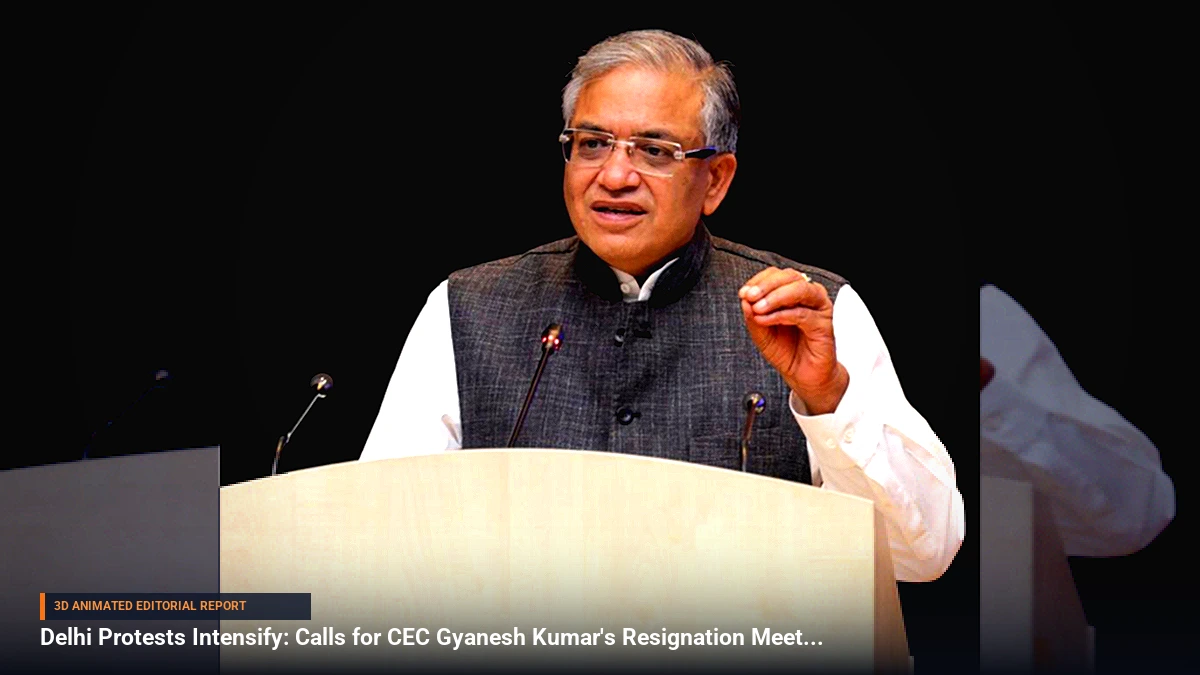
What Happened: The Core Developments
Tensions in the national capital have reached a boiling point following a series of escalating protests targeting Chief Election Commissioner (CEC) Gyanesh Kumar. The political landscape shifted dramatically when the newly prominent Cockroach Janta Party announced a high-profile march to New Delhi slated for October 10, explicitly demanding the immediate resignation of the election chief.
Concurrently, the Indian Youth Congress took legal recourse by moving the Delhi High Court after local authorities denied them formal permission to stage demonstrations against CEC Kumar. Despite the legal roadblocks and clampdowns, demonstrations erupted near the historic Jantar Mantar site. The police response was swift and heavy-handed, resulting in the registration of three separate First Information Reports (FIRs) against demonstrators. Prominent activists and political figures—including Yogendra Yadav and Neha Bora—were detained by Delhi Police on the second day of the unrest, drawing sharp criticism from civil society and opposition groups who labeled the crackdown an infringement on democratic rights.
Background & Key Context
Public demonstrations targeting constitutional bodies in India are heavily regulated, particularly in sensitive zones like central New Delhi. The focal point of these recent grievances is CEC Gyanesh Kumar, whose leadership of the Election Commission has increasingly become a lightning rod for political friction. Opposition factions and various grassroots entities have expressed deep discontent over recent electoral administration and regulatory decisions.
The emergence of unconventional political movements, such as the Cockroach Janta Party, alongside established entities like the Youth Congress, signifies a broader, multi-pronged pushback against regulatory authorities. Historically, Jantar Mantar serves as the designated epicentre for public agitation in Delhi, making the recent police intervention and subsequent detentions a notable escalation in state control over public dissent.
Key Takeaways
- Escalating Demands: The Cockroach Janta Party scheduled a major march into Delhi on October 10 specifically calling for the resignation of CEC Gyanesh Kumar.
- Legal Battles: The Indian Youth Congress approached the Delhi High Court to challenge the denial of permits for anti-CEC protests.
- Police Crackdown: Delhi Police registered three separate FIRs in connection with the demonstrations near Jantar Mantar.
- High-Profile Detentions: Prominent figures including Yogendra Yadav and Neha Bora were detained by law enforcement during the second consecutive day of protests.
- Growing Opposition: Civil society leaders and youth activists have condemned the state's intervention, dubbing the unfolding events as a critical test for freedom of assembly.
Impact, Analysis & Global/National Reactions
The unfolding crisis in New Delhi highlights a growing friction between institutional authority and public dissent in the world's largest democracy. Analysts suggest that targeting the head of the Election Commission directly strikes at the core of institutional neutrality and public trust in electoral processes.
While the government and law enforcement agencies maintain that these restrictions and subsequent FIRs are necessary to maintain public order and prevent civil unrest, critics view the heavy-handed response as an alarming authoritarian drift. Activists have vocalized their defiance on social media and public forums, with figures like Aishe Ghosh and Abhijeet Dipke declaring that "Jantar Mantar 2.0 has begun," signaling that the youth-led movement will not be easily silenced by police action or legal denials.
What's Next: Looking Ahead
As the October 10 march approaches, all eyes will be on the Delhi High Court as it deliberates on the Indian Youth Congress's petition regarding protest permissions. The judicial stance could set a crucial precedent for future public demonstrations in the capital.
Furthermore, the posture of the Election Commission and central authorities regarding these unrelenting resignation demands will heavily influence the trajectory of the movement. Stakeholders across the political spectrum are bracing for potential flashpoints as civic groups refuse to back down, ensuring that electoral governance remains at the forefront of national discourse in the weeks to come.

Be the first to comment
Start a useful conversation around this story.