
What Happened: The Core Developments
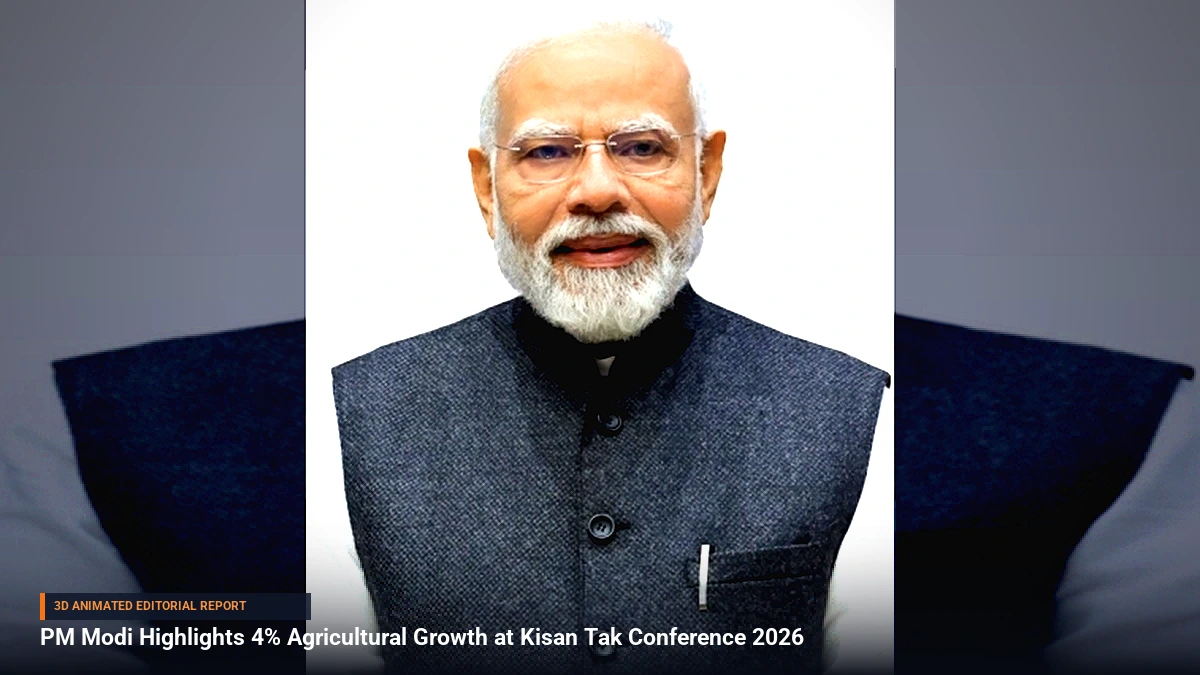
Prime Minister Narendra Modi took center stage at the Kisan Tak Bharat Agriculture Conference 2026, delivering a comprehensive address focused on the future of India's agrarian economy, smart farming technologies, and national food security. During his keynote speech, the Prime Minister highlighted landmark economic achievements in the agricultural sector, pointing to structural reforms and robust administrative backing that have transformed rural livelihoods across the country.
Central to his address was the announcement that India's agricultural growth has consistently topped 4% for the first decade since Independence. This milestone, according to the administration, reflects a decisive shift from survival-oriented farming to a commercial, technology-driven, and resilient agricultural ecosystem. Furthermore, the Prime Minister emphasized the government's proactive fiscal measures to shield farmers from global commodity volatility, noting that the Centre absorbed 43 rupees of the diesel hike to protect rural transport and irrigation economics from inflationary pressures.
Background & Key Context
For decades, Indian agriculture has faced structural vulnerabilities, including monsoon dependency, fragmented landholdings, and high input costs. However, over the past decade, policy interventions have progressively shifted toward capital formation in rural areas, direct benefit transfers, digital infrastructure integration (such as the PM-KISSAN scheme and digital crop surveys), and enhanced institutional credit availability.
The debate over input costs—particularly diesel, fertilizers, and chemical pesticides—has remained a central theme in Indian agricultural policy. By absorbing a significant share of fuel price spikes, the central government aims to keep operational costs manageable for tractor-dependent farming communities. Concurrently, ongoing policy dialogues have increasingly targeted a reduction in chemical dependency, advocating instead for natural, organic, and precision agriculture to restore soil health and lower long-term cultivation costs.
Key Takeaways
- Historic Growth Milestone: Agricultural growth has surpassed 4% for the first continuous decade since India's Independence.
- Fiscal Cushioning: The central government absorbed 43 rupees of the diesel price hike to insulate farmers from extreme fuel inflation.
- Shift Away from Chemicals: The conference emphasized smarter farming practices and a strategic reduction in reliance on harmful farm chemicals.
- Vision for Viksit Bharat: Agricultural modernization and rural empowerment were framed as foundational pillars for achieving a developed India (Viksit Bharat).
Impact, Analysis & Global/National Reactions
Agricultural economists and policy analysts have noted that maintaining a 4% sectoral growth rate is crucial for supporting nearly half of India's workforce while keeping food inflation in check. The targeted absorption of diesel price hikes provides immediate relief to operational margins, particularly during critical sowing and harvesting cycles where mechanization is indispensable.
At the same time, the administration's pushback against excessive chemical inputs signals a long-awaited pivot toward sustainable agronomy. Stakeholders across the agricultural value chain are increasingly evaluating how digital marketplaces, climate-resilient crop varieties, and decentralized storage infrastructure will intersect with these macroeconomic targets. While opposition figures and critics continue to scrutinize the broader socio-economic pressures facing marginal farmers, events like the Kisan Tak conference underscore the government's intent to position technology and fiscal protectionism at the heart of rural policy.
What's Next: Looking Ahead
As the agricultural sector adapts to shifting climatic patterns and global trade dynamics, policy implementation will likely focus on scaling up digital public infrastructure in agriculture and expanding natural farming training hubs. Observers will be closely monitoring upcoming budgetary allocations, procurement policies, and the rollout of climate-smart agricultural initiatives designed to safeguard farm incomes through 2030 and beyond.






Be the first to comment
Start a useful conversation around this story.