
What Happened: The Core Developments
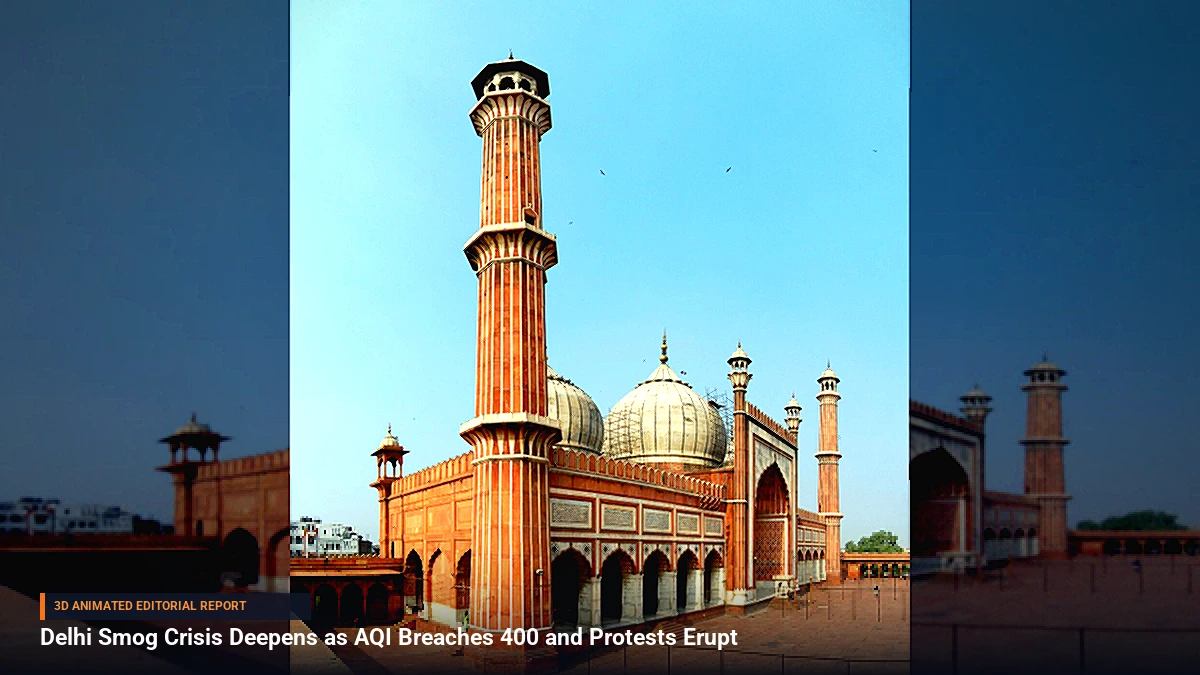
A heavy, toxic pall of smog has descended upon New Delhi, sharply reducing visibility and triggering severe health concerns across the capital region. The city's Air Quality Index (AQI) crossed the critical 400 threshold at multiple monitoring stations, plunging overall air conditions into the 'severe' bracket.
Amidst conflicting metrics—with some overall city averages hovering around 373 while localized monitors recorded readings well past the 400 mark—Delhi temporarily surpassed Lahore to rank as the world's most polluted metropolitan area. The worsening environmental conditions have directly fueled civic unrest. Demonstrators, spearheaded by the National Students' Union of India (NSUI), took to the streets to voice public outrage over hazardous pollution levels, demanding that local and national authorities implement immediate, effective interventions rather than temporary stopgaps.
Background & Key Context
Delhi's annual winter air pollution crisis is a complex, recurring phenomenon driven by a combination of geographic, meteorological, and anthropogenic factors. As temperatures drop and wind speeds decrease heading into the winter months, pollutants such as particulate matter ($PM_{2.5}$ and $PM_{10}$) become trapped in the lower atmosphere due to thermal inversion.
Historically, this seasonal deterioration is exacerbated by regional stubble burning, vehicular emissions, heavy industrial output, and construction dust. Despite years of judicial scrutiny, policy debates, and the implementation of phased emergency plans like the Graded Response Action Plan (GRAP), the city continues to grapple with life-threatening air quality year after year, leaving millions of residents exposed to severe health hazards.
Key Takeaways
- Severe AQI Levels: Multiple monitoring stations across Delhi recorded an AQI surpassing the 400 mark, denoting hazardous air quality conditions.
- Global Ranking: Delhi temporarily overtook Lahore to become the world's most polluted city amid the spike in toxic smog.
- Civic Unrest: The National Students' Union of India (NSUI) organized active street protests to demand immediate administrative accountability and air purification measures.
- Data Discrepancies: While general city indices reported averages around 373, localized monitoring units recorded significantly higher spikes in severe pollution.
- Public Health Threat: The dense particulate matter poses acute risks to vulnerable populations, including children, the elderly, and individuals with respiratory conditions.
Impact, Analysis & Global/National Reactions
Environmental experts and public health officials have repeatedly warned that sustained exposure to severe-category air pollution leads to chronic cardiovascular and respiratory diseases. The recurrence of these toxic episodes places an immense burden on healthcare infrastructure.
Political friction has also intensified. Student bodies and civil society organizations argue that successive administrations have failed to execute sustainable, long-term regional solutions. The protests led by the NSUI underscore a growing public demand for systemic policy overhauls rather than seasonal emergency curbs. Observers note that without robust inter-state cooperation to curb agricultural burning and stricter enforcement of urban anti-pollution norms, Delhi's air crisis will remain an intractable public health emergency.
What's Next: Looking Ahead
As the winter season progresses, meteorological forecasts suggest that unfavorable wind patterns could trap pollutants for weeks to come, keeping pressure high on municipal and federal policymakers.
Stakeholders are closely watching for potential emergency restrictions, including possible bans on non-essential construction, restrictions on vehicular movement such as odd-even traffic schemes, and intensified crackdowns on industrial emissions. Judicial bodies are also expected to review emergency preparedness plans, demanding strict compliance reports from regional governing agencies to mitigate the ongoing health catastrophe.

Be the first to comment
Start a useful conversation around this story.