
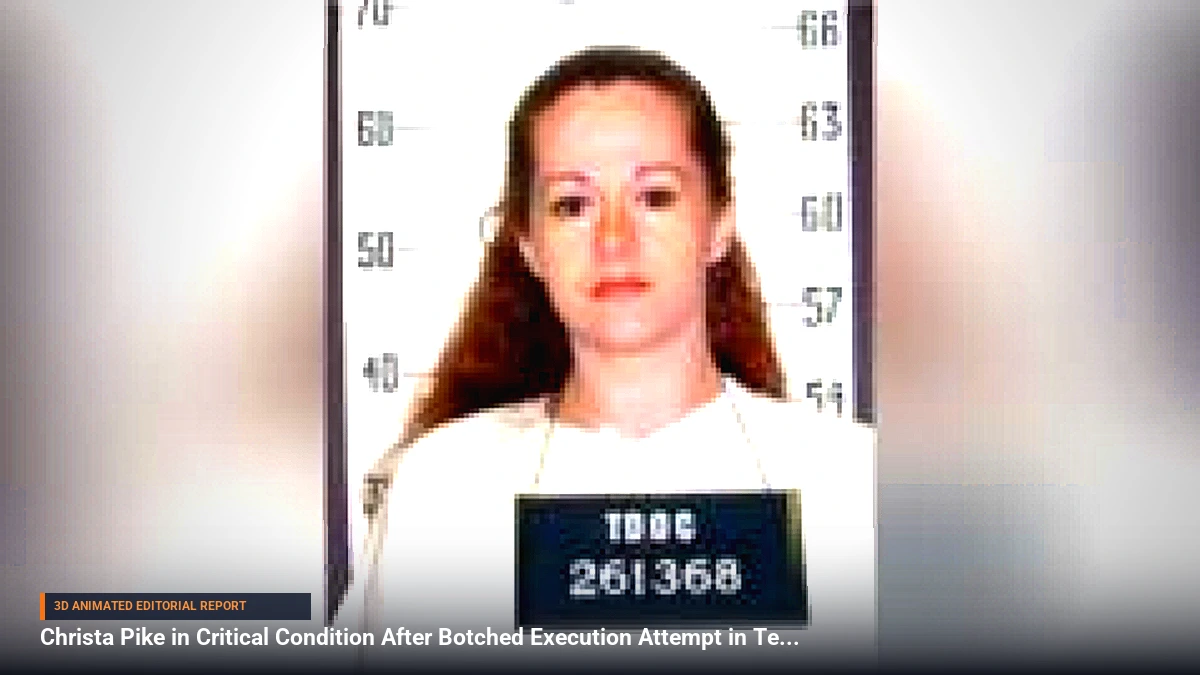
What Happened: The Core Developments
In an unprecedented and harrowing turn of events within the American correctional system, death row inmate Christa Pike survived a botched execution attempt via lethal injection in Tennessee. Following the failed procedure, Pike was urgently transferred to an outside medical facility where she is currently listed in critical condition, receiving intensive, life-saving care. Legal representatives and medical observers have raised serious concerns over the execution protocol, pointing to profound procedural complications that left the long-standing inmate fighting for her life in a hospital rather than succumbing to the state's intended capital punishment.
Background & Key Context
Christa Pike's path to death row spans nearly three decades. She has been imprisoned since her high-profile 1996 conviction for the brutal murder of Colleen Slemmer, a fellow Job Corps student, committed when Pike was just 18 years old. Over the subsequent decades, her case wound through numerous state and federal appeals, drawing widespread media attention as one of the few women on death row in the United States. Capital punishment protocols in Tennessee have faced intense scrutiny over the years regarding drug availability, administration methods, and transparency, setting a complex legal backdrop for this unprecedented execution failure.
Key Takeaways
- Execution Failure: Christa Pike survived a state-administered lethal injection attempt in Tennessee, resulting in an unexecuted sentence.
- Hospitalization: Pike was immediately transferred from the execution chamber to a medical facility where she remains in critical condition.
- Decades on Death Row: Pike has been imprisoned since her 1996 conviction for the murder of Colleen Slemmer.
- Legal Scrutiny: The incident has immediately galvanized legal defense teams and human rights advocates, who are questioning the constitutionality and humanity of the state's execution methods.
- Uncertain Protocol: State corrections officials face mounting pressure to explain how the lethal injection procedure went critically wrong.
Impact, Analysis & Global/National Reactions
The botched execution has sent shockwaves through legal communities, corrections departments, and human rights organizations across the nation. Legal scholars note that surviving an execution attempt opens an entirely unprecedented frontier in Eighth Amendment jurisprudence regarding cruel and unusual punishment. Representatives for Pike have emphasized the severity of her medical condition while demanding absolute transparency from state authorities. Meanwhile, civil rights groups and opponents of capital punishment are utilizing the incident to argue against the inherent risks and technical failures associated with lethal injections.
What's Next: Looking Ahead
As Christa Pike fights for her life under intensive medical supervision, her defense team is expected to file emergency legal motions halting any future execution attempts. Courts will likely face complex hearings regarding whether a state should be permitted multiple attempts to execute an individual after a protocol failure. Furthermore, state legislators and correctional oversight committees are anticipated to launch independent investigations into the Tennessee Department of Correction's lethal injection procedures to determine accountability and prevent future catastrophic failures.






Be the first to comment
Start a useful conversation around this story.