
What Happened: The Core Developments
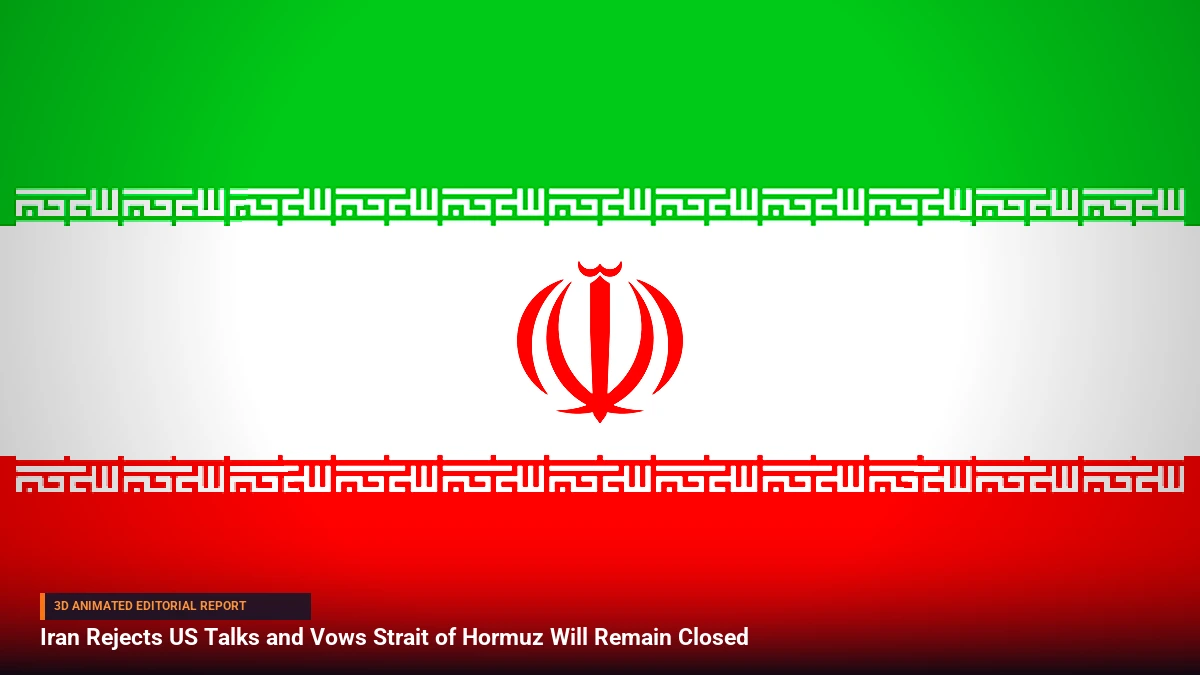
Tensions in the Middle East have escalated sharply following official statements from Tehran denying that any active diplomatic talks are currently underway with the United States. Iranian leadership has doubled down on a hardline position regarding the Strait of Hormuz, asserting that the critical global maritime chokepoint will remain closed until a series of strict preconditions are satisfied.
The standoff intensified alongside troubling reports from the Islamic Revolutionary Guard Corps (IRGC), which confirmed that at least three commercial vessels struck hidden mines and subsequently caught fire within the crucial waterway. These security incidents underscore the immediate physical hazards facing international shipping lanes as geopolitical posturing gives way to active disruption.
Background & Key Context
The Strait of Hormuz handles a massive share of the world's petroleum supply, making it one of the most strategically sensitive maritime corridors on Earth. For months, friction between Iran and Western powers has simmered, but the latest developments mark a significant escalation in tactics.
Senior Iranian officials, including high-ranking figures like Mohsen Rezaei and Parliament Speaker Mohammad Bagher Ghalibaf, have framed the current crisis as a structural turning point. Ghalibaf notably stated that the waterway will “never return” to its pre-war status, signaling that Tehran views the closure not merely as a temporary bargaining chip, but as a permanent shift in regional security architecture.
Key Takeaways
- Denial of Backchannel Diplomacy: Tehran has explicitly refuted claims that diplomatic negotiations or backdoor talks are taking place with the United States.
- Condition-Based Closure: Iranian authorities maintain that the Strait of Hormuz will stay completely shut until all specific national demands are met.
- Maritime Incidents: The IRGC reported that at least three ships have struck underwater mines in the strait, resulting in fires and heightened navigational danger.
- Permanent Paradigm Shift: Top officials, including Ghalibaf, have declared that the strategic strait will not return to its historical pre-war operating conditions.
Impact, Analysis & Global/National Reactions
The closure of the Strait of Hormuz sends severe shockwaves through global energy markets and international supply chains. Analysts note that prolonged disruptions in this corridor threaten to trigger spikes in global oil prices and force commercial carriers to seek costly, time-consuming alternative routes.
While Washington has repeatedly urged open diplomatic channels to de-escalate maritime risks, Iran’s public posture complicates international mediation efforts. Regional stakeholders and maritime insurers are scrambling to reassess risk profiles as the threat of unexploded ordnance and active naval confrontation turns the strait into a high-risk zone.
What's Next: Looking Ahead
As international monitors await further clarity on Iran's specific conditions for reopening the waterway, the immediate focus remains on maritime safety and the prevention of further kinetic escalation. Diplomatic observers will be closely watching whether international pressure or economic fallout can compel a resumption of talks, or if the region is bracing for a prolonged period of shipping blockades and heightened naval confrontation.



Be the first to comment
Start a useful conversation around this story.